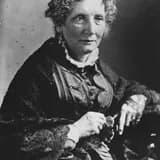
Death of Harriet Beecher Stowe in Hartford, Connecticut, after a long literary and reform career.
Harriet Beecher Stowe died in her sleep on July 1, 1896, at her home in Hartford, Connecticut, seventeen days after her eighty-fifth birthday. By that time, she had lived long enough to see the United States transformed by the Civil War, emancipation, and the changing literary culture that her own work had helped shape.
Her death marked the end of a career that had spanned more than six decades and included novels, essays, travel writing, and social commentary. Though most famous for Uncle Tom’s Cabin, Stowe also wrote other significant works such as Dred and The Minister’s Wooing. She became one of the most widely recognized women writers of the nineteenth century and one of the most politically consequential authors in American history.
Stowe died in an era when women’s political rights were still limited and formal national recognition for women’s public influence remained uneven. Yet her legacy had already taken hold: she was remembered as a writer whose fiction helped change the terms of public debate over slavery. Her death in Hartford closed the life of a woman who turned moral conviction, literary craft, and evangelical culture into enduring historical force.