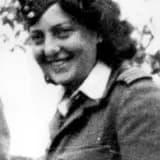
On 7 November 1944, Hannah Szenes was executed by firing squad in Budapest after being convicted of treason, becoming an enduring symbol of Jewish resistance.
On 7 November 1944, Hannah Szenes was executed by firing squad in a courtyard of the military prison in Budapest, having been convicted of treason by a Hungarian military tribunal collaborating with the Nazi occupation. She was twenty-three years old. Her execution came after months of imprisonment, torture, and a show trial in which she refused to express regret for her actions or to plead for clemency in any way that might compromise her principles.
Szenes stood before the firing squad reportedly without a blindfold, looking directly at her executioners, an act of defiance that has become legendary in the retelling of her story. Her death occurred just months before the liberation of Hungary and the end of the Holocaust, making her one of the last martyrs among the small group of Jewish parachutists from Mandatory Palestine who volunteered to fight behind enemy lines.
The historical significance of her execution lies not only in the tragedy of a young life cut short, but in the powerful symbol it created: a Jewish woman who voluntarily left the relative safety of Palestine to risk her life for her people, and who faced death with composure and conviction. Her poems, including the famous "Blessed is the Match," written shortly before her final mission, became closely associated with her death and are recited at Israeli Holocaust remembrance ceremonies to this day. Her body was later reinterred at Mount Herzl in Jerusalem, Israel's national military cemetery, in 1950.