← All women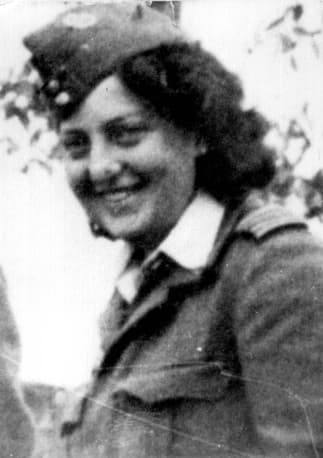
Hungarian, Israeli (posthumous) · Activism · Literature
Hannah Szenes
July 17, 1921 – November 7, 1944
Early Life and Background
Hannah Szenes (often anglicized as Hannah Senesh; Hebrew: Ḥannah Senesh; Hungarian: Szenes Anna or Anikó) was born on 17 July 1921 in Budapest, Hungary, into an assimilated, middle‑class Jewish family.[1][3][10][18] Her father, Béla Szenes, was a noted journalist, playwright and editor, and her mother, Catarina (Kató) Szenes, came from a cultivated milieu of writers and musicians.[1][10] This environment immersed Hannah in literature and theater from childhood and encouraged her own early experimentation with writing.
Budapest in the interwar years was a major cultural center but also a site of intensifying antisemitism. The 1920s and 1930s saw the introduction of numerus clausus university quotas and other discriminatory measures against Jews, alongside the rise of right‑wing nationalism.[3][10] Although the Szenes family was largely secular and Magyarized, Hannah’s experiences at an elite Protestant girls’ school exposed her to overt anti‑Jewish prejudice. She initially benefited from a special agreement that allowed her to enroll despite the Jewish quota, but she saw other Jewish students restricted and stigmatized.[3][5]
These experiences profoundly shaped her worldview. As a teenager she joined a Zionist youth movement and began to envision her future not in Hungary but in a Jewish homeland in Palestine. At the same time, she developed as a writer, composing poetry and diary entries in Hungarian that combined introspection, spiritual searching, and reflections on social injustice.[1][10] Her sense of alienation from the hostile atmosphere around her and her growing attachment to Jewish collective destiny formed the emotional and ideological background for the decisive step she would take at the end of the 1930s.
Emigration to Palestine and Education
In 1939, as Europe slid toward war and antisemitic legislation in Hungary tightened, Hannah emigrated to Mandatory Palestine (Eretz Israel).[2][3][5][10] She traveled via a Zionist framework that facilitated youth aliyah (immigration) and joined an agricultural school associated with the Women’s International Zionist Organization, where she studied farming and Hebrew.[2][10] This move represented both a personal escape from discrimination and an ideological commitment to building a Jewish national society.
In Palestine, she initially spent time at the agricultural school of Mikveh Israel and soon gravitated toward the pioneering kibbutz movement. By 1941, she became one of the founding members of Kibbutz Sdot Yam, near Caesarea on the Mediterranean coast.[2][10] Life in the kibbutz exposed her to collective labor, self‑governance, and an intense Hebrew cultural environment. She worked in the fields and took part in community life, while continuing to write poetry—now increasingly in Hebrew—and plays for the kibbutz’s cultural activities.[1][2][10]
This period marked a crucial transformation in her identity: she shifted from Hungarian‑language, assimilated Jewishness to an emergent Israeli Hebrew culture, blending her literary talent with the practical, ideological ethos of the kibbutz. Her diary from these years records both enthusiasm for the pioneering project and deep concern for the fate of Jews left behind in Europe as reports of Nazi persecution and mass murder multiplied.[10][20]
Early Literary Work and Emerging Voice
Throughout her late teens and early twenties, Hannah Szenes cultivated a distinctive literary voice that intertwined personal spirituality, national longing, and ethical reflection. She wrote poems, diary entries, and a short play, often exploring themes of sacrifice, love, and the search for meaning in a violent world.[1][10][20]
Initially her poetry was in Hungarian, reflecting her cultural roots. As she gained fluency in Hebrew, she began to write in the revived Jewish language and to contribute to kibbutz literary life. One of her best‑known poems, often referred to by its opening words "Eli, Eli" ("My God, My God"), expresses a longing that "the sand and the sea, the rush of the water, the lightning in the sky, the prayer of man" should never end. Written in Palestine before her mission, this work has since become part of the modern Hebrew canon and is frequently set to music and performed in Israel.[1][6][10]
Her diary, later collected and published posthumously, documents her inner debates over faith, nationalism, and the demands of resistance. It shows her grappling with questions of individual versus collective duty, the moral costs of violence, and the role of women in national struggle.[5][10][20] These writings would only become widely known after the war, but they were already central to how she understood herself and her mission.
Joining the Palmach and Military Involvement
As World War II intensified and news of the Nazi extermination of European Jewry reached Palestine, Hannah felt increasing urgency to act. In 1942, she became active in the Palmach, the strike force of the Jewish Haganah underground, gaining military training and integrating into the emerging Zionist defense framework.[2][5][10] The Palmach specialized in guerrilla tactics and covert operations, and membership signaled her readiness to combine ideals with armed resistance.
In 1943, officials from the Jewish Agency approached her to volunteer for a clandestine unit that would cooperate with the British Army and the Special Operations Executive (SOE).[3][5][10][18] The mission’s goal was to parachute Jewish volunteers from Palestine into Nazi‑occupied Europe to support partisan movements, collect intelligence, and assist efforts to rescue Jews. Thirty‑seven Jewish volunteers were selected in total, and she was one of the few women among them.[1][7][18]
Szenes accepted immediately, seeing the mission as a way to reach her native Hungary and help her community. She underwent extensive training in military discipline, wireless operation, parachuting, and covert work. By January 1944, she had completed a paratrooper course, preparing for imminent deployment.[3][10] This step marked a turning point: she shifted from local defense activities in Palestine to participation in a transnational Allied and Zionist rescue project.
Parachute Mission to Yugoslavia
In March 1944, just days before Germany formally occupied Hungary, Hannah Szenes was parachuted into Yugoslavia as part of the British‑led operation.[3][5][10][12] She and fellow parachutists landed in territory controlled by Yugoslav partisans and began working to establish contact with resistance networks, gather information on downed Allied airmen, and assess possibilities for reaching Hungary.
The Yugoslav terrain and political landscape were complex, with multiple partisan factions and shifting front lines. Szenes spent several months with Yugoslav fighters, experiencing harsh conditions and the constant threat of German or collaborator attacks.[1][10] Despite these difficulties, she remained focused on her ultimate goal: crossing into Hungary to help Jews there and act as a liaison for the Allied effort.
The mission was highly dangerous. By the time of her arrival, Hungarian Jews were being rapidly deported to Auschwitz, and German and Hungarian security forces were on high alert for infiltrators. British officials were cautious about sending operatives directly into Hungary, but Hannah pressed to continue, believing that personal risk was justified by the potential to aid her community.[3][10]
Arrest, Imprisonment, and Trial
In June 1944, shortly after entering Hungary, Szenes was captured. According to the United States Holocaust Memorial Museum, on 7 June 1944 she attempted to cross the border from Yugoslavia into German‑occupied Hungary and was arrested by Hungarian authorities.[5][12] They discovered her radio equipment and coded documents, identifying her as a British‑linked operative.
She was taken to a prison in Budapest, where she was interrogated and tortured. Hungarian security officers sought information about Allied plans, resistance networks, and other parachutists. Szenes endured severe beatings and psychological pressure but refused to betray her comrades or reveal operational details.[5][10][12]
To break her resolve, the authorities arrested her mother, Kató, and staged confrontations between them, hoping filial bonds would induce cooperation. Both women remained silent, a fact later emphasized in Jewish and Israeli commemorations as a testament to mutual courage and loyalty.[5][10] After approximately five months in custody, Hannah was brought before a military court on charges of treason.
During the trial, she defended herself with composure, arguing that her actions were aimed at fighting Nazism and saving Jews, not betraying Hungary. The court nevertheless convicted her. The proceedings occurred amid the ongoing deportation and murder of Hungarian Jews, highlighting the divergence between official state policy and acts of resistance undertaken by figures like Szenes.[5][10]
Execution and Final Moments
On 7 November 1944, Hannah Szenes was executed by firing squad in Budapest at the age of 23.[1][3][5][10][12] The sentence followed her treason conviction and rejection of cooperation with Hungarian and German authorities. Accounts from postwar testimonies and memorial texts describe her walking to her death with moral clarity, reportedly reciting the Jewish prayer "Shema Yisrael" (“Hear, O Israel”) before the shots were fired.[5][11]
On the day of her execution, she was offered a chance to ask for a pardon. She declined, choosing not to plead for mercy from a regime complicit in genocide.[5][11] This conscious refusal became central to her posthumous image: she is remembered as someone who maintained her principles even in the face of imminent death, embodying integrity and defiance.
After the execution, her body was buried in an unmarked grave. Her family and the broader Jewish community would only later recover and reinter her remains. At the time, however, she was one among many victims of wartime tribunals and state violence, and her story was not yet widely known beyond immediate circles of acquaintances and colleagues.[1][5]
Postwar Reinterment and Recognition
In the years following the war, Hannah Szenes’s mother played a pivotal role in preserving and publicizing her daughter’s memory. She collected Hannah’s diary, poems, and plays, and worked with editors and institutions to have them published, making her writings available to a broad audience.[5][10][20]
In 1950, Hannah’s remains were exhumed from their grave in Budapest and reburied in the military cemetery on Mount Herzl in Jerusalem, Israel’s national cemetery.[5] This reinterment symbolized her integration into the official narrative of Israeli heroism and sacrifice, placing her alongside other figures commemorated for defense and resistance.
As Israel consolidated state institutions and national symbols, Szenes came to be celebrated as one of the most important heroines of the Yishuv (pre‑state Jewish community) and the new state. Streets, schools, and a village—Yad Hannah—were named after her, and Kibbutz Sdot Yam, where she had lived, created memorial spaces and traditions honoring her life.[2][6][10][18]
Major Works and Literary Legacy
Hannah Szenes’s literary legacy centers on her poetry, diary, and a short play, much of it written between her adolescence in Hungary and her kibbutz years in Palestine. Her collected writings were published after the war, including in the volume "Hannah Senesh: Her Life and Diary", which presents her personal reflections alongside the texts of her poems and letters.[10][20]
Her most widely known poem, "Halikha LeKesariya" ("Walking to Caesarea"), often identified by the opening words "Eli, Eli," has become a cornerstone of modern Hebrew culture. Set to music by composer David Zehavi, the poem is regularly sung in Israel at ceremonies, memorials, and cultural events, and is frequently associated with themes of continuity, nature, and the endurance of prayer even amid catastrophe.[1][6][10]
Her diaries offer insight into her intellectual development and emotional life, recording her struggles with faith, nationalism, gender roles, and the ethical dimensions of resistance. Scholars have used these writings to explore the intersection of personal narrative and political commitment, especially for Jewish women in the Yishuv engaged in military and rescue work.[7][10][14]
In addition to their literary merit, her writings function as historical documents that illuminate the mentality of young Zionist pioneers and resistance fighters. They capture the tension between the demands of the collective and personal aspirations, and have been used in educational settings to teach about the Holocaust, resistance, and the role of women in history.[5][6][10]
Awards, Honors, and Cultural Commemoration
While specific state awards and decorations are less prominently documented than her memorialization, Hannah Szenes has been widely honored in Israel and abroad. Israeli institutions such as Yad Vashem, the Israel Defense Forces, and the National Library of Israel highlight her as a central figure in narratives of Jewish resistance and courage.[2][6][18][19]
Her story has inspired numerous artistic and educational works, including plays, films, radio programs, and museum exhibitions. In 2010, New York’s Museum of Jewish Heritage mounted an exhibition titled "Fire in My Heart: The Story of Hannah Senesh", described as the first major exhibition devoted specifically to her life and legacy.[17] The exhibition presented artifacts, photographs, and interpretive materials tracing her path from Budapest to Palestine and back to Europe as a parachutist.
Publishing houses and cultural organizations have also contributed to her commemoration. The Jewish Publication Society and other presses have released collections of her writings, while educational projects use her biography to introduce younger generations to themes of resistance, sacrifice, and the complexities of moral choice under totalitarian regimes.[14][20]
Personal Life
Hannah Szenes did not marry or have children; her short life was largely devoted to study, communal labor, writing, and political‑military commitments. Her closest documented relationships were with her family—especially her mother—and comrades in Zionist and military circles.[5][10]
Her diary reveals intimate friendships and emotional attachments, including reflections on love and companionship, but these were superseded by the pressing historical circumstances of war and genocide. Scholars often note that her writings express both a desire for personal fulfillment and a readiness to sacrifice that fulfillment for the sake of national and ethical obligations.[7][10]
The confrontation between Hannah and her mother in Budapest prison, where each refused to pressure the other into cooperation with authorities, is central to her personal story. It underscores the fusion of familial bonds and political commitment in her life, as well as the gendered dimensions of courage and endurance in wartime.[5][10]
Legacy and Historical Impact
Hannah Szenes has become one of the most iconic figures in Jewish and Israeli memory of the Holocaust and resistance. As one of the Jewish parachutists from Palestine sent by the Yishuv leadership to Nazi‑occupied Europe, she symbolizes a proactive, armed response to genocide, contrasting with stereotypes of Jewish passivity.[1][6][10][18]
Her legacy operates on multiple levels:
- Resistance and Rescue: She represents the effort by the Yishuv to intervene directly in occupied Europe, supporting partisans and attempting to reach endangered Jewish communities. Her decision to volunteer and insist on reaching Hungary highlights the agency of Jewish actors in the face of catastrophic violence.[3][10][18]
- Gender and Heroism: As a young woman engaged in military and clandestine work, she challenges traditional gender expectations. Historians and feminist scholars examine her as a case study in how women navigated roles as fighters, messengers, and symbols in wartime, and how their contributions have been remembered or marginalized.[5][7][10]
- Literary and Spiritual Influence: Her poetry and diaries, especially "Eli, Eli," continue to shape Israeli cultural memory. They provide language and imagery for commemorating the dead and articulating a vision of endurance and faith.[1][6][10]
- Educational Symbol: In schools, youth movements, and Holocaust education programs, her story is used to explore dilemmas of resistance, the limits of what could be done, and the importance of moral choice. Institutions such as Yad Vashem and the United States Holocaust Memorial Museum present her narrative to international audiences.[6][12][18]
Her life also raises questions about the effectiveness and ethics of rescue missions, the relationship between the Yishuv and European Jewry, and the intersection of Zionism with British imperial structures during the war. Contemporary debates revisit her story to scrutinize how states construct heroic icons and what is gained or lost in the process.[7][10][16]
Later Reinterpretations and Scholarship
In recent decades, historians, literary scholars, and cultural critics have produced more nuanced analyses of Hannah Szenes’s life and memory. Academic articles and monographs examine archival materials, trial records, and her writings to contextualize her mission within broader patterns of wartime intelligence, gendered violence, and the politics of commemoration.[7][10][14]
Some studies focus on how her image has been shaped by Israeli state narratives and the needs of national identity, exploring tensions between hagiography and historical complexity. Others highlight her role as a transnational figure connecting Hungarian Jewish history, Palestinian Jewish resistance, and Allied operations.[7][10][16]
There is also growing interest in her impact on Hungarian memory culture, including discussions of how post‑Communist Hungary has addressed—or failed to address—the legacy of wartime collaboration and the persecution of Jews. Her story appears in multiple languages—Hebrew, Hungarian, English, French, German, Romanian, Japanese—indicating its global resonance.[4][7][8][13][15][18]
Museums and memorial projects continue to reinterpret her legacy. Exhibitions such as "Fire in My Heart" in New York, digital collections at Yad Vashem, and features by the Israel Defense Forces emphasize different facets: the poet, the paratrooper, the martyr, the symbol of courage and integrity.[6][17][19] These reinterpretations maintain her relevance for contemporary audiences and ensure her story remains part of ongoing conversations about resistance, identity, and memory.
Historical Significance
Hannah Szenes occupies a unique position at the intersection of Holocaust history, Zionist nation‑building, and women’s history. Her decision to leave relative safety in Palestine and return to Europe as a parachutist encapsulates the moral urgency felt by many in the Yishuv as they learned of the annihilation of European Jewry. Her actions demonstrate that segments of the Jewish community sought, despite severe constraints, to intervene in the catastrophe unfolding across the continent.[1][3][10][18]
Her story also complicates narratives about the limits of what could be done. While her mission did not succeed in saving large numbers of Hungarian Jews—deportations proceeded at terrifying speed—her individual resistance challenges assumptions that Jews were entirely powerless. She stands as a reminder of initiatives that, though often thwarted, represented meaningful attempts at solidarity and rescue.[3][10][12]
As a woman engaged in frontline resistance and later memorialized as a national heroine, she helps broaden understandings of who participates in war and political struggle. Her literary output offers rare insight into the inner life of a female fighter and poet, bridging emotional introspection with public action.
Today, Hannah Szenes’s name is invoked in discussions of courage, moral integrity, and the responsibilities of individuals within oppressive systems. Her writings and biography continue to be disseminated through books, educational programs, and museum exhibitions, ensuring that her life remains a touchstone in the global conversation about resistance to tyranny and the role of memory in shaping ethical communities.[2][5][6][10][17][19][20]
Dated achievements
4 indexed.
- Jul171921Science
Birth in Budapest, Hungary
Hannah Szenes was born on 17 July 1921 in Budapest, Hungary, to an assimilated Jewish family, later becoming a poet, diarist, and resistance parachutist.
View details Hannah Szenes - Wikipedia - Jun071944Science
Arrested at the Hungarian border during rescue mission
Szenes was captured by Hungarian gendarmes on 7 June 1944 while attempting to cross from Yugoslavia into occupied Hungary to aid Jews and downed Allied airmen.