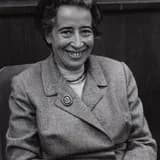
Johanna 'Hannah' Cohn Arendt was born in Linden, near Hanover, Germany, into a secular German-Jewish family.
Hannah Arendt was born on October 14, 1906, in Linden, a district of Hanover, Germany, to Paul and Martha Arendt, a secular Jewish family of Russian-Jewish descent that had assimilated into German middle-class life. Her father worked as an engineer, and the family soon moved to Königsberg (now Kaliningrad), the birthplace of Immanuel Kant, a city whose intellectual legacy would later resonate in Arendt's own philosophical work.
Arendt's early childhood was marked by tragedy: her father died of syphilis-related illness when she was seven years old, leaving her mother to raise her largely alone. Despite this early loss, Arendt was recognized from a young age as an exceptionally gifted student, reading philosophy—including Kant and Kierkegaard—well before university.
Her birth in this era of pre-World War I Germany placed her at the cusp of the twentieth century's greatest upheavals: two world wars, the Holocaust, and the Cold War, all of which she would witness and analyze as one of the most original political theorists of her time. Her Jewish heritage and German upbringing would become central to her identity and her later reflections on totalitarianism, statelessness, and the nature of evil.
Arendt's birth marks the starting point of a life that would fundamentally reshape twentieth-century political philosophy, particularly through her analyses of totalitarianism, the nature of power, and the human capacity for both radical evil and public action.