← All women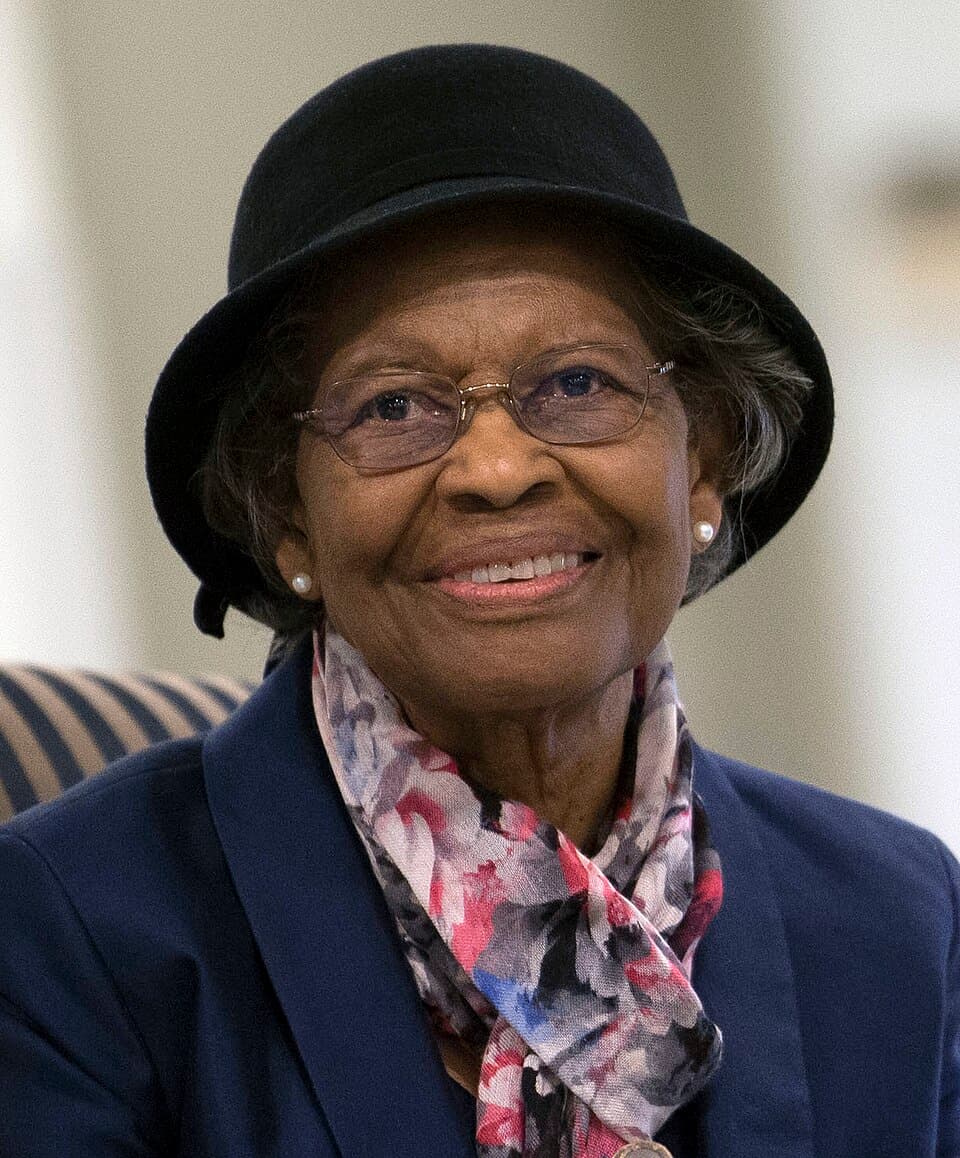
American · Science
Gladys West
October 27, 1930 – 2026
Early Life and Background
Gladys Mae Brown, later known as Gladys West, was born on 27 October 1930 in Sutherland, Dinwiddie County, Virginia, United States.[1][7][12] She was one of four children of Nolan and Macy Brown, an African American farming family in a rural community of sharecroppers.[7][16] Growing up under Jim Crow segregation, she spent much of her childhood working in tobacco and corn fields, experiences that impressed upon her the physical demands and economic precarity of farm labor.[7][8][16]
West attended segregated local schools, including a one‑room schoolhouse where one teacher instructed multiple grade levels.[15][16] From an early age she recognized that education offered a route off the farm; she later recalled that she “realized [she] had to get an education to get out” of the cycle of agricultural work and poverty.[16] She excelled academically, particularly in mathematics, and graduated at the top of her high school class in 1948.[16] This achievement earned her a scholarship to Virginia State College (now Virginia State University), a historically Black institution in Ettrick, Virginia.[3][7][16]
At Virginia State College, West studied mathematics, a path not commonly encouraged for women and even less so for Black women in the late 1940s and early 1950s.[2][3] She became deeply interested in geometry, attracted by its precision and logical structure, and committed herself to earning a degree that could support a professional career.[8][16] Her undergraduate years were shaped by a community of faculty and peers who valued academic excellence as a form of resistance against segregation and limited opportunities.[3][7]
Education and Early Career
In 1952, West graduated from Virginia State College with a bachelor’s degree in mathematics, finishing as valedictorian of her class.[3][7][8] Her top ranking reflected both her talent and her determination to seize the educational opportunities available at a historically Black college during an era of widespread racial discrimination. Immediately after graduation, she accepted a position teaching mathematics and science in Virginia public schools.[3][16] Teaching allowed her to support herself while contributing to the education of younger African American students.
Recognizing the importance of advanced training, West returned to Virginia State for graduate study. While working as a research assistant, she pursued a master’s degree in mathematics, deepening her expertise in analytical and computational methods.[3][16] She completed her master’s degree in mathematics in 1955, at a time when Black women with graduate degrees in mathematical sciences were extremely rare.[3][8]
After earning her master’s degree, West briefly continued teaching before seeking opportunities in scientific and technical research. The expansion of Cold War defense projects created openings for mathematicians in federal laboratories. In 1956, she applied to the U.S. Naval Proving Ground in Dahlgren, Virginia—today part of the Naval Surface Warfare Center—where advanced computing and ballistics work were transforming military science.[11][14]
Entry into Naval Research and Early Contributions
On 27 June 1956, West began work as a mathematician at the U.S. Naval Proving Ground, becoming the second Black woman ever hired there as a professional employee and one of just four Black employees overall.[3][7][11] Her role initially focused on performing complex calculations and programming large‑scale computers, including the Naval Ordnance Research Calculator (NORC), one of the most powerful computing machines of its time.[11][16]
At Dahlgren, West joined a small group of women who carried out critical computing tasks for the U.S. military in the early Cold War period.[11] She faced both gender and racial barriers in a predominantly white, male environment, yet colleagues and supervisors quickly recognized her skill and reliability in handling intricate mathematical problems.[3][7] Her work soon extended beyond routine calculations to advanced programming and analysis on cutting‑edge hardware.
In the early 1960s, West participated in an award‑winning astronomical research effort known as Project 29V, which used NORC to analyze the motion of Pluto relative to Neptune.[11] The project required billions of computations to test the regularity of Pluto’s orbit. West’s programming and computational expertise were central to the study’s success, and on 1 September 1962 she received the Navy Meritorious Civilian Service Award in recognition of her contributions.[11] This commendation documented her growing stature as a civilian scientist within the defense research establishment.
Advances in Satellite Geodesy and the Road to GPS
From the mid‑1970s through the 1980s, West’s work shifted increasingly toward satellite geodesy—the use of satellite data to measure and model Earth’s shape and gravitational field.[1][11][14] These efforts would become foundational for the eventual development of the Global Positioning System (GPS). She and her colleagues used complex algorithms to account for variations in gravitational forces, tides, and other effects that distort the planet’s shape.[11]
One of West’s major responsibilities was programming the IBM 7030/7073 "Stretch" supercomputer to integrate satellite sensor data and other geophysical measurements into an increasingly precise model of the geoid—a mathematical representation of Earth’s mean sea level and gravitational surface.[11][14][16] By refining this geoid, West’s team produced the reference frame and orbital parameters necessary for satellites to determine position with high accuracy. This modelling work is now recognized as a cornerstone of GPS technology.[1][14]
West’s leadership extended to the analysis of radar altimetry data from early Earth‑observation satellites. On 28 June 1978, she was appointed project manager for the Seasat radar altimetry data processing project.[3][11] Seasat, launched by NASA in 1978, was the first satellite designed specifically for remote sensing of the oceans. West oversaw the team responsible for processing Seasat’s altimeter data, converting raw radar signals into accurate measurements of sea‑surface height and ocean topography.[3][11]
The Seasat work required sophisticated corrections for instrument biases, atmospheric conditions, and Earth’s uneven gravity field. West’s algorithms and data‑processing strategies improved understanding of ocean dynamics and contributed to more accurate geoid models.[3][11][14] This in turn helped refine the coordinate systems and orbital models that GPS satellites use to provide reliable positioning information worldwide.
Across these projects, West’s expertise lay in bridging raw data and usable models—designing programs, validating outputs, and continually improving algorithms so that satellite observations could be translated into precise geodetic information. Though much of her work remained within technical reports and specialized literature, its impact reached far beyond the laboratory.[1][11][14]
Major Works and Scientific Accomplishments
West’s scientific legacy centers on three interconnected domains: large‑scale computing, satellite data processing, and geodetic modelling for GPS.
- Project 29V and planetary motion: Her programming on NORC enabled the award‑winning study of Pluto’s motion relative to Neptune, representing an early demonstration of high‑performance computing applied to astronomical dynamics.[11]
- Radar altimetry and Seasat: As project manager for Seasat data processing, she led efforts to transform satellite radar returns into accurate ocean‑surface height measurements, yielding improved understanding of ocean circulation and topography.[3][11]
- Geoid modelling for GPS: West directed and contributed to long‑term projects using IBM Stretch and other systems to calculate an accurate geoid, incorporating gravitational, tidal, and other corrections. These models became the mathematical basis for GPS satellite orbits and positioning algorithms.[1][11][14][16]
During her career, West authored and co‑authored technical papers and presented her work at national and international conferences, though many of her most influential results were embedded in internal reports and navigation system designs rather than widely circulated publications.[3] The technical nature and military context of her work meant that her name was not initially associated with GPS in public discourse, even as billions of devices came to rely on the systems grounded in her calculations.
Awards, Honors, and Recognition
For much of her 42‑year career at Dahlgren, West’s contributions were recognized primarily through internal commendations such as the 1962 Meritorious Civilian Service Award.[11] Broader public and institutional recognition grew substantially in the twenty‑first century.
West retired from federal service on 26 August 1998, after four decades of work at the Naval Proving Ground and Naval Surface Warfare Center.[11][16] In 2000, she completed a doctorate (Ed.D.) in public administration and policy affairs at Virginia Tech, focusing on the relationship between mathematics, technology, and public policy.[3][8] Her pursuit of a doctorate after retirement reflected her ongoing engagement with the societal implications of technical innovation.
In 2017, a colleague at her church submitted a short biography of West for a Black History Month program, an act that helped spark wider media coverage of her story as a "hidden figure" behind GPS.[2][13][14] Profiles in outlets such as BBC News, The Guardian, and engineering and technology organizations began to highlight her role in satellite geodesy and navigation systems.[2][5][14]
On 6 December 2018, West was inducted into the U.S. Air Force Space and Missile Pioneers Hall of Fame, an honor reserved for individuals who have made significant and enduring contributions to the Air Force’s space program.[8][13] The Lemelson Foundation notes that she is the only Black woman to have received this distinction.[8] The induction formally recognized her as a key figure in the development of GPS and space‑based navigation.
Public honors continued to accumulate. On 14 March 2019, the Virginia General Assembly adopted House Joint Resolution No. 563, commending Dr. Gladys B. West for her pioneering GPS‑enabling mathematics and naming her among the state’s "changemakers."[3] The resolution recounted her journey from rural Dinwiddie County to national acclaim and framed her work as globally significant.
In 2021, West received multiple high‑profile honors. On 18 May 2021, the Royal Academy of Engineering announced her as the recipient of the 2020 Prince Philip Medal, citing her pioneering work on mathematical modelling of Earth that underpins GPS.[21] She formally received the medal at an online ceremony on 22 May 2021.[21] Around the same time, on 19 May 2021, the Webby Awards named her the Webby Lifetime Achievement Award honoree, emphasizing that her contributions made GPS—and thus many internet services—possible.[20] On 3 November 2021, the National Museum of the Surface Navy presented her with its inaugural Freedom of the Seas Exploration and Innovation Award, honoring the impact of her work on maritime navigation.[22]
West’s home state further celebrated her achievements. On 20 September 2023, the Virginia Museum of History & Culture unveiled her portrait in its "Agents of Change" series, recognizing her as a transformative figure in Virginia and world history.[23] The portrait placed her within a curated group of individuals credited with reshaping the state’s social and technological landscape.
At the international level, recognition continued. On 5 May 2024, the Institute of Electrical and Electronics Engineers (IEEE) awarded West the 2024 IEEE President’s Award for her mathematical modelling and satellite geodesy contributions that were pivotal to GPS.[14] This honor from one of the world’s largest engineering organizations underscored the global importance of her work.
Personal Life
West’s personal life intersected closely with her professional milieu. At the Naval Proving Ground she met Ira West, a fellow mathematician working at Dahlgren.[11] The two married in 1957
Throughout her life, West remained connected to her home community and to historically Black educational institutions. She maintained ties with Virginia State University as a prominent alumna and later drew attention as an example of the achievements possible for students educated at historically Black colleges and universities.[3][7][8] Her religious community also played a role in bringing her story to broader attention, particularly through the Black History Month biography that helped catalyze media coverage in 2017.[13][14] Gladys West’s legacy is deeply woven into the technological infrastructure of modern life. Her work on satellite geodesy and geoid modelling underpins the Global Positioning System, which in turn supports aviation, maritime navigation, emergency services, precision agriculture, logistics, and everyday smartphone use.[1][2][14] Without the accurate models of Earth’s shape and gravitational field that she helped create, GPS satellites could not provide reliable position and timing information. From a historical perspective, West embodies the experience of a "hidden figure"—a scientist whose contributions were essential but long overlooked in mainstream narratives.[2][5][14] For decades, her work remained largely within military and technical circles, and public accounts of GPS development rarely mentioned her. The shift beginning in the 2010s, when journalists, historians, and institutions started to highlight her story, reflects broader efforts to recover the contributions of women and people of color in STEM. West’s career also illuminates the evolution of computing and geospatial science. She participated in the transition from manual, desk‑calculator work to early mainframes such as NORC, and later to supercomputers like IBM Stretch.[11][16] Her ability to adapt to new technologies and methodologies over more than four decades exemplifies the dynamic nature of scientific labor during the Cold War and beyond. In women’s‑history scholarship, West is increasingly cited as a case study of how African American women navigated segregated educational systems, broke into male‑dominated technical fields, and shaped global technologies. Her trajectory—from a farm in Dinwiddie County to international engineering awards—illustrates the interplay of structural barriers and individual determination.[2][3][7][8] Institutions such as the Royal Academy of Engineering, IEEE, the Air Force, the Virginia Museum of History & Culture, and the Virginia General Assembly have now inscribed her contributions into official records, awards, and public displays.[3][8][14][21][23] These recognitions not only honor West individually but also help correct historical narratives by foregrounding the role of Black women in geospatial science and navigation. After retiring from the Naval Surface Warfare Center in 1998, West pursued doctoral studies and earned an Ed.D. in public administration and policy affairs from Virginia Tech in 2000.[3][8] In later years she spoke more publicly about her career, participating in interviews and profiles that highlighted both her scientific work and the challenges she faced as a Black woman in a segregated and male‑dominated field.[2][5][14] Her accomplishments gained wider attention in the 2010s, particularly after the 2017 Black History Month biography at her church prompted local and then national media coverage.[2][13][14] This newfound visibility led to a cascade of honors and positioned her as a symbol of the many women whose scientific labor had remained unseen. Multiple reputable sources report that Gladys West died in January 2026 at the age of 95. Some, including Encyclopaedia Britannica and the MacTutor History of Mathematics archive, give the date as 17 January 2026[12][9][10][13]; major news outlets such as The New York Times similarly state that she "died on January 17" in Fredericksburg, Virginia.[6] However, institutional and media accounts do not all agree on the exact date, and a widely circulated PBS NewsHour video reporting her death is timestamped 5 January 2026 without explicitly specifying the date of death.[24] Because of these discrepancies, some editorial projects choose to record January 2026 as the month of her death while treating the 5 January PBS NewsHour post as the date of public reporting rather than definitive evidence of the date of death. What is consistent across sources is that she died in January 2026 in Virginia at age 95, and that her passing prompted an outpouring of tributes from scientific, military, and educational institutions.[6][8][12][15] Shortly after her death, the Lemelson Foundation noted that she was inducted into the Geospatial Professional Network Hall of Fame for her "path‑breaking" contributions to geospatial science and GPS‑related geodesy.[8] Obituaries and memorial statements from organizations such as Virginia State University emphasized her status as a pioneering mathematician whose work had quietly shaped technologies now taken for granted.[8][19] In the years since her death, Gladys West has continued to serve as an inspiration for students and scholars, particularly women and underrepresented minorities pursuing careers in mathematics, engineering, and geospatial science. Her life story—documented in biographies, museum exhibits, and institutional tributes—stands as a powerful testament to the transformative impact of scientific work undertaken in the face of social and structural obstacles.[1][2][3][8][14]Legacy and Historical Impact
Later Life and Death
Dated achievements
14 indexed.
- Oct271930Science
Birth of Gladys Mae Brown
Gladys Mae Brown (later West) was born in Sutherland, Dinwiddie County, Virginia, to a family of sharecroppers.
View details Gladys West - Britannica - Jun271956Science
Hired at U.S. Naval Proving Ground as second Black woman professional
Gladys West entered on duty as a mathematician at the U.S. Naval Proving Ground, Dahlgren, VA, becoming only the second Black woman hired there as a professional.