← All women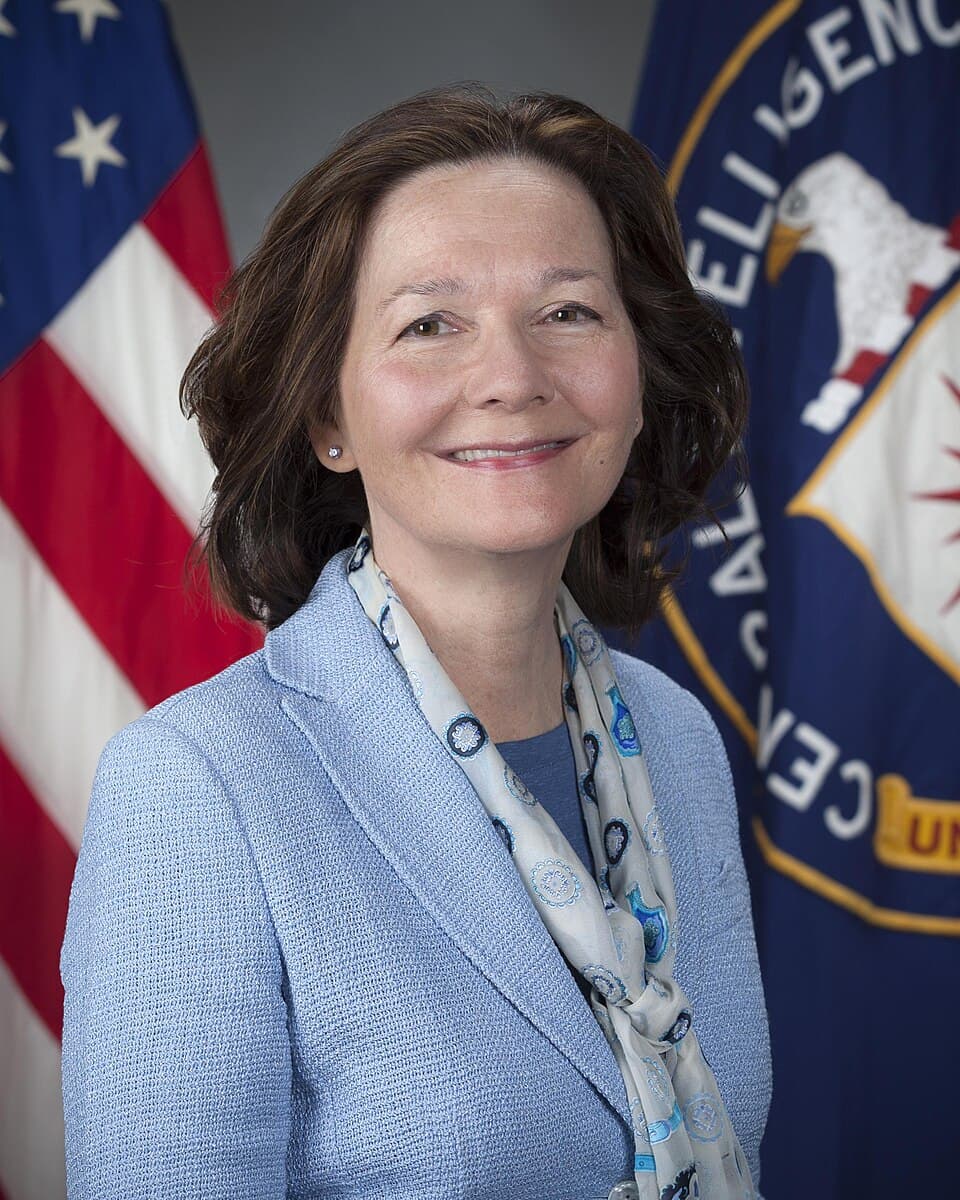
American · Politics
Gina Haspel
October 1, 1956 – present
Early Life and Background
Gina Cheri Walker Haspel was born on October 1, 1956, in Ashland, Kentucky, United States.[1][5] She grew up in a military family; her father served in the U.S. Air Force, and as the eldest of five children she spent much of her childhood on Air Force installations overseas.[2][7][11] This upbringing on bases in Europe exposed her early to international environments, military culture, and the strategic concerns of the Cold War era.
Haspel attended the University of Kentucky before transferring to the University of Louisville, where she studied languages and journalism and earned a bachelor’s degree.[1][10] According to later biographical accounts released by the CIA, she was an enthusiastic supporter of the Kentucky Wildcats basketball team and at one point aspired to attend the United States Military Academy at West Point.[11] Her combination of language skills, interest in foreign affairs, and familiarity with military structures created an educational and experiential foundation suited to a career in intelligence.
Career Beginnings in the CIA
Haspel joined the Central Intelligence Agency (CIA) in 1985, in the waning days of the Cold War.[1][2][3] She entered as an operations officer, working in clandestine service rather than in analytical or overt support roles. Over the ensuing decades, she built a career largely in the shadows, with assignments that were rarely publicized at the time.
Early in her CIA career, Haspel worked as a reports officer specializing in Russia, and for the first fifteen years her work was shaped by Russian targets and the broader strategic rivalry with the Soviet Union and its successor state.[7] She accumulated extensive experience in overseas operations, eventually serving as Chief of Station in the capital of a major U.S. ally, though the specific city has not been publicly named.[2][4] Her postings involved managing human intelligence sources and directing covert activities, including counterterrorism and foreign intelligence operations.
Within CIA headquarters in Washington, D.C., she moved into senior leadership positions in the Agency’s clandestine branch. She became Chief of Staff to the Deputy Director for Operations and later served as Deputy Director of the National Clandestine Service (NCS)—now known as the Directorate of Operations.[2][4] She also held the role of Deputy Director of the NCS for Foreign Intelligence and Covert Action, and Chief of Staff for the Director of the National Clandestine Service.[4][12] These positions placed her near the center of CIA operational decision-making.
Post‑9/11 Counterterrorism and Controversial Assignments
The terrorist attacks of September 11, 2001, marked a turning point in Haspel’s career and in U.S. intelligence policy. CIA biographical material indicates that she began working at the Agency’s Counterterrorism Center on September 11 itself, joining an intensified effort focused on al‑Qaeda and other militant groups.[11] In the ensuing years, she became closely associated with aspects of the CIA’s secretive detention and interrogation program.
In 2002, Haspel served as CIA station chief in Thailand, where the Agency operated a covert "black site" interrogation facility as part of its post‑9/11 program.[1][3][13] Detainees held there were subjected to "enhanced interrogation techniques," including waterboarding, which have since been widely condemned as forms of torture. Open-source reporting and later official summaries linked Haspel to the oversight of this site, though details about her direct involvement were contested and partly classified.
Haspel’s name also became associated with the destruction of videotapes documenting CIA interrogations. In 2005, a senior CIA operations official ordered the destruction of tapes showing the interrogation of two al‑Qaeda suspects; investigative reports and subsequent accounts suggested that Haspel drafted the cable authorizing the destruction, while other officials contended she was following superior directions.[1][3][5] These actions drew sustained criticism from human rights organizations, European legal advocates, and some members of the U.S. Congress, who viewed them as part of an effort to reduce accountability for abusive practices.
Legal advocacy groups in Europe, including the European Center for Constitutional and Human Rights (ECCHR), later referenced Haspel’s role in complaints and reports focused on alleged torture and ill‑treatment at CIA black sites.[15] For critics, her involvement symbolized the institutional continuity of officials associated with controversial counterterrorism policies rising to higher leadership positions despite unresolved concerns about legality and human rights.
Rise to Senior Leadership: Deputy Director of the CIA
Despite the controversies, Haspel’s career progression within the CIA continued. By the early 2010s, she was reported to have served as Deputy Director of the National Clandestine Service, reinforcing her status as one of the Agency’s most senior operations officers.[2][4] Within the Obama administration, she at one point briefly served as acting head of the clandestine service, though internal debates over her role in the detention program affected formal appointments.
In 2017, under President Donald Trump and CIA Director Mike Pompeo, Haspel was appointed Deputy Director of the CIA.[1][4][12] On February 7, 2017, she was sworn into the position, and press accounts noted that she was the first woman to hold the role.[9][12] As Deputy Director, she managed day‑to‑day Agency operations and served as a key adviser to the Director. Official CIA and White House communications later emphasized that she was the first woman to rise from within the CIA’s own ranks to reach the Deputy Director position, differentiating her from external appointees.[2][4]
Her tenure as Deputy Director coincided with heightened tensions regarding Russia, evolving counterterrorism priorities, and internal efforts to recalibrate CIA operations after the end of the formal detention and interrogation program. Supporters pointed to her deep operational experience, especially concerning Russia and counterterrorism, as assets in navigating these challenges.[7]
Nomination and Confirmation as CIA Director
On March 13, 2018, President Donald Trump announced that he would nominate Haspel to serve as Director of the Central Intelligence Agency, elevating her from Deputy Director after selecting Mike Pompeo to become Secretary of State.[1][3][4] This announcement made Haspel the first woman ever nominated to lead the CIA since its establishment in 1947.[1][3]
The nomination sparked intense public debate. The Trump White House released statements describing Haspel as "the right person to lead the CIA" and highlighting her more than thirty years of service, overseas postings as Chief of Station, and leadership roles in the National Clandestine Service.[4] Intelligence community figures and some former officials publicly supported her nomination, citing her professionalism and expertise. At the same time, civil liberties organizations, segments of the press, and some members of Congress focused on her involvement in the detention and interrogation program and the tape destruction, arguing that such a record should disqualify her from the Agency’s top post.[1][3][15]
On May 9, 2018, Haspel appeared before the Senate Select Committee on Intelligence for a confirmation hearing.[9] Senators questioned her closely about her role at the Thailand black site and the interrogation program, asking whether she believed such practices were moral or lawful, and whether she would permit them in the future. Haspel responded by emphasizing her support for the current legal framework, which prohibits enhanced interrogation techniques, and asserting that the CIA had learned from past experience and would not restart the program.[9] The hearing underscored the tension between her pioneering status as a female nominee and the unresolved debates over accountability for torture.
On May 17, 2018, the U.S. Senate confirmed Haspel as CIA Director by a vote of 54–45.[1][3][12] She thereby became the first woman to lead the Agency and the first career CIA operations officer to serve as Director since William Colby, who led the CIA in the 1970s.[1][3] Several Democratic senators joined Republicans in voting for her confirmation, while others opposed her based on human rights concerns.
First Woman to Head the CIA: Swearing‑In and International Reception
On May 21, 2018, Haspel was officially sworn in as the seventh Director of the Central Intelligence Agency at CIA Headquarters in Langley, Virginia.[1][12] President Trump attended the ceremony, praising her as "one of the most accomplished officers of her generation" and emphasizing her long service and professional achievements.[4] With this swearing‑in, she became the first woman to serve as CIA Director on a permanent basis in the Agency’s history.[1][5][8]
CIA communications highlighted that Haspel had risen from the ranks of operations officers to the directorship, a path rarely traveled by women in the intelligence community.[2] The Agency and the White House also pointed to her numerous awards, including the Intelligence Medal of Merit, the George H.W. Bush Award for Excellence in Counterterrorism, the Donovan Award, the Presidential Rank Award, and the Distinguished Career Intelligence Medal, although specific dates for these honors were not publicly provided.[2][4][9]
International media reported widely on Haspel’s appointment. Outlets such as Deutsche Welle noted that she was the first woman to head the CIA and discussed the controversies regarding her record in the interrogation program.[6] European legal organizations, including ECCHR, referenced her directorship in the context of efforts to address alleged torture and abuses at black sites.[15] Thus, her elevation to the CIA’s top post was perceived globally both as a milestone for women in national security and as a focal point for ongoing disputes over human rights and accountability.
White House communications continued to emphasize her status as the first woman to rise from CIA ranks to become Deputy Director and then Director.[2][4] A June 12, 2018 article profiled her career and reinforced the narrative of her as an exceptionally accomplished officer whose ascent broke internal gender barriers while preserving continuity in the Agency’s operational leadership.[2][4]
Awards, Honors, and Recognition
Over the course of her career, Haspel received numerous honors from the CIA and the U.S. federal government. Official sources list her awards as including the Intelligence Medal of Merit, the George H.W. Bush Award for Excellence in Counterterrorism, the Donovan Award, the Presidential Rank Award, and the Distinguished Career Intelligence Medal.[2][4][9] These awards recognize sustained exceptional performance, leadership in counterterrorism operations, and significant contributions to U.S. intelligence.
Although the publicly available sources do not specify the exact dates on which these awards were presented, they appear to have been granted over the span of her decades in service, particularly in recognition of her work in clandestine operations and counterterrorism.[2][4] CIA and White House materials emphasized these distinctions during her nomination and in profiles that sought to establish her credentials as a highly decorated professional.
Personal Life
Publicly available information about Haspel’s personal life is limited, reflecting both the culture of secrecy within the intelligence community and her own preference for privacy. Biographical notes released by the CIA and reported by media outlets state that she is the eldest of five siblings and that she is an avid fan of the Kentucky Wildcats basketball team.[2][11] She has also been described as enjoying the music of Johnny Cash and having at one point hoped to attend West Point.[11]
The CIA’s "Get to Know Our Deputy Director" profile refers to her by the name "Gina," indicating a relatively informal internal persona, but it provides no details about marital status or children.[2] Major biographies and media coverage similarly focus on her professional trajectory and controversies rather than her private life.[1][3][7] As a result, her personal relationships and family life have not become part of the public historical record in the way that they sometimes do for more public‑facing officials.
Legacy, Historical Impact, and Contested Reputation
Haspel’s legacy is multifaceted and contested. On one hand, she occupies a significant place in women’s history as the first woman to permanently serve as Director of the CIA, and as the first woman from the Agency’s ranks to become Deputy Director.[1][2][5][8] Her rise demonstrates that women can reach the highest levels of U.S. intelligence institutions, not only as political appointees but as career officers with extensive operational backgrounds.
Supporters, including current and former intelligence officials and some political leaders, have portrayed her as one of the most accomplished officers of her generation. They emphasize her decades of service, her leadership roles, and her expertise in counterterrorism and Russia, arguing that her work helped protect U.S. national security in a dangerous era.[4][7] From this perspective, her gender milestones are combined with a narrative of professional excellence and institutional continuity.
On the other hand, human rights organizations, legal advocates, and critical commentators focus on her role in the CIA’s detention and interrogation program and the destruction of interrogation tapes. For them, her ascent to the directorship exemplifies the lack of accountability for alleged torture and other abuses committed in the name of counterterrorism.[1][3][15] They argue that her leadership position may have signaled to both the Agency and the public that involvement in controversial operations is no barrier to promotion, raising concerns about the ethical orientation of the intelligence community.
In international contexts, particularly in Europe, her name appears in discussions of CIA black sites, extraordinary rendition, and the legal challenges surrounding post‑9/11 policies.[6][15] Some legal complaints and reports cite her as a figure whose actions should be scrutinized under international law. As a result, her historical impact cannot be separated from debates over torture, secrecy, and the limits of executive power in democracies.
For scholars of women’s history and security studies, Haspel’s career illustrates that women’s entry into elite positions within security institutions may both expand representation and complicate assumptions that female leadership necessarily aligns with liberal or rights‑enhancing agendas. Her story underscores that women, like men, can be central participants in contested and morally complex state practices.
Later Life and End of Tenure
Haspel served as Director of the Central Intelligence Agency from May 21, 2018, until January 20, 2021.[1][12] Ballotpedia records her term as Director as lasting from May 21, 2018, to January 19, 2021, with her resignation aligning with the transition from the Trump administration to the Biden administration.[12] Wikipedia and other sources note the end of her directorship on January 20, 2021, the date of the presidential inauguration.[1]
During her tenure, she maintained a relatively low public profile, consistent with her background in clandestine operations. Her time as director coincided with ongoing concerns about Russian activities, terrorism, and the increasing importance of cyber and technological intelligence. While the details of her internal policy decisions remain largely classified, she presided over the Agency during a period of reevaluation of past practices and adaptation to new threats.
After leaving the directorship, Haspel has remained a figure of interest in discussions of intelligence leadership and accountability. As of the latest available information, she is alive, and no official post‑CIA biography indicates that she has taken on high‑visibility public roles comparable to her directorship.[1][3] Subsequent assessments of her legacy continue to weigh her status as a pioneering woman in the intelligence community against the controversies that marked her career.
Overall Significance in Women’s and Intelligence History
Gina Haspel’s life and career embody both the opening of previously male‑dominated institutions to women and the persistence of ethical controversies within national security structures. Her journey—from a Kentucky childhood on Air Force bases, through decades in CIA clandestine service, to becoming the first woman to direct the Agency—offers a case study in how gender, secrecy, and power intersect.
Her prominence in official narratives as a decorated, pioneering officer contrasts with ongoing criticism from human rights advocates and some legal experts who point to her involvement in practices widely condemned as torture. This tension ensures that her place in history will remain debated: she is simultaneously a symbol of women’s ability to reach the apex of intelligence organizations and a reminder that representation does not, by itself, resolve deeper questions about the morality and legality of those organizations’ actions.
For an editorial almanac of women’s history, Haspel stands as a complex figure whose achievements and controversies must both be acknowledged. Her story illustrates the importance of examining not only the breaking of gender barriers but also the substantive policies and practices that leaders—male or female—carry forward within powerful, secretive institutions.
Dated achievements
9 indexed.
- Oct011956Politics
Birth of Gina Haspel
Gina Cheri Walker Haspel was born in Ashland, Kentucky, and would later become the seventh Director of the Central Intelligence Agency (CIA).
View details Gina Haspel - Wikipedia - Mar132018Politics
First woman nominated as Director of the CIA
President Trump announced Gina Haspel's nomination as the first woman to lead the CIA.