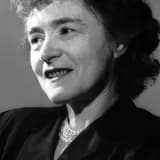
Gerty Cori died on October 26, 1957, in St. Louis, Missouri, after a decade-long battle with myelosclerosis.
Gerty Cori died on October 26, 1957, in St. Louis, Missouri, at the age of 61. She had been diagnosed with myelosclerosis, a rare and progressive bone marrow disorder, in 1947—the very same year she received the Nobel Prize. Remarkably, she continued to conduct active laboratory research for the following decade, publishing significant work on glycogen storage diseases even as her illness progressed and required numerous blood transfusions.
Her death marked the end of one of the most productive husband-and-wife scientific partnerships in history. Carl Cori, her collaborator of over three decades, continued their shared research program at Washington University School of Medicine, where the couple had built an internationally renowned biochemistry department that trained and influenced generations of future Nobel laureates and leading scientists.
Cori's death was widely noted in the scientific community as the loss of a pioneering figure who had overcome profound gender-based professional discrimination to reach the pinnacle of scientific achievement. Her legacy endured through the Cori cycle and Cori ester, foundational concepts still taught in biochemistry curricula worldwide, and through the example she set for women in science. Institutions including the National Women's Hall of Fame and numerous scientific societies have since honored her memory, and she remains a touchstone figure in histories of women in STEM fields.