← All women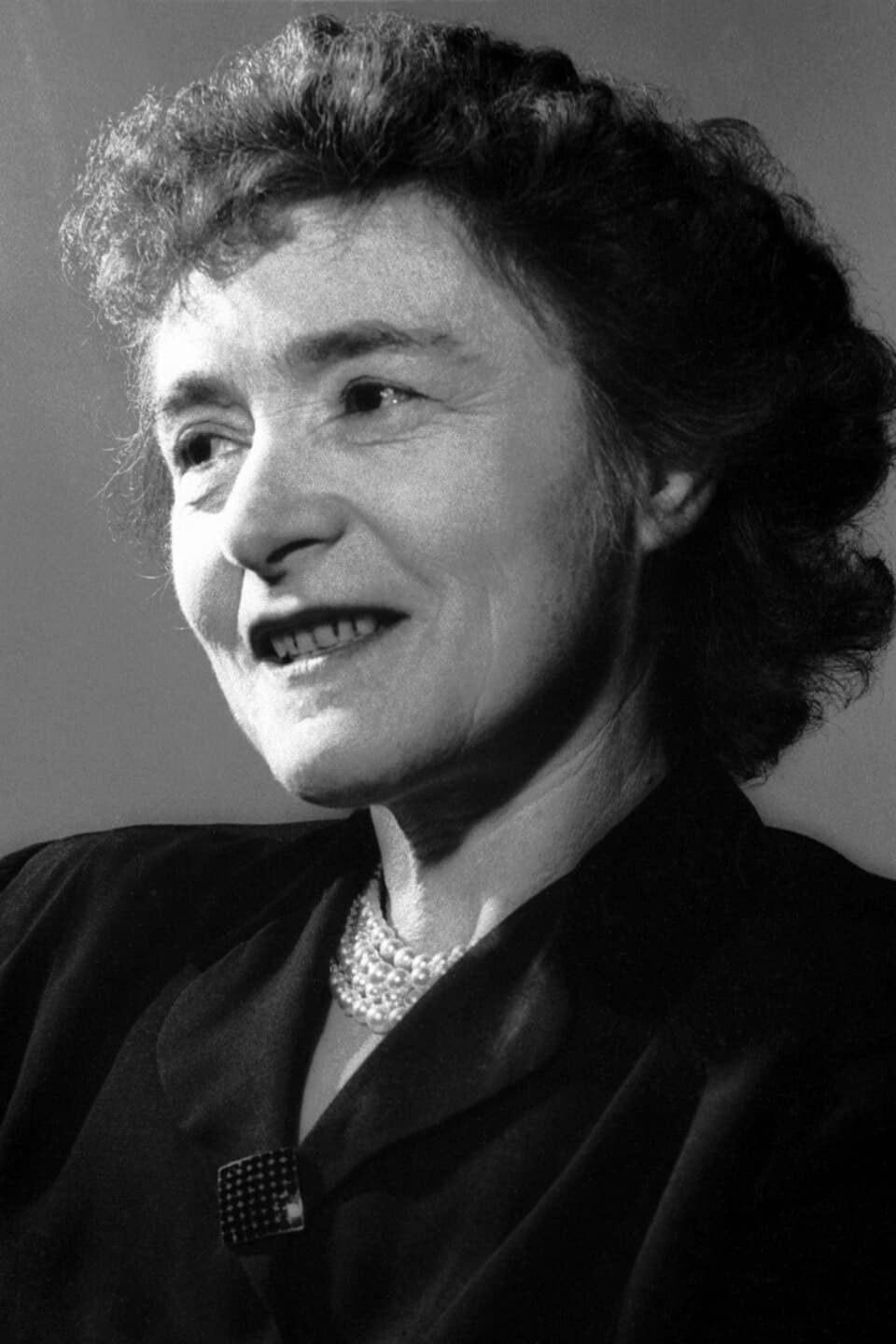
Austrian, American · Science · Medicine
Gerty Cori
August 15, 1896 – October 26, 1957
Early Life and Background
Gerty Theresa Radnitz Cori was born on 15 August 1896 in Prague, then part of the Austro‑Hungarian Empire (now the Czech Republic).[2][9] She was the daughter of Otto Radnitz, a chemist and manager of a sugar factory, and Martha Neustadt Radnitz, who fostered her interest in literature.[9] Raised in a well‑to‑do Jewish family, Cori grew up in a cultural milieu that valued education but offered limited formal scientific opportunities to women.
Prague at the turn of the twentieth century was a multilingual and multiethnic city, shaped by Czech, German, and Jewish communities and by the political tensions of the Austro‑Hungarian realm. Cori’s early education reflected these complexities. She attended a private school and then the Realgymnasium in Tetschen (now Dĕčín), a rigorous secondary school that prepared students for university with strong training in mathematics and science.[9] At a time when girls were often steered away from advanced study, her enrollment there was itself a break with gender norms.
World War I cast a shadow over her formative years. The conflict disrupted daily life and reshaped European society, but Cori remained focused on her studies. She decided to pursue medicine, a choice that combined her intellectual interests with a desire to contribute to human health. In 1914 she entered the German University of Prague Medical School, one of the few women of her cohort to do so.[9] There she encountered both academic challenge and institutional skepticism about women in medicine, experiences that would inform her persistence in later scientific work.
Medical Education and Meeting Carl Ferdinand Cori
As a medical student, Gerty Radnitz developed strong interests in physiology and biochemistry, disciplines then undergoing rapid change as laboratory methods transformed the study of bodily processes.[11] During her time in medical school she met Carl Ferdinand Cori, a fellow student from a distinguished Prague family with a shared enthusiasm for research.[4][7] Their intellectual partnership began early; as students they coauthored their first scientific paper, demonstrating a collaborative style that would define their careers.[11]
Cori graduated with her medical degree (M.D.) from the German University of Prague in 1920.[9] After graduation she held positions as an assistant in pediatrics, gaining clinical experience that deepened her understanding of metabolic diseases in children.[9][11] Her medical training gave her a dual perspective—both laboratory and clinical—on questions of carbohydrate metabolism, which later proved crucial in framing her research on glycogen and glucose.
In 1920 she married Carl Ferdinand Cori.[4][9] The couple, both Jewish and trained in Austrian and German medical traditions, soon confronted the growing antisemitism and political instability in postwar Central Europe. At the same time, they shared a conviction that their future lay in research rather than clinical practice. These factors led them to seek scientific opportunities abroad, eventually deciding to emigrate to the United States.
Emigration to the United States and Career Beginnings
In the early 1920s, Gerty and Carl Cori emigrated to the United States, settling first in Buffalo, New York, where they both obtained positions at the State Institute for the Study of Malignant Diseases, associated with the Roswell Park Cancer Institute.[4][9] At this time, the American scientific community was expanding but still conservative regarding women’s roles. Although Gerty held the same degree and demonstrated equal skill, she was initially hired at a lower rank and salary than Carl—a pattern that persisted for years despite their joint research output.[9][11]
During their Buffalo years, the Coris began systematic investigations into carbohydrate metabolism, focusing on how the body uses sugars for energy. In 1923, Gerty published her first U.S. paper, titled "The Influence of Thyroid Extract and Thyroxine on the Rate of Multiplication of Paramecia", which examined hormonal regulation in a simple organism and reflected her growing interest in biochemical control mechanisms.[9][11] The couple’s laboratory work laid the foundation for their later elucidation of the pathways through which glycogen and glucose are interconverted.
Despite her productivity, Cori faced structural barriers. Many institutions were reluctant to grant women permanent research roles, and she repeatedly encountered assumptions that her contribution was secondary to her husband’s.[1][10] Nevertheless, they insisted on coauthorship and collaborative credit, advancing together in a research culture that often expected women scientist‑wives to fade into the background.
Move to Washington University and Development of Biochemical Research
In 1931 the Coris accepted positions at Washington University School of Medicine in St. Louis, Missouri, marking a major transition in their careers.[4][10] Carl became chair of the pharmacology department and later of a newly established biochemistry department, while Gerty took an appointment as a research associate.[4][9] Though her rank and pay remained lower than Carl’s for many years, the move gave them better resources and institutional support to deepen their biochemical investigations.
At Washington University, the Coris turned intensively toward studying glycogen, a polymer of glucose that serves as a key energy store in liver and muscle tissue.[4][7] Using emerging techniques in enzymology and biochemistry, they set out to map how glycogen is broken down and resynthesized in the body. Their experiments involved tissue extracts, isolated enzymes, and careful measurement of intermediates, work that was significant both for basic science and for understanding diabetes and other metabolic disorders.[5][11]
Throughout the 1930s, Gerty Cori’s experimental skill and conceptual clarity were critical to a series of advances. She played a leading role in identifying and characterizing intermediate compounds in carbohydrate metabolism, contributing to a new view of biochemical pathways as stepwise, enzyme‑mediated processes. Her contributions also extended to mentoring younger scientists and establishing a collaborative laboratory environment, an important factor in the emergence of Washington University as a major center for biochemistry.[4][5]
Major Discoveries: Cori Cycle and Cori Ester
Among Cori’s most important contributions was the description of the Cori cycle, developed with Carl Cori in the late 1920s.[4][10][11] This concept explained how lactic acid produced by muscles during anaerobic activity is transported to the liver, converted back into glycogen or glucose, and then returned to the muscles. The cycle clarified a long‑standing physiological puzzle: how the body manages energy demands during intense exercise and recovers afterward.
The Cori cycle revealed that carbohydrate metabolism is an integrated, organ‑spanning process, involving the coordinated activity of muscle and liver rather than localized events. This insight provided a framework for understanding clinical conditions such as diabetes, shock, and liver disease, where the cycle’s balance is disturbed.[4][5][11] It also illustrated how biochemical reasoning could elucidate physiological phenomena, helping to establish biochemistry as a central discipline in medicine.
In 1936, the Coris isolated and identified glucose‑1‑phosphate, an intermediate in glycogen breakdown that became known as the Cori ester.[4][5][10] This discovery showed that glycogen is not converted directly to free glucose, but rather proceeds through specific phosphorylated intermediates. By demonstrating that glucose‑1‑phosphate could be enzymatically produced from glycogen and reconverted, the Coris provided a molecular handle on glycogen metabolism and opened new avenues for studying enzyme mechanisms.
The identification of the Cori ester had profound scientific implications. It supported the growing idea that metabolism is organized around discrete chemical intermediates and reversible enzymatic reactions. It also helped explain how the body can rapidly mobilize glycogen stores, highlighting the role of glycogen phosphorylase, an enzyme that the Coris and their colleagues studied extensively.[4][7] These advances formed the core of the work later recognized by the Nobel Prize.
Recognition, Professorship, and the 1947 Nobel Prize
By the mid‑1940s, the Coris’ research on carbohydrate metabolism had achieved international prominence. In 1946 Carl was appointed chair of the newly organized biochemistry department at Washington University, and Gerty, after years of lower‑ranked positions, was promoted to full professor in 1947.[2][4][10] This promotion was unusual in an era when very few women held professorships in medical schools, especially in laboratory disciplines.
On 29 October 1947, the Nobel committee awarded the Nobel Prize in Physiology or Medicine to Gerty Cori and Carl Cori "for their discovery of the course of the catalytic conversion of glycogen," and to Bernardo Alberto Houssay for his work on pituitary hormones and sugar metabolism.[2][8] Gerty Cori became the first woman ever to receive the Nobel Prize in Physiology or Medicine, the first American woman to win a Nobel Prize in a scientific field, and only the third woman worldwide to receive a Nobel in science.[2][3][4][9]
The Nobel Prize recognized a body of work that had revealed the enzymatic pathways through which glycogen is broken down and resynthesized, clarified the role of phosphorylated intermediates such as glucose‑1‑phosphate, and linked these biochemical insights to the physiology of exercise and disease.[4][5][8] The award also highlighted the Coris as one of the earliest husband‑and‑wife teams to share a Nobel Prize in science, underscoring the collaborative nature of their research.[1][10]
In 1947 Gerty and Carl traveled to Stockholm to receive the prize, an event widely reported in the press. Contemporary accounts emphasized both the scientific importance of their discoveries and the social significance of Gerty’s status as a woman laureate. Her Nobel lecture, delivered in a context where women scientists were still rare in leading institutions, contributed to changing expectations about who could lead major biochemical research.[1][5]
Awards, Honors, and Professional Recognition
Following the Nobel Prize, Gerty Cori received numerous honors. She was elected to several prestigious scientific societies, most notably the American Philosophical Society (APS), to which she was elected on 13 December 1948.[10] APS, founded in the eighteenth century, was historically dominated by male scholars; her election reflected both scientific esteem and a gradual widening of membership to include distinguished women scientists.
Cori also received honorary degrees from multiple universities and was invited to serve on editorial boards and advisory panels. Her peers recognized her as an authority on carbohydrate metabolism and enzymology, and she became a sought‑after speaker at international conferences.[4][5] In St. Louis, her contributions were later commemorated by a star on the St. Louis Walk of Fame, shared with Carl Cori, symbolizing their joint impact on science and the city.[3][4]
Beyond formal honors, Cori’s laboratory became a training ground for a generation of biochemists. Several of her trainees went on to distinguished careers, carrying forward the methods and conceptual frameworks she helped develop. Her professional recognition thus extended through the network of scientists influenced by her mentoring and collaboration.
Personal Life and Collaboration
Gerty and Carl Cori’s marriage was both a personal partnership and a scientific collaboration. They insisted on joint authorship for most of their research, reflecting their shared contributions to study design, experimentation, and interpretation.[4][11] In an era when women’s scientific work was often subsumed under male colleagues’ names, this insistence was significant.
The couple immigrated together, adjusted to life in the United States, and navigated both cultural and institutional challenges. As Jews who left Central Europe in the interwar period, they were acutely aware of the rise of antisemitism and the fate of many European scientists during World War II.[4][9] Their laboratory in Buffalo and later in St. Louis became a space of intense work but also collegial support.
Accounts from colleagues and students emphasize Gerty Cori’s combination of intellectual rigor and personal warmth. She was known for careful experimental technique, high standards of evidence, and an ability to articulate complex biochemical concepts clearly. At the same time, she maintained interests in literature and music, reflecting the broader cultural background of her upbringing.[1][11] While details of her private life remain more limited in the record than her professional achievements, she appears as a figure who integrated scientific dedication with a rich personal and family life.
Later Research, Illness, and Teaching
In the decade after the Nobel Prize, Cori continued to conduct research and mentor younger scientists at Washington University. She remained deeply involved in studies of carbohydrate metabolism, extending earlier work and exploring new aspects of enzymatic regulation.[4][5] Her position as a full professor allowed her greater control over research directions and laboratory organization, though she remained committed to collaborative work with Carl and their colleagues.
During these years she also increasingly engaged in teaching and supervision of graduate students and postdoctoral fellows. Cori’s approach to mentoring emphasized careful experimental design, critical analysis of data, and awareness of the physiological significance of biochemical findings.[5][11] The combination of her teaching and research helped solidify Washington University’s reputation as a leading center for biochemistry and contributed to the broader development of the field in the United States.
In the early 1950s, Cori was diagnosed with myelofibrosis, a serious bone‑marrow disorder that gradually impaired her health.[1][5] Despite fatigue and other symptoms, she continued to work in the laboratory as long as possible, demonstrating a strong commitment to science even in the face of illness. Her persistence during this period is often cited as evidence of her dedication and resilience.
Later Life and Death
As her illness progressed, Cori had to reduce her laboratory activities, but she remained engaged with the scientific community through correspondence, advising, and participation in selected meetings.[1][5] She continued to follow developments in biochemistry and maintained an interest in the clinical implications of metabolic research, particularly for diabetes and related disorders.
On 26 October 1957, Gerty Cori died in the St. Louis area at the age of 61.[2][3][9] Her death marked the end of a career that had profoundly shaped understanding of carbohydrate metabolism and helped establish biochemistry as central to modern medicine. Obituaries and memorial articles emphasized both her scientific achievements and the barriers she had overcome as a woman and immigrant scientist.
After her death, Carl Cori continued their research tradition, but he repeatedly acknowledged Gerty’s equal role in their joint contributions.[4][7] The scientific community, increasingly attentive to issues of gender and recognition, came to see Gerty Cori as a pioneering figure whose career illustrated both the possibilities and difficulties faced by women seeking full participation in scientific life in the first half of the twentieth century.
Legacy and Historical Impact
Gerty Cori’s legacy is multifaceted. Scientifically, her work on glycogen metabolism, the Cori cycle, and the Cori ester remains foundational to biochemistry and physiology. These discoveries continue to inform research on muscle function, exercise, liver disease, and diabetes, and they are standard topics in medical and biochemical education.[4][5][8]
Historically, Cori stands as a trailblazer for women in science. As the first woman Nobel laureate in physiology or medicine and the first American woman to win a science Nobel, she helped alter perceptions about women’s capabilities in high‑level research.[2][3][4][9] Her promotion to full professorship at Washington University and election to the American Philosophical Society further signaled that women could occupy senior positions in scientific institutions, although such cases remained rare for decades.
Her name has been memorialized in several ways. The Cori cycle and Cori ester in scientific terminology ensure that each generation of students encounters her work.[4][5] A lunar crater, Cori, was named in her honor, symbolizing her contributions reaching beyond Earth.[3] She and Carl share a star on the St. Louis Walk of Fame, linking their scientific achievements to local civic memory.[3][4] Biographical profiles by organizations such as the Nobel Foundation, the Science History Institute, the National Library of Medicine, and Jewish Women’s Archive continue to highlight her story as an example of perseverance and intellectual excellence.[1][4][10][11]
Gerty Cori’s career also contributes to broader narratives about Jewish scientists who emigrated from Central Europe and helped shape American science in the twentieth century. Her life illustrates how migration, collaboration, and institutional change interacted to produce new scientific disciplines and discoveries. For women’s history, she offers a case study of how individual determination can challenge structural barriers while also revealing the limitations of mid‑century progress, since women remained underrepresented in science long after her achievements.
Today, Cori is widely regarded as a pioneering biochemist whose work dramatically advanced understanding of cellular energy and whose career opened doors for future generations of women in medicine and science.[1][5][10][11]
Dated achievements
4 indexed.
- Aug151896Science
Birth in Prague
Gerty Theresa Radnitz was born in Prague, then part of Austria-Hungary, into a Jewish family.
View details Gerty Cori – Facts, Nobel Prize - Oct291947Science
First woman to win the Nobel Prize in Physiology or Medicine
Gerty Cori became the first woman awarded the Nobel Prize in Physiology or Medicine, shared with Carl Cori and Bernardo Houssay, for discovering the Cori cycle.