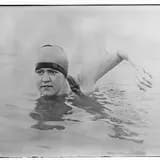
On August 6, 1926, Ederle became the first woman to swim the English Channel, crossing from France to England in about 14 hours 31 minutes.
On August 6, 1926, Gertrude Ederle achieved one of the most celebrated feats in sports history, becoming the first woman to swim across the English Channel. She entered the water at Cap Gris-Nez, France, and emerged at Kingsdown, England, after approximately 14 hours and 31 minutes in often rough, cold water — beating the existing men's record by nearly two hours.
The Channel had long been considered one of the ultimate tests of human endurance, and by 1926 only five men had ever successfully completed the crossing. Many doubted a woman could withstand the physical demands, cold, and currents involved. Ederle's success shattered these assumptions decisively, not merely matching male achievement but surpassing it by a wide margin.
Her triumph made her an instant international celebrity. Upon returning to the United States, she was greeted with a massive ticker-tape parade in New York City attended by an estimated two million people — one of the largest receptions of its kind at the time. The feat became a landmark moment in the history of women's sports, offering powerful evidence against pervasive beliefs that women were physically inferior to men in endurance events.
Ederle's swim remains a touchstone achievement in the history of women's athletics, inspiring generations of female swimmers and helping shift public perceptions of women's physical capabilities during the Jazz Age.