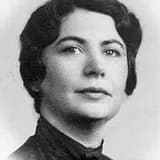
Birth of Gertrude Blanch in Kolno, then in the Russian Empire, before her later rise as a pioneer in numerical analysis and computation.
Gertrude Blanch was born on 2 February 1897 in Kolno, then in the Russian Empire and now in Poland, into a Jewish family. Her birth marked the beginning of a life that would later intersect with several of the most important transformations in twentieth-century mathematics: the rise of numerical analysis, the organization of large-scale human computation, and the transition to electronic computing. Sources identify her birth name as Gittel Kaimowitz, later known as Gertrude Blanch after emigrating to the United States with her family in 1907.
Her early life unfolded in a period when women, immigrant children, and working-class students faced steep barriers to advanced scientific education. The fact that she ultimately became a professional mathematician is historically significant because it reflects both personal persistence and the slow opening of educational opportunities for women in the early twentieth century. Her childhood in eastern Europe, migration to New York, and later return to study after years of wage labor form an important part of the historical context for her eventual leadership in American computational mathematics.
Blanch’s birth is also significant because her career helped define an entire bridge era between hand calculation and machine computation. The work she later directed at the Mathematical Tables Project and in federal research laboratories helped create methods, work practices, and technical standards that influenced early computing in the United States.