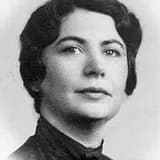
Blanch recorded a Smithsonian oral history interview, preserving her firsthand account of the Mathematical Tables Project and early computing.
On 16 May 1971, Gertrude Blanch took part in a Smithsonian Computer Oral History Collection interview. The interview is historically valuable because it preserves first-person testimony from one of the central figures in early American numerical computation. Oral history was especially important for people like Blanch, whose work often took place in collaborative settings and was not always captured in formal published authorship.
The interview matters because it documents the transition from hand calculation to early electronic computing through the perspective of someone who helped manage both worlds. Blanch could speak directly to the organizational reality of large computing projects, the design of algorithms for human workers, and the adaptation of those methods to early machines. Such testimony is indispensable for historians of technology because it records practices that were often informal, ephemeral, or under-documented in printed sources.
Her participation also shows the growing historical awareness of computing as a field with a past worth preserving. In 1971, the work of the Mathematical Tables Project was already becoming part of institutional memory. Blanch’s oral history helped ensure that women’s intellectual labor, especially labor embedded in government and collaborative computation, remained part of the historical record rather than disappearing behind the names of more visible male supervisors and administrators.