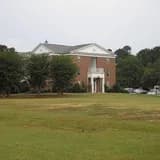
Georgia Female College opened its doors in Macon, GA, beginning instruction as a pioneering women's higher education institution.
In 1839, Georgia Female College opened its doors to students in Macon, Georgia, becoming one of the earliest institutions in the world to offer women a structured collegiate curriculum with the intent of conferring formal academic degrees. While the precise opening day is not documented with certainty in surviving records, the year 1839 marks the beginning of actual instruction following the college's charter three years earlier.
The opening of the college was a watershed moment for women's education. Its founders, associated with the Methodist Episcopal Church, envisioned a curriculum that mirrored the rigor of men's colleges of the era, including subjects such as classical languages, mathematics, natural sciences, and philosophy — a stark departure from the ornamental curricula typical of contemporary female seminaries.
Students who enrolled in these earliest classes were pioneers in their own right, choosing to pursue an education that society had not previously sanctioned for women. The college's early years were marked by financial struggle and skepticism from a public unaccustomed to the idea of educated women, but the institution persisted and would go on, within a year of opening, to award the first documented collegiate degree to a woman in American history. This moment set into motion an educational legacy that would eventually include produced doctors, lawyers, and other trailblazing alumnae across nearly two centuries of continuous operation as what is now known as Wesleyan College.