← All women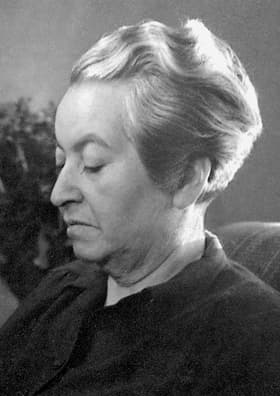
Chilean · Literature · Arts
Gabriela Mistral
April 7, 1889 – January 10, 1957
Early Life and Background
Gabriela Mistral, born Lucila de María del Perpetuo Socorro Godoy Alcayaga, entered the world on 7 April 1889 in the small Andean town of Vicuña, in Chile’s Elqui Valley.[2][4][10][11] Her family background was modest and unstable. Her father, Jerónimo Godoy Villanueva, a schoolteacher and dilettante poet, abandoned the family when Lucila was still a child, leaving her mother, Petronila Alcayaga, a seamstress, to support the household.[1][4] Growing up in rural poverty, with intermittent formal schooling, Lucila’s early experiences of loss, hardship, and maternal strength profoundly shaped the emotional and ethical core of her later poetry.
She spent much of her childhood and adolescence in the Elqui Valley, moving among small towns including Montegrande, where she developed an intense attachment to the landscape of the Chilean cordillera. These mountains, valleys, and village schools would recur symbolically throughout her work.[4][10] Largely self‑educated, she read the Bible, classical authors, and Spanish and Latin American poetry, often borrowing books and learning autonomously. The limited educational opportunities available to girls of her class in late nineteenth‑century Chile required persistence and resourcefulness, traits that would characterize her career.[3][10]
Lucila began publishing poems as a teenager in local newspapers of the Coquimbo region, often under pseudonyms, which allowed her to explore themes of spirituality, love, and social justice while obscuring her identity as a young, female village teacher.[4][5][10] Her early exposure to both the hardships of rural life and the power of written expression encouraged her to envision literature as a space where personal suffering could be transformed into communal insight.
Career Beginnings and Development
Economic necessity led Lucila to seek work in education at an early age. Around fifteen, she became a rural schoolteacher in the Elqui Valley, teaching in elementary schools and later in secondary institutions.[1][4][7] The classroom environment deeply influenced her writing: her daily contact with poor children and illiterate parents reinforced her conviction that education was a tool for social uplift and spiritual development. Many of her poems and prose texts would later celebrate teachers, children, and the transformative power of schooling.
A formative emotional shock occurred when a railway worker with whom she had a passionate relationship died by suicide.[1][4] This loss inspired a group of poems on death and mourning that would eventually coalesce into the cycle "Sonetos de la muerte" (Sonnets on Death). On 12 December 1914, this sequence won first prize at the Juegos Florales poetry contest in Santiago, giving her national recognition and marking her emergence as a major literary voice.[4] The sonnets combined personal grief with spiritual reflection, casting the poet in a quasi‑maternal, intercessory role that would become central to her poetic persona.
During the 1900s and 1910s, her poems such as "Ensoñaciones," "Carta Íntima," and "Junto al Mar" appeared in regional newspapers under various signatures, consolidating her presence in Chilean print culture.[10] In 1913, series like "Elegancias" were published in the Mexican magazine Elegancias, representing her first publication outside Chile and signaling the start of her continental circulation.[10] In 1908 she adopted the pseudonym Gabriela Mistral, reportedly combining the names of Italian poet Gabriele D’Annunzio and Provençal poet Frédéric Mistral, in a poem published in the newspaper El Coquimbo.[5] The pen name gradually replaced her birth name in literary and public contexts.
Mistral’s dual career as teacher and writer advanced in the 1910s and early 1920s. She taught in various Chilean schools, became headmistress of the Liceo de Niñas in places such as Los Andes, and engaged in debates about schooling for the rural poor and for girls. In 1922, the Universidad de Chile granted her the professional title of teacher of Spanish in recognition of her teaching and literary achievements, despite her lack of formal degrees.[10] This institutional acknowledgment of her practical expertise was unusual for a woman of her background and underscored her growing national stature.
Major Works and Literary Accomplishments
Mistral’s international breakthrough came with the publication of "Desolación", her first major collection of poetry. On 1 June 1922, the Instituto de las Españas in New York published the volume, bringing together poems on love, sorrow, religion, motherhood, nature, and pedagogy.[7][13] "Desolación" presented a distinctive spiritual and emotional voice, one that fused Christian imagery with intimate reflections on grief and maternal tenderness. The book quickly established her reputation beyond Chile and is often regarded as one of the foundational works of twentieth‑century Latin American poetry.[1][3][4][7]
Her work during the 1920s and 1930s continued to develop these themes. In 1923 she published "Lecturas para mujeres", a prose anthology intended for women and girls, reflecting her commitment to female education and her belief that literature could form ethical character.[10] The 1924 collection "Ternura" focused on children, lullabies, and mother‑child relationships, further consolidating her image as the poet of maternity and childhood.[10][13] Although precise day‑and‑month publication dates are not widely documented, these works belong to a period in which Mistral explored the pedagogy of affection and the poetic representation of domestic and school life.
In 1938 she published "Tala", generally seen as one of her most important and mature collections.[10][13] "Tala" widens her focus from personal and domestic themes to broader reflections on exile, identity, and landscape, influenced by her diplomatic travels and years abroad. Later, the collection "Lagar" (published in the 1950s) engaged with the trauma of war and collective suffering, responding to global events such as the Spanish Civil War and World War II.[4][13] Throughout her oeuvre, Mistral’s language combined simplicity with symbolic density, often drawing on rural Chilean speech and biblical cadences.
Beyond poetry, she wrote essays and journalistic pieces on culture, education, and politics. Texts like "Decálogo del artista" articulated her ethical vision of artistic vocation, emphasizing humility, service, and responsibility. She also composed prose sketches on the Elqui Valley and Latin American identity, weaving together personal memory and cultural commentary.[4][10] Her letters, many later published, reveal networks with prominent writers such as Pablo Neruda and Victoria Ocampo, as well as her sustained engagement with questions of feminism, indigeneity, and social justice.
Educational Work and Diplomatic Career
Parallel to her literary production, Mistral exerted significant influence as an educator and cultural policymaker. Early in the 1920s, she was invited by Mexican Minister of Education José Vasconcelos to assist with educational reform in post‑revolutionary Mexico. She spent time there advising on rural schools and women’s education, drawing on her Chilean experience and advocating a humane, community‑based pedagogy.[1][3][4] Her presence in Mexico strengthened cultural ties between the two countries and enhanced her standing as an educational leader.
She later worked with international bodies, including serving on cultural committees of the League of Nations, where she contributed to discussions about literacy, children’s welfare, and intercultural understanding.[1] These roles highlighted her belief that education and culture were central to social peace. Her diplomatic career advanced when Chile appointed her as consul in various cities. Over the years she served as Chilean consul in Naples, Madrid, Lisbon, and other posts, representing her country while continuing to write.[1][4] These positions were significant for a woman at a time when diplomatic service was overwhelmingly male.
Her travels across Europe, the Americas, and the Caribbean informed her poetry’s cosmopolitan dimension. She engaged with local cultures, wrote about Indigenous communities, and commented on international conflicts. Yet she retained a strong sense of attachment to Chile and Latin America, often portraying herself as a voice from the Andes speaking to the world. This dual identity—as provincial schoolteacher and world‑traveler diplomat—gave her work its distinctive mixture of intimacy and universality.
Awards, Honors, and Recognition
Mistral received numerous honors, but the most consequential was the Nobel Prize in Literature. On 15 November 1945, she was awarded the prize in Stockholm, becoming the first Latin American author and first Latin American woman to receive the literature Nobel, and the fifth woman laureate in that category.[2][4][7][8][13] The Swedish Academy cited her "lyric poetry which, inspired by powerful emotions, has made her name a symbol of the idealistic aspirations of the entire Latin American world."[7] The award was widely reported and celebrated, confirming her status as a continental and global figure.
In Chile, the Nobel Prize was followed some years later by the National Prize for Literature, which recognized both her oeuvre and her role in shaping Chilean cultural identity.[10] Universities and cultural institutions in Chile and abroad granted her honorary degrees and distinctions, acknowledging her contributions to letters and education. Schools, libraries, and cultural centers were named in her honor, especially in the Elqui Valley and across Chile.
The Nobel Prize also marked an important milestone for Spanish‑language literature and for women writers. Mistral’s recognition preceded other Latin American Nobel laureates such as Miguel Ángel Asturias, Pablo Neruda, and Octavio Paz, and helped legitimize Latin American literature in global forums.[2][4][7] For women, her award demonstrated that a female voice rooted in domestic and educational experience could be considered central to world literature, challenging the gendered boundaries of the canon.
Personal Life and Relationships
Mistral’s personal life was complex and often marked by sorrow. She never married and had no biological children, yet she cultivated deep, quasi‑maternal relationships with students, nieces, and young people under her care.[4][10] Her poetic focus on motherhood and children, though not grounded in her own motherhood, reflected both her work as a teacher and her identification with the vulnerable.
The suicide of her early lover left a lasting mark on her emotional world and inspired the "Sonetos de la muerte," in which she explores themes of death, love, and spiritual union beyond the grave.[1][4] Later, she formed close relationships with women who worked as her secretaries and companions during her travels. In her final decades, her most important companion was Doris Dana, an American who served as her secretary, translator, and household partner.[4] Dana played a key role in organizing Mistral’s papers and later became one of the principal custodians of her literary estate.
Mistral’s letters and prose writings reveal her engagement with questions of gender and sexuality, although she did not publicly associate herself with specific feminist or sexual identities in modern terms. She advocated strongly for the rights of women, children, Indigenous peoples, and the poor, often emphasizing maternal ethics and community responsibility rather than formal political platforms.[3][10] Her spirituality combined Catholic devotion with a broad humanitarianism, leading her to speak for the marginalized in moral, poetic, and pedagogical registers.
Legacy and Historical Impact
Gabriela Mistral’s legacy spans literature, education, diplomacy, and social thought. As a poet, she is considered one of the central figures of twentieth‑century Chilean and Latin American literature.[2][4][10][13] Her work offered a distinctive female voice, grounded in maternal imagery, rural landscapes, and spiritual introspection, at a time when literary modernism often prioritized urban, male perspectives. She expanded the possibilities for women’s writing by showing that domestic, pedagogical, and emotional experiences could be sources of profound poetic reflection.
Her influence on education is equally important. Through her teaching, advisory roles in Mexico, participation in League of Nations cultural committees, and essays on pedagogy, she helped shape ideas about rural schooling, literacy, and the moral duties of teachers in Latin America.[1][3][4] She saw education as a means of forming citizens and nurturing the dignity of the poor, and her writings on children and classrooms continue to be studied in teacher‑training programs.
As a diplomat, she symbolized Chile abroad and participated in the development of cultural diplomacy as a state function. Her presence in consular posts across Europe and the Americas demonstrated that women could serve as official representatives in international affairs, opening paths for later female diplomats.[1][4] She used these roles to promote Latin American culture, advocate for peace, and support humanitarian causes.
In literary history, Mistral’s Nobel Prize in 1945 marked a turning point in the global recognition of Latin American letters.[2][7][13] It signaled that Spanish‑language poetry from the global South could be central, not peripheral, to world literature. Her example inspired subsequent generations of writers, including many women who saw in her life a model of how artistic vocation could be combined with social responsibility.
Her work continues to be translated, studied, and commemorated. Institutions such as the Biblioteca Nacional de Chile and the Instituto Cervantes maintain biographical and critical resources on her life and writings.[5][10] Streets, schools, and cultural centers in Chile and other countries bear her name, and the Elqui Valley has become a site of literary pilgrimage for admirers of her poetry. In contemporary discussions of Hispanic and feminist literature, Mistral is often cited as an early and powerful representative of women’s voices in the Americas.
Later Life and Death
In her later years, Mistral continued to write and to serve in diplomatic and cultural roles, despite declining health. She spent extended periods in Brazil, the United States, and Europe, often accompanied by Doris Dana.[4] Her later poetry, including the collection "Lagar," reflected the impact of global conflicts and personal aging, engaging more explicitly with themes of war, collective trauma, and the search for spiritual meaning in a violent century.
She suffered from diabetes and ultimately from pancreatic cancer. On 10 January 1957, she died at Hempstead General Hospital in Hempstead, Long Island, New York, at the age of 67.[1][2][3][4][7][11] Following her death, her remains were repatriated to Chile, where she was buried in Montegrande, close to the landscapes that had nurtured her childhood and imagination.[10][11] Chilean authorities and cultural organizations organized tributes, and her passing was widely mourned across the Spanish‑speaking world.
Mistral’s death closed the life of a woman who had journeyed from an impoverished Andean village to the highest international recognition in literature, while remaining committed to the everyday realities of children, teachers, and rural communities. Her writings, diplomatic service, and educational work left a durable imprint on the cultural history of Chile and Latin America. Today, she is remembered not only as the first Latin American Nobel laureate in literature but also as a poet of compassion and a thinker who insisted on the moral and social responsibilities of art.
Dated achievements
5 indexed.
- Apr071889Science
Birth of Lucila Godoy Alcayaga in Vicuña, Chile
Gabriela Mistral was born Lucila de María del Perpetuo Socorro Godoy Alcayaga in Vicuña, in Chile's Elqui Valley.
View details Gabriela Mistral - Facts - Dec121914Science
Wins Juegos Florales prize for "Sonetos de la muerte"
Mistral's poem cycle "Sonetos de la muerte" won first prize at Santiago's Juegos Florales, bringing her national recognition.