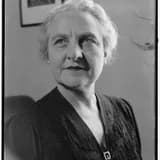
President Roosevelt signed the Nurse Training Act of 1943 (the Bolton Act), sponsored by Bolton, establishing the U.S. Cadet Nurse Corps.
On June 13, 1943, President Franklin D. Roosevelt signed the Nurse Training Act of 1943, universally known as the Bolton Act in honor of its chief sponsor, Congresswoman Frances P. Bolton. The legislation created the U.S. Cadet Nurse Corps, a program designed to address the acute wartime shortage of trained nurses by funding accelerated nursing education across the country.
The Act was groundbreaking in several respects: it provided federal funding for nursing education regardless of race, explicitly prohibiting discrimination and opening pathways for Black women to enter the nursing profession at accredited schools receiving federal funds. Over 124,000 women would ultimately enroll in the Cadet Nurse Corps by the war's end, dramatically expanding the American nursing workforce during a critical period of wartime need.
For Bolton, this was the culmination of decades of advocacy for nursing as a profession, dating back to her earlier philanthropic support of nursing education at Western Reserve University. The Bolton Act cemented her legacy as the foremost congressional champion of nursing in American history, and the Cadet Nurse Corps became a model referenced in subsequent public health workforce legislation. It remains one of the most significant pieces of health workforce legislation of the World War II era, and its emphasis on accessible, well-funded nursing education influenced nursing education policy for decades afterward.