← All women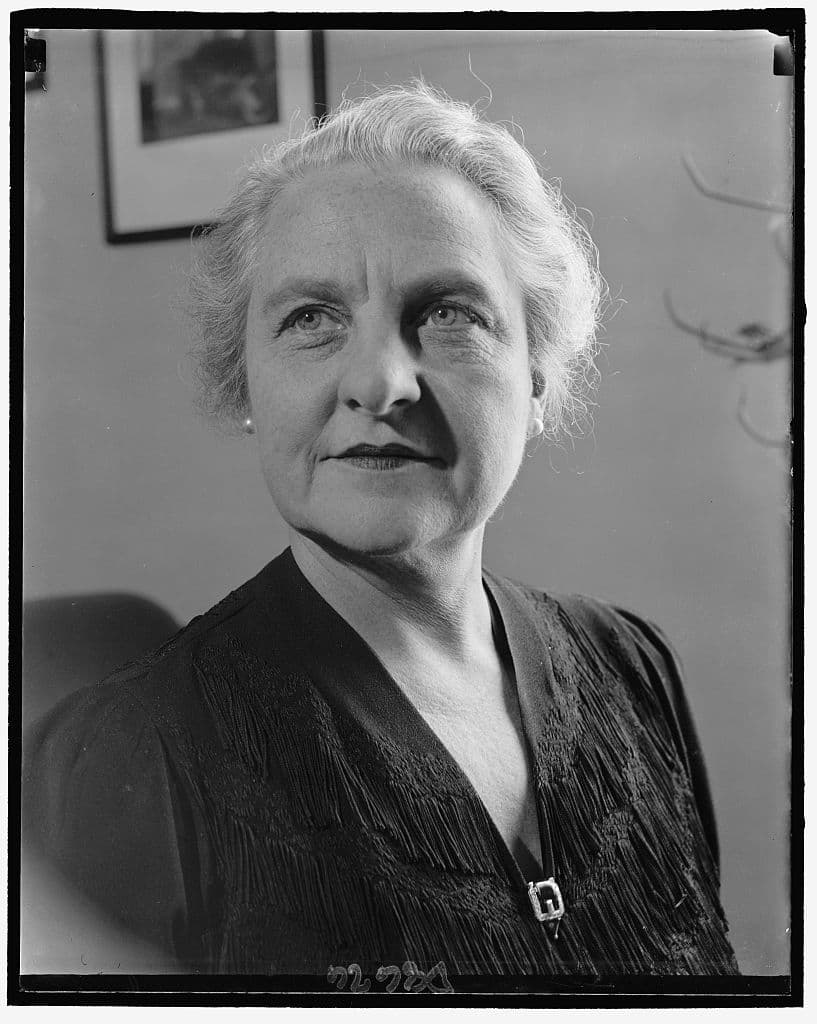
American · Politics · Medicine
Frances P Bolton
March 29, 1885 – March 2, 1977
Early Life and Background
Frances Payne Bolton (née Frances Payne Bingham) was born on March 29, 1885, in Cleveland, Ohio, into one of the city’s wealthiest and most prominent families.[1][3][7] Her father, Charles William Bingham, was a successful industrialist and civic leader, and her mother, Mary Perry Payne Bingham, belonged to the influential Payne family whose fortune was closely linked to Standard Oil.[7][9] The Binghams and Paynes were deeply involved in philanthropy and public service, shaping a family environment in which charitable giving and civic responsibility were expected.
As the fourth of five children, Frances grew up in an atmosphere of privilege but also of social obligation. The family’s patronage of hospitals, schools, and cultural institutions exposed her early to questions of public health, education, and urban reform.[3][5] Cleveland Historical notes that she was "born into a wealthy and prominent family" and that this background later facilitated her ability to fund major projects such as nursing schools.[5]
Bolton received a cosmopolitan education. She attended Hathaway Brown School in Cleveland, an elite institution for girls, before studying at Dieudonné in Bornel, Oise, France, and Miss Spence’s School in New York City.[7] This mix of American and European schooling broadened her perspective and fostered an interest in international affairs that would become central to her later congressional career. Although she did not pursue a formal university degree, her education was extensive and typical of high‑status women of the period who were prepared for social leadership rather than professional careers.
Early Philanthropy and Career Beginnings
Bolton’s public work began in philanthropy rather than formal politics. Influenced by the Progressive Era’s emphasis on social reform, she devoted particular attention to nursing and health care. During World War I, she used her political connections in Cleveland to advocate for better nursing provision in the U.S. Army, persuading Secretary of War Newton D. Baker to establish an Army School of Nursing so that the military would not rely solely on volunteers.[6] This early intervention demonstrated her belief that nursing required structured, professional training and that government should play a role in supporting it.
In 1923, Bolton made a major philanthropic contribution by donating $500,000 to Western Reserve University in Cleveland to establish a university‑based School of Nursing.[3][5] At the time, few such schools existed, and her gift enabled Western Reserve to open one of the first university nursing schools in the United States.[5] The National Women’s History Museum notes that she also provided for student scholarships and facilities, helping raise the educational standards of the profession.[3] While the exact date of the donation is not clarified in available sources, its scale and impact were substantial, and the school became a model for academic nursing education.
Bolton’s philanthropy extended beyond nursing. She supported civic and cultural organizations and became increasingly active in Republican Party politics. By the late 1930s, she had moved from being a benefactor to being a party insider, serving on the Ohio Republican State Central Committee from 1937 to 1940 and attending local and state political events.[4] This period of party service laid the groundwork for her transition into elective office.
Entry into Politics and Congressional Career
Frances Payne Bolton’s formal political career began with personal tragedy. Her husband, Chester Castle Bolton, a Republican congressman representing Ohio’s 22nd district, had served from 1929 to 1937 and again from January 1939 until his death on October 29, 1939.[7] Following his death, party leaders encouraged Frances to stand in the special election to complete his term, expecting her to serve as a temporary caretaker for the district.[8]
Bolton won the special election and officially took her seat in the U.S. House of Representatives on February 27, 1940first woman elected to Congress from Ohio, a milestone later emphasized by biographical accounts.[1][3][11] Far from being a short‑term placeholder, she quickly established herself as an independent and capable legislator. She was reelected repeatedly, eventually serving fifteen consecutive terms, with her official tenure recorded from February 27, 1940, to January 3, 1969.[7]
Bolton’s committee assignments reflected her interests in foreign affairs, defense, and health. She served on the House Committee on Foreign Affairs, where she developed expertise in international relations during World War II and the Cold War, and she engaged with issues ranging from European recovery to African decolonization.[1][12] Her long tenure made her one of the House’s most experienced women members, and she was often referred to as "the gentlewoman from Ohio" in contemporary accounts.[11]
Major Legislative Achievements: Nursing and Public Health
Bolton’s most celebrated legislative achievement is the Bolton Act, formally the Nurse Training Act of 1943. As the United States faced acute nursing shortages during World War II, she drew on her longstanding commitment to nursing to craft a federal response.[3][5][8] The act, which she sponsored in Congress in 1943, provided for a new program—the U.S. Cadet Nurse Corps.
On June 13, 1943, President Franklin D. Roosevelt signed the Bolton Act into law.[6] The act authorized federal funds for nursing schools and student stipends in exchange for the nurses’ commitment to serve for the duration of the war in military or essential civilian service.[6] Bolton insisted on a provision that the corps be funded "without regard to race or ethnicity," a clause highlighted by later commentators as an unusual and progressive requirement in the early 1940s.[8] National Women’s History Museum and regional histories credit the Cadet Nurse Corps with training tens of thousands of nurses—often estimated at more than 100,000—and sustaining both military and civilian health systems during the war.[3][5]
The Bolton Act had lasting consequences. It raised the profile of nursing as a profession, expanded educational infrastructure, and created pathways for minority women to enter nursing schools that had previously excluded them. Bolton’s leadership demonstrated that a woman legislator could shape national defense policy and civil rights within the framework of health care, challenging gendered assumptions about what issues women in Congress might handle.[3][5][8]
Foreign Policy, Africa, and the United Nations
Beyond nursing, Bolton was deeply engaged in foreign policy. During and after World War II, she took part in numerous congressional study missions abroad. In 1947, she became the first woman member of Congress to lead a congressional delegation abroad, heading an official mission to the Middle East.[3][6] That same year, she also became the first woman member of Congress to represent the United States in the United Nations General Assembly
Bolton continued to deepen her role in international diplomacy. In 1953, President Dwight D. Eisenhower appointed her as a congressional delegate to the U.N. General Assembly, making her the first woman to hold that specific appointment.[4][6][8] She helped shape U.S. policy positions in the General Assembly during the early Cold War, focusing on issues of collective security and development. Her special interest in Africa became particularly visible in the mid‑1950s. A detailed study in African Studies Quarterly describes how, in 1955, Bolton organized and personally financed a wide‑ranging fact‑finding trip to Africa, becoming the first American woman member of Congress to head an international delegation
Bolton’s foreign policy work challenged prevailing gender norms by placing a woman at the center of high‑stakes diplomatic travel and global strategy. She argued that understanding Africa and the Middle East was vital to American security and ethical responsibility, and she pressed for more nuanced engagement with African independence movements.[12] Bolton also made a mark in conservation and preservation. In 1955, she purchased the 500‑acre Bliss farm in Accokeek, Maryland, located across the Potomac River from George Washington’s Mount Vernon estate.[3] Concerned that commercial development would degrade the historic viewshed from Mount Vernon, she bought the land to preserve the rural landscape and protect the vista George Washington had known. The Accokeek Foundation, which later developed the property as a conservation and education site, credits Bolton’s foresight and personal investment with saving the area from intensive development.[3] This act of private conservation mirrored her broader approach: using personal wealth to preserve public goods, whether nursing facilities or historic landscapes. It also dovetailed with mid‑20th‑century movements to protect historic sites and natural environments, placing her among the early advocates for viewshed preservation as an aspect of heritage protection. While Bolton was a conservative Republican on many issues, she developed a reputation as a supporter of civil rights for African Americans. The Bolton Act’s nondiscrimination clause is one example of her willingness to integrate race equality into major legislation.[3][8] Biographical accounts emphasize that she advocated for changes in law to improve the status of minorities and supported measures that expanded opportunities in education and health care.[3][11] Her voting record included support for several civil rights measures, and she was seen by some contemporaries as a leading Republican voice for fair treatment of African Americans in the health sector and beyond.[3][8] At the same time, like many politicians of her era, she navigated the complexities of party politics and regional tensions, and her stance did not always align with more radical calls for change. Bolton’s contributions were acknowledged in various institutional honors. In 1935, Western Reserve University’s School of Nursing, which she had funded in 1923, was renamed in her honor, becoming the Frances Payne Bolton School of Nursing.[5][6] This renaming recognized not only her initial donation but also her continued advocacy for nursing education. The school, now part of Case Western Reserve University, remains one of the leading nursing schools in the United States and carries her name into the present. Within political circles, Bolton was recognized as a trailblazer. She served as a delegate to the Republican National Conventions in 1956, 1960, 1964, and 1968, reflecting her status as a senior figure in the party.[4] She was also invited to attend congressional leadership meetings at the White House, reportedly becoming the first congresswoman to participate in such high‑level gatherings.[11] These roles demonstrated that her male colleagues regarded her as a serious player in national politics. Though specific award dates are less documented in the provided sources, regional histories and institutional biographies consistently describe her as a humanitarian, philanthropist, politician, and patriot, and they emphasize the lasting institutional footprints of her work in nursing and preservation.[3][5][9] Frances Payne Bingham married Chester Castle Bolton on September 14, 1907.[7] Chester, himself from a prominent Ohio family, pursued a career in business and politics, eventually serving in the U.S. House of Representatives. Together, the couple had three sons: Charles Bingham Bolton, Kenyon Castle Bolton, and Oliver Payne Bolton
The Bolton household reflected the intertwining of wealth, politics, and public service. Frances managed family responsibilities while engaging in philanthropy, and as Chester’s political career advanced, she became familiar with legislative life and Washington culture.[7] After Chester’s death, her decision to stand for his seat and then to develop her own independent agenda underscored her determination to move beyond the traditional role of political wife. A particularly notable aspect of her personal and political life was her relationship with her son Oliver. Oliver Payne Bolton served as a Republican member of the House from 1953 to 1957 and again from 1963 to 1965.[8] For a period, mother and son served simultaneously in the House, an arrangement Politico notes remains unique in congressional history.[8] Their overlapping service symbolized the familial nature of American political dynasties but also highlighted Frances’s unusual position as both a matriarch and a colleague in the same institution. By the late 1960s, Bolton’s long tenure faced new challenges. Redistricting in Ohio altered the boundaries of her congressional district ahead of the 1968 election.[4][7] Running in a changed political landscape, she was defeated in the general election, ending her service in the House effective January 3, 1969.[4][7] She was 83 years old at the time, making her one of the oldest serving members of Congress. After leaving office, Bolton returned to her Franchester estate near Cleveland and continued to support charitable and educational causes, though at a reduced level of activity.[5][9] Regional histories describe her as maintaining her interest in nursing and civic affairs while living a more private life.[5] Bolton died in Lyndhurst, Ohio, in March 1977 at the age of 91.[3][7][8] There is a documented conflict regarding the exact date of her death. The National Women’s History Museum states that she died on March 2, 1977, while Encyclopedia.com and Politico’s "This Day in Politics" column report March 9, 1977
Frances Payne Bolton’s legacy spans nursing, public health, foreign policy, civil rights, and women’s political representation. Her early philanthropy helped establish one of the first university‑based nursing schools in the United States and raised the status of nursing as a profession.[3][5] Through the Bolton Act and the U.S. Cadet Nurse Corps, she played a decisive role in meeting wartime medical needs and in opening pathways for women—including Black women and other minorities—into professional nursing.[3][5][8] In Congress, Bolton broke barriers as the first woman elected from Ohio, one of the longest‑serving women representatives of her era, and the first woman member of Congress to lead and later to head an international delegation and to serve as a congressional delegate to the United Nations General Assembly.[1][3][4][6][11][12] Her work on the House Foreign Affairs Committee and her extensive travel in Africa and the Middle East contributed to U.S. understanding of decolonization and Cold War dynamics, even though her contributions have been relatively neglected in mainstream diplomatic histories.[12] Bolton also stands out as a bridge figure in women’s political history. She entered office through a widows’ succession, a common path for women of her generation, but she transformed that opportunity into a long, substantive career. Her independence, policy expertise, and leadership roles challenged stereotypes about women in politics and helped normalize their presence in foreign policy and defense discussions.[1][3] Institutionally, her name endures most visibly at the Frances Payne Bolton School of Nursing at Case Western Reserve University, which continues to train nurses and conduct research in health care.[5] The Accokeek Foundation’s preserved landscape across from Mount Vernon also bears the imprint of her conservation efforts.[3] In Cleveland historical memory, she is remembered as a humanitarian and patriot who used wealth and office to advance education, health, and international understanding.[5][9] For women’s‑history researchers, Bolton’s life illustrates both the possibilities and limitations of women’s political power in mid‑20th‑century America. She operated within a Republican establishment and a family dynasty, yet she carved out distinct priorities—nursing, Africa, civil rights—that left a measurable imprint on public policy. Her story underscores the importance of examining women legislators not only as symbolic firsts but as substantive policymakers whose work influenced national and international developments.Environmental and Cultural Preservation
Civil Rights and Domestic Policy
Awards, Honors, and Recognition
Personal Life
Later Life, Electoral Defeat, and Death
Legacy and Historical Impact
Dated achievements
4 indexed.
- Mar291885Science
Birth of Frances Payne Bolton
Frances Payne Bolton was born in Cleveland-area New York City family, later becoming a pioneering U.S. Representative from Ohio and champion of nursing.
View details Frances Bolton - National Women's History Museum - Feb271940Politics
First woman elected to Congress from Ohio
Bolton began her U.S. House service representing Ohio's 22nd district, becoming the first woman elected to Congress from Ohio.