← All women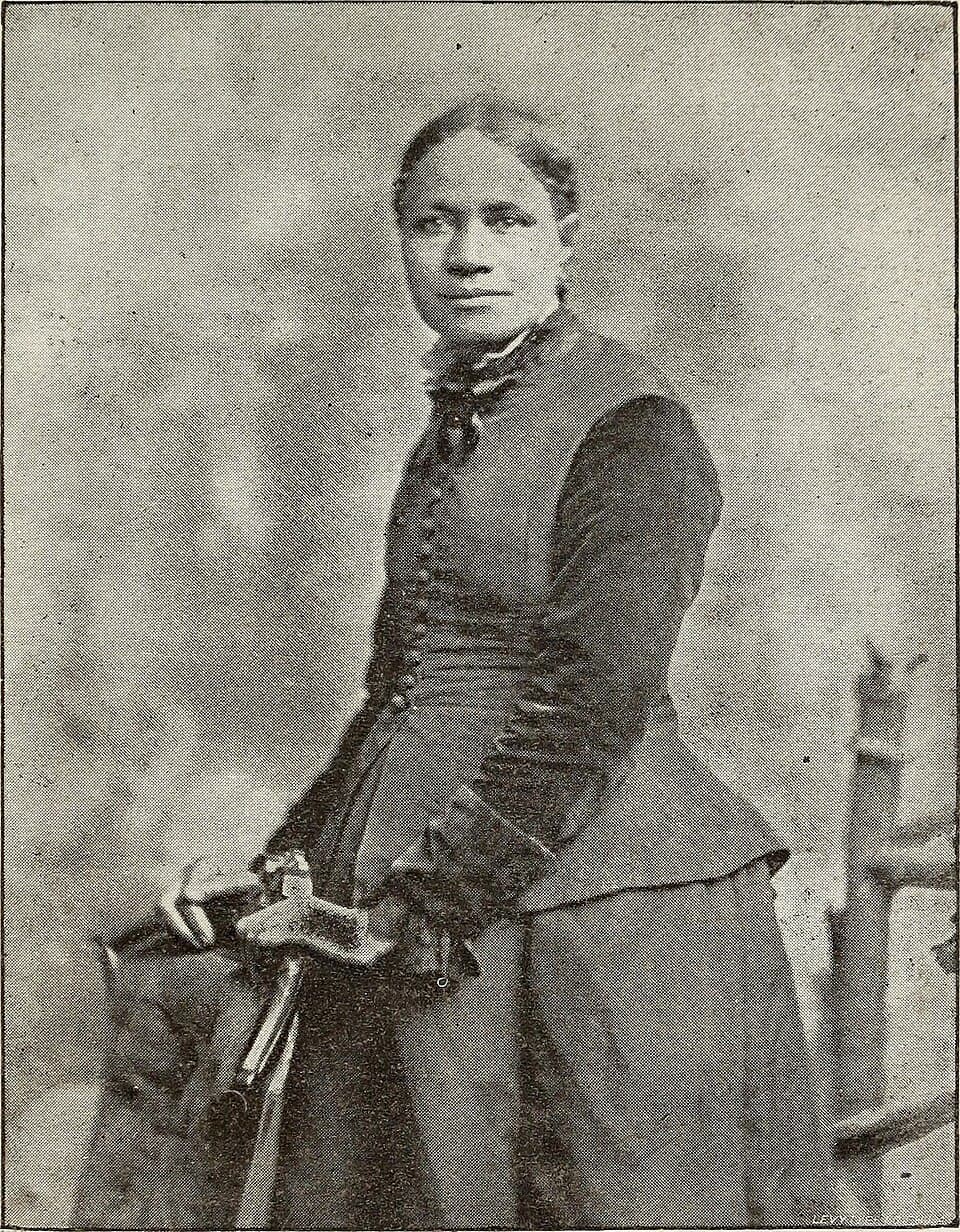
American · Activism · Literature
Frances Ellen Watkins Harper
September 24, 1825 – February 22, 1911
Early life and family background
Frances Ellen Watkins Harper was born on September 24, 1825, in Baltimore, Maryland, to free Black parents. She was born in a slaveholding state, but into a family that belonged to Baltimore’s free Black community, a position that gave her both relative legal freedom and intimate proximity to the violence of slavery and racial exclusion. Her mother died when Harper was still young, and she was raised by relatives, most notably her uncle William Watkins, a minister, educator, and antislavery activist who operated a school for free Black children. That environment deeply shaped her intellectual formation and political commitments.
Harper received early schooling and then continued to educate herself while working as a domestic and seamstress laborer. Like many free Black women of her generation, she had to combine education with wage work because opportunities for formal schooling and advancement were restricted by race, gender, and class. These early years were important not only because they built her discipline as a writer, but because they gave her firsthand knowledge of the economic vulnerability that Black women faced in the nineteenth century.
By the late 1830s, Harper was already writing, and early pieces appeared in antislavery publications. Her literary development emerged directly from reform culture: the same world that encouraged Black education also demanded Black testimony against slavery and racial oppression. Her early life therefore established the two great constants of her career: literary expression and public reform.
Early writing and rise as a poet
Harper’s first volume of verse, Forest Leaves (also known as Autumn Leaves), appeared in the 1840s. The exact publication date is not securely documented, but the pamphlet is now recognized as an early African American literary achievement. It is significant that Harper entered print at a time when very few Black women had published books at all. Her emergence as a poet was therefore both artistic and political: she was claiming a public voice in a society that routinely denied Black women authority.
Her major breakthrough came with Poems on Miscellaneous Subjects, published in 1854. The collection was commercially successful and made Harper the most popular African American poet before Paul Laurence Dunbar. Her poetry combined religious imagery, antislavery conviction, moral reflection, and emotional directness. She wrote about slavery, motherhood, freedom, temperance, Christian duty, and the obligations of citizenship. The work circulated widely in abolitionist and reform networks, helping establish her national reputation.
Harper’s poetry mattered because it demonstrated that literary excellence and political engagement could coexist. She was not merely recording events; she was arguing for a different moral and social order. Her poetry offered a language for Black grief, Black endurance, and Black aspiration at a moment when such expression had limited public space.
Teacher, lecturer, and abolitionist
In 1850, Harper became the first female teacher at Union Seminary in Columbus, Ohio, where she taught sewing. This was a meaningful professional milestone in a period when Black women were largely excluded from respected educational roles. Her appointment reflected both her own abilities and the commitment of antislavery reformers who recognized the importance of Black education. It also helped move her from local self-support into a wider public role.
After this teaching post, Harper devoted herself more fully to antislavery work. She lectured for antislavery organizations in northern states and southeastern Canada and became a widely known public speaker. In an era when women’s public speaking was often criticized, and Black women’s public authority even more so, Harper’s lecture career was itself a form of barrier-breaking activism. She used the platform to speak about slavery, freedom, education, and the moral responsibilities of the nation.
She also assisted fugitive enslaved people through Underground Railroad networks, working in collaboration with other antislavery activists. Her activism was not limited to rhetorical support; it was practical, risky, and rooted in the urgency of slavery’s human consequences. Harper’s career in this period shows how Black women’s reform work linked literature, education, and direct action.
Marriage, widowhood, and renewed public work
Harper married Fenton Harper in 1860. Their daughter, Mary, was born during the marriage. Harper’s personal life was marked by loss when Fenton Harper died in 1864. Following his death, she and her daughter returned to Philadelphia, where she resumed and expanded her public speaking and writing career. Widowhood, for Harper, did not signal retreat; instead, it opened another phase of activism and authorship.
After the Civil War, Harper traveled throughout the South, speaking on education, civil rights, temperance, domestic reform, and anti-lynching efforts. Reconstruction and its aftermath intensified the struggles she addressed: the legal end of slavery did not produce equality, and violence against Black communities remained widespread. Harper’s speeches and writings from this period show her attentiveness to the unfinished work of emancipation.
In 1870, Harper occupied the Philadelphia rowhouse now known as the Frances Ellen Watkins Harper House, and in 1871 she made Philadelphia her permanent home. That residence became associated with the later phase of her career, when she continued to write and lecture on national social issues. Her home life and public life were intertwined: she worked as both a mother and an intellectual laborer at a time when Black women were often denied stable access to either domestic security or professional status.
Fiction, Reconstruction, and Black women’s writing
Harper’s fiction expanded her literary significance. Her short story The Two Offers, published in 1859, is widely regarded as the first short story published by an African American woman. The work matters because it showed that Black women writers could participate in forms of fiction traditionally dominated by white authors while bringing their own social concerns into the genre. It addressed women’s choices and the pressures of respectable womanhood, linking private life to public inequality.
Between 1868 and 1888, three of Harper’s novels—Minnie's Sacrifice, Sowing and Reaping, and Trial and Triumph—were serialized in a Christian magazine. Serialization allowed her to reach readers over time and to place Black women’s moral and social concerns inside a popular religious print culture. In 1872, she published Sketches of Southern Life, a poetry volume that introduced the character Aunt Chloe and offered one of her most memorable literary portrayals of Reconstruction-era Black Southern life.
Her most famous novel, Iola Leroy, or Shadows Uplifted, appeared in 1892. It made her one of the first African American women to publish a novel and remains one of the most important nineteenth-century Black women’s novels. The book examines slavery, racial passing, education, labor, and Black women’s moral leadership. It is especially notable for its insistence that freedom required more than emancipation: it required institutions, knowledge, and collective political will.
Temperance, women’s rights, and organizational leadership
Harper’s reform career extended well beyond abolition. She became active in the temperance movement, believing that alcohol contributed to the social and economic weakening of Black communities. She also became one of the most prominent Black women advocates for women’s suffrage and broader civil rights. Her activism placed her within organizations that were often divided by race and gender, and she worked continuously to ensure that Black women’s needs were not sidelined.
She was associated with the American Equal Suffrage Association and later worked with the American Woman Suffrage Association. She also held leadership roles in Black women’s and Christian institutions, including service as co-founder and vice president of the National Association of Colored Women’s Clubs. Her participation in the founding era of that organization in 1896 is especially significant because it reflected the late nineteenth-century movement to unify Black women’s club activity into a national force for racial uplift, education, and civic reform.
In addition, Harper served as superintendent of the Colored Sections of the Philadelphia and Pennsylvania Women’s Christian Temperance Unions and as director of the American Association of Colored Youth. These positions show how deeply involved she was in organizational life. She was not only a writer about reform; she was an architect of reform institutions.
Literary significance and public reputation
During her lifetime, Harper was widely known as “the Bronze Muse” and was regarded as a household name in nineteenth-century Black print culture. Her reputation rested on the breadth of her output: poetry, fiction, essays, lectures, and reform writing. She was one of the most studied African American women writers in print scholarship and one of the most important literary figures of her century.
What distinguishes Harper is the way she used literature as a public instrument. She wrote not as a detached observer but as a participant in the moral and political conflicts of her age. Her work addressed slavery, racial violence, women’s rights, education, labor, temperance, and family life. She gave artistic form to Black experience while also insisting on the intellectual seriousness of Black women’s thought.
Her importance has grown in modern scholarship because her career illuminates the intersection of race, gender, and citizenship in nineteenth-century America. She helped define the possibilities of Black women’s authorship and public leadership at a time when both remained exceptional.
Later life and death
In her later years, Harper continued to write and speak, though her public appearances became less frequent as she aged. She remained in Philadelphia and continued to be associated with reform work and literary production. Even after the great period of abolitionist struggle had passed, she kept attention on the unfinished promises of freedom, especially for Black women and children.
Harper died in Philadelphia on February 22, 1911, from heart failure. Her death marked the end of an extraordinarily long public career that had begun in the age of slavery and extended into the early twentieth century. She left behind a body of work that is central to the history of African American literature and women’s activism.
Legacy
Frances Ellen Watkins Harper’s legacy is broad and enduring. She is remembered as a poet, novelist, lecturer, abolitionist, suffragist, temperance advocate, educator, and organizer. She broke ground as one of the first African American women to publish fiction and as the author of the first short story published by a Black woman. Her writing preserved the voice of a Black woman intellectual who insisted that literature could be a means of public action.
Her influence is visible in the later traditions of Black feminist literature and activism. She helped create a model of the writer as reformer and the reformer as writer. In both her life and work, she challenged the barriers that constrained Black women in nineteenth-century America, and she did so with sustained intelligence, moral force, and literary skill.
Dated achievements
6 indexed.
- Sep241825Literature
Born in Baltimore, Maryland
Frances Ellen Watkins was born free in Baltimore, Maryland, to free Black parents, on September 24, 1825.
View details Frances Ellen Watkins Harper - Wikipedia - Jan011850Literature
First Female Teacher at Union Seminary, Ohio
Harper became the first female teacher at Union Seminary in Columbus, Ohio, teaching sewing to students.