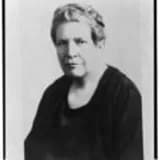
Kelley's Chicago slum wage-and-ethnicity survey helped anchor the pioneering sociological study Hull-House Maps and Papers.
Issued in book form around March 1, 1895, Hull-House Maps and Papers compiled detailed color-coded maps and statistical surveys documenting the wages, nationalities, and living conditions of residents in Chicago's near West Side slums, the neighborhood surrounding Hull-House.
Florence Kelley, then a resident of Hull-House and a special agent for the U.S. Bureau of Labor, contributed core data from her wage and ethnicity census conducted amid the 1893 World's Columbian Exposition. Her rigorous methodology—going door to door to record occupation, income, ethnicity, and living conditions—helped establish the survey as a serious tool for social investigation rather than mere anecdote or moralizing.
The volume is widely regarded as one of the founding texts of American urban sociology and the settlement house movement's empirical wing, predating and influencing later efforts such as W.E.B. Du Bois's The Philadelphia Negro. It demonstrated how hard data could be marshaled to support legislative reform, a technique Kelley would use throughout her career, notably later in the Brandeis Brief for Muller v. Oregon.
The book cemented Hull-House, and Kelley in particular, as intellectual leaders in translating grassroots social investigation into actionable public policy.