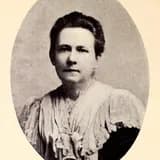
Florence Howe Hall died on April 10, 1922, in High Bridge, New Jersey, closing a lifetime of suffrage activism and literary work.
On April 10, 1922, Florence Howe Hall died in High Bridge, New Jersey, the small Hunterdon County town where she had made her home in her later years and to which she remained locally attached, as documented in regional histories of the area.
By the time of her death, Hall had built a substantial legacy independent of her famous parents. She had served for eight years as president of the New Jersey Woman Suffrage Association, helping to organize and sustain the movement for women's voting rights in the state during a critical period leading up to the ratification of the Nineteenth Amendment in 1920 — meaning she lived to see the culmination of the cause to which she had devoted so much of her public life. She also served as vice-president of the General Federation of Women's Clubs, one of the era's most influential networks of women's civic organizations.
Hall was additionally known as an author, having written etiquette manuals, memoirs including Memories Grave and Gay (1901), and a tribute to her mother's most famous work, The Story of the Battle Hymn of the Republic (1916). Her death marked the passing of one of the last direct links to the Boston reform circle of her parents, Samuel Gridley Howe and Julia Ward Howe, and to the first generation of American suffragists who had witnessed the movement's victory.