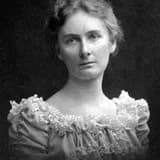
In mid-1896, Bascom was appointed assistant geologist with the USGS, becoming the first woman geologist ever hired by that agency.
In mid-1896, Florence Bascom was appointed as an assistant geologist with the United States Geological Survey (USGS), making her the first woman ever employed as a geologist by the federal agency, which had been founded in 1879. This appointment was a landmark breakthrough into governmental scientific employment, a realm that had been entirely closed to women in the geosciences.
Bascom's work with the USGS focused on the Piedmont region of the Mid-Atlantic states, where she conducted detailed field surveys and produced meticulous geological maps and folios examining crystalline rock formations, structural geology, and the physiographic history of the region. Her fieldwork often required rugged outdoor conditions that many at the time considered unsuitable or inappropriate for women, yet she conducted this work with the same rigor as her male colleagues.
Her tenure with USGS would ultimately span decades, during which she authored numerous influential folios, including surveys of the Philadelphia, Trenton, Elkton-Wilmington, Quakertown-Doylestown, and Honeybrook-Phoenixville quadrangles. Her scientific output helped establish foundational geological understanding of the Appalachian Piedmont province. Beyond her individual scientific contributions, her hiring represented a structural crack in the wall of gender exclusion within federal scientific agencies, paving the way for future generations of women geologists to find employment in government science.