← All women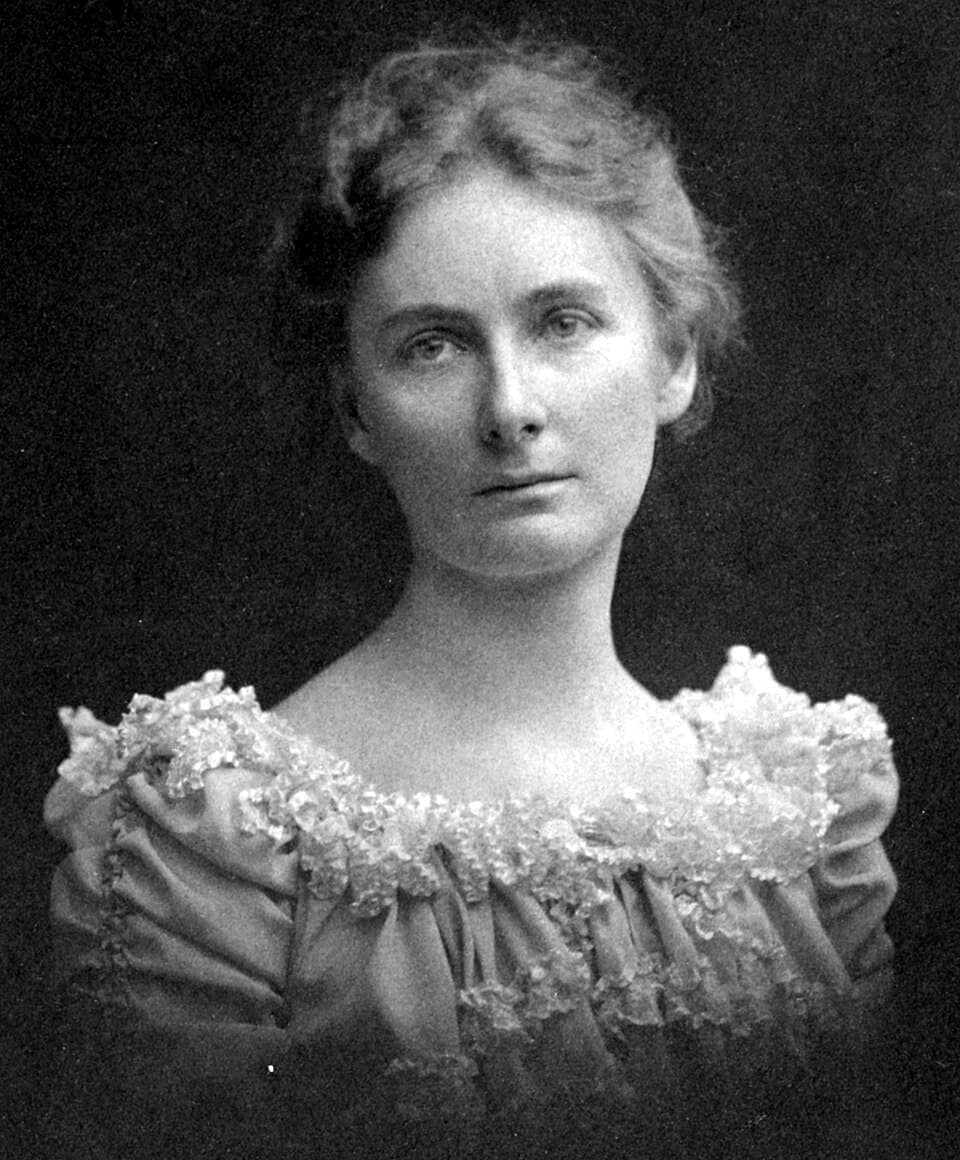
American · Science
Florence Bascom
July 14, 1862 – June 18, 1945
Early life and education
Florence Bascom was born on 14 July 1862 in Williamstown, Massachusetts, into a family that valued scholarship and public service. Her father, John Bascom, was a noted educator and later president of the University of Wisconsin, and her mother, Emma Curtiss Bascom, had been a teacher. The intellectual climate of her household mattered profoundly. Bascom grew up in an era when women were typically steered away from advanced scientific work, but her family environment supported education and helped make a scholarly career imaginable.
Bascom attended the University of Wisconsin, where she completed undergraduate study and pursued graduate work in geology. Sources consistently note her early academic strength and the depth of her scientific training there. She earned degrees in the 1880s and became increasingly committed to the study of earth science, especially petrology and the geologic history of the Appalachian region. In an age when women were still limited in access to laboratories, fieldwork, and advanced degrees, Bascom’s academic progress was itself an act of determination.
Her formal training continued at Johns Hopkins University, one of the most prestigious research universities in the United States. Johns Hopkins was not a welcoming place for women in advanced science, but Bascom persisted. She worked under leading geologists and developed the technical and observational skills that would define her later career. On 13 June 1893, she received her Ph.D. in geology, becoming the first woman to earn a degree from Johns Hopkins and the second woman in the United States to earn a doctorate in geology. That achievement gave her rare authority in a profession that remained overwhelmingly male.
Early career and the building of a scientific path
Bascom’s early teaching career began in the 1890s, including appointments at Ohio State University and later at Bryn Mawr College. Her work in higher education showed that she was not only a researcher, but also a gifted teacher and institution-builder. She understood that the future of women in geology depended on more than individual talent; it required departments, mentors, field training, and professional expectations that women could access on equal terms.
In 1895, Bascom founded the geology department at Bryn Mawr College. This was a landmark in women’s education, because it created the first dedicated geology department at a women’s college in the United States. Bryn Mawr became one of the most important training grounds for women geologists in the early twentieth century, in large part because Bascom insisted on rigorous standards and real scientific preparation. She mentored many women who later became professionals in geology and related earth sciences.
The following year, in 1896, Bascom broke another barrier when the U.S. Geological Survey hired her as an assistant geologist. She became the first woman ever appointed as a geologist by the agency. At a time when federal science was deeply male-dominated, this was an extraordinary step. Bascom spent years studying the crystalline rocks and structural geology of the Piedmont region in Maryland, Pennsylvania, and New Jersey. Her mapping and interpretation helped refine geological understanding of the Mid-Atlantic region and became durable scientific resources.
Professional recognition and leadership
Bascom’s standing in the profession grew steadily. By 1894, she had become the second woman elected to the Geological Society of America, a notable sign that her peers recognized her authority. She also became the first woman to present a paper before the Geological Society of Washington in 1901, reinforcing her public visibility as a scientific expert. These milestones mattered because societies and meetings were central to the production of scientific reputation. For a woman to speak and vote in these spaces was still unusual at the turn of the century.
In 1906, Bascom was listed among the 100 most influential scientists in American Men of Science, a publication whose title itself reflected the gender assumptions of the period. Her inclusion signaled that her work had entered the mainstream of American scientific life. That same year she became a full professor of geology at Bryn Mawr College, cementing her dual identity as an educator and a research geologist.
Bascom’s scientific reputation was also tied to her cartographic and field-based work for the U.S. Geological Survey. She published important folios on the geology of the Philadelphia and Trenton quadrangles in 1909, followed by the Elkton–Wilmington folio in 1920, the Quakertown–Doylestown folio in 1931, and the Honeybrook–Phoenixville folio in 1938. These studies helped establish the geological framework of the Mid-Atlantic Piedmont and remained valuable to later researchers.
In 1919, she published The Geology of Mount Desert Island, becoming the first professional female geologist to survey that area in what later became Acadia National Park. The work extended her influence beyond the Piedmont and into the geologic history of coastal Maine. It also connected her name to an enduring national landscape, showing the breadth of her scientific range.
Bascom’s leadership within scientific societies reached a new level on 29 December 1924, when she was elected to the Geological Society of America Council. She was the first woman to serve on the council and the first woman elected as a GSA officer. In 1930, she went on to become vice president of the society, another first for a woman in GSA leadership. These honors were historically important because they represented not only inclusion, but governance: Bascom helped shape the profession itself.
Teaching, mentorship, and women in science
Bascom’s teaching career at Bryn Mawr lasted for decades and was central to her legacy. From the beginning, she treated women’s scientific education as a serious professional mission. She trained students in field methods, petrography, and structural interpretation, and she helped normalize the idea that women could become geologists rather than merely assistants or amateurs. She was known for demanding standards and for preparing students for real scientific careers.
That mentorship role is one of the most important reasons Bascom is remembered today. She helped train the majority of women geologists in the United States during the early twentieth century, according to Smithsonian archival material. Her influence therefore extended far beyond her own publications. Through her students, she altered the demographic future of geology and created a lineage of women scientists whose opportunities were directly connected to the academic structures she built.
Personal life
Bascom never married and did not have children. Her life was instead organized around scholarship, teaching, field research, and institutional service. In the historical context of the late nineteenth and early twentieth centuries, that choice was itself noteworthy. Women scientists often faced strong social pressure to choose domestic life over professional ambition, and Bascom’s career represented a deliberate and successful commitment to science as a full vocation.
Her work ethic and professional identity were deeply intertwined. Rather than presenting herself primarily through private domestic roles, she became one of the most visible women in American geology. That visibility mattered, because it showed younger women that a serious intellectual life was possible outside conventional expectations.
Later life, honors, and death
Bascom continued to be recognized late in life for her contributions to geology. She remained active in scientific circles for decades and was honored during her lifetime as one of the field’s most respected figures. Her election to GSA leadership, her teaching record, and her federal research work made her a singular presence in American science.
She died on 18 June 1945 in Northampton, Massachusetts, at the age of 82. Her death closed a career that had lasted through a period of profound change in American higher education, scientific professionalism, and women’s access to expert roles. By the end of her life, Bascom had become widely recognized as the first American woman geologist.
Legacy
Florence Bascom’s legacy rests on both scientific achievement and institutional change. She was a pioneer in the study of the Appalachian Piedmont, a major figure in U.S. Geological Survey mapping, and an important contributor to the development of modern geology in the United States. Her fieldwork helped clarify the structure and composition of rocks in the Mid-Atlantic region, and her publications remained useful long after their initial appearance.
Equally important, Bascom changed the professional landscape for women. She became the first woman to earn a degree from Johns Hopkins, the first woman geologist hired by the U.S. Geological Survey, the first woman to present before the Geological Society of Washington, the first woman elected to the Geological Society of America Council, and the first woman vice president of GSA. Each of those firsts was a barrier crossed in an era when women in science were still expected to remain on the margins.
Her greatest legacy may be the infrastructure of opportunity she built for others. By founding the geology department at Bryn Mawr College and training generations of women geologists, she made sure that her own breakthroughs became pathways for others. That combination of research excellence, institutional leadership, and mentorship is why Florence Bascom remains one of the central figures in the history of women in science.
Dated achievements
11 indexed.
- Jul141862Science
Birth of Florence Bascom
Florence Bascom was born in Williamstown, Massachusetts; she would become widely regarded as the first American woman geologist.
View details Britannica: Florence Bascom - Jun131893Science
First woman to receive a degree from Johns Hopkins University
Bascom earned her Ph.D. in geology from Johns Hopkins on June 13, 1893, becoming the first woman to receive any degree from the university.