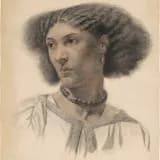
Simeon Solomon's painting The Mother of Moses, believed to feature Fanny Eaton, was exhibited at the Royal Academy on 28 April 1860 — her clearest documented public debut.
On 28 April 1860, the Royal Academy of Arts in London opened its annual Summer Exhibition, which included The Mother of Moses by the young painter Simeon Solomon. The painting is widely identified by art historians as featuring Fanny Eaton as its central figure, marking what is considered her earliest clearly documented public appearance as a professional artist's model within the Pre-Raphaelite circle.
This event is historically significant because it represents a rare instance in which a Black woman was not merely a marginal or anonymous figure in Victorian art, but the deliberate subject of a biblical narrative painting shown to the fashionable London art-viewing public at the era's most prestigious annual exhibition. At a time when Black models in British fine art were almost always relegated to allegorical, exoticized, or servant roles, Solomon's choice to cast Eaton as the mother of the prophet Moses was a striking artistic statement.
The exhibition of this work helped establish Eaton's reputation among London artists and likely contributed to the subsequent stream of modeling commissions she received throughout the 1860s from painters associated with the Pre-Raphaelite movement, including Dante Gabriel Rossetti and John Everett Millais's circle. Solomon's painting, and its public unveiling on this date, remains one of the few precisely dateable milestones in Eaton's career and is central to recent scholarly reassessments of her role in Victorian art history.