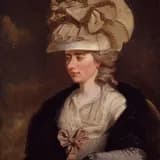
On her 15th birthday, Fanny Burney burned the manuscript of her first novel, 'The History of Caroline Evelyn,' and other early writings.
On her fifteenth birthday, 13 June 1767, Fanny Burney made the dramatic decision to burn the manuscript of her first novel, The History of Caroline Evelyn, along with numerous other early writings including diaries, poems, and stories. The bonfire took place in the paved play-court of her father's house on Poland Street, London.
This act was reportedly driven by a complex mixture of adolescent guilt and social anxiety. In an era when female authorship was viewed with suspicion and often considered unbecoming for a respectable young woman, Burney had internalized warnings—possibly from her stepmother—that writing fiction was an improper pursuit for a lady. She is said to have wept as she watched her pages burn, a poignant testament to the emotional weight of the sacrifice.
Remarkably, this act of self-censorship did not extinguish her literary ambitions. Burney continued to write secretly, and the story of Caroline Evelyn survived in her memory, eventually forming the backstory for her breakthrough novel Evelina, published just over a decade later in 1778, in which the heroine is revealed to be the daughter of the tragic Caroline Evelyn.
This episode is significant not merely as biographical color but as an early illustration of the tensions faced by women writers of the period, who often had to reconcile creative ambition with social expectations of feminine modesty. Burney's resilience in returning to writing despite this dramatic renunciation foreshadowed her eventual triumph as one of the era's most celebrated novelists.