← All women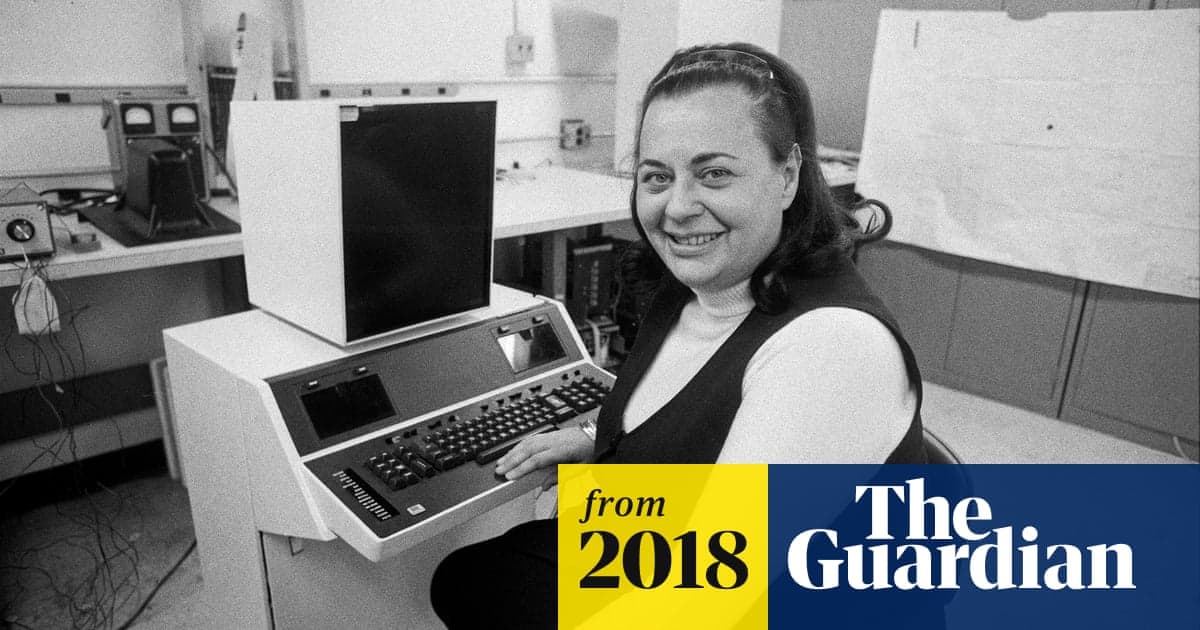
United States · Science · Aviation
Evelyn Berezin
April 12, 1925 – December 8, 2018
Early Life and Background
Evelyn Berezin was born on 12 April 1925 in the Bronx, New York, the daughter of Jewish immigrants from Russia.[1][6][8] Her father, Sam Berezin, worked as a furrier, and her mother, Rose (Berman) Berezin, was a seamstress, placing the family firmly within New York’s working‑class garment world.[1][8] Growing up in East Bronx during the Great Depression, she experienced both economic hardship and the opportunities afforded by public education. Multiple accounts note that she showed early aptitude and interest in mathematics and science.[1][5]
Berezin attended Christopher Columbus High School in the Bronx.[4] At a time when few girls were encouraged toward scientific careers, she pursued advanced coursework and developed aspirations beyond the typical gendered expectations of the era. Her academic talent earned her a scholarship to New York University (NYU), where she studied physics.[1][3][9] The scholarship was critical: coming from an immigrant, working‑class family, higher education would have been difficult to access without financial support.
At NYU she completed a bachelor’s degree in physics in 1945.[1][3][9] In 1946 she received an Atomic Energy Commission fellowship for graduate study at NYU, undertaking doctoral coursework in physics, though she ultimately did not complete the PhD.[1][3] These experiences provided her with a rigorous grounding in mathematical reasoning and logic design, skills that would later underpin her pioneering work in computer systems.
Career Beginnings in Early Computing
Berezin’s entry into professional computing occurred during the infancy of the digital computer. In 1951, she joined Electronic Computer Corporation (Elecom), a Brooklyn‑based start‑up that had begun to build digital computers.[3][4] According to later accounts, as the only woman in the office she was asked to "design a computer," a challenge she accepted.[3][4][12] This episode marked the start of her career as a computer designer.
From 1951 to 1969, Berezin worked at several computer and electronics companies, designing a variety of special‑purpose systems.[3][5] At Elecom and later firms, she learned and applied logic design and data transmission techniques at a time when computing hardware was custom‑built and highly experimental. Her responsibilities included the design of logic circuits, memory architectures, and control systems, fields in which women were rare.
In the early 1950s she joined Underwood Corporation, a company best known for typewriters. While working there, she designed what is considered the first office computer, an early system aimed at business applications rather than purely scientific calculation.[2][9] Though surviving sources typically give only the year (1953), this project is important because it foreshadowed Berezin’s later focus on business and administrative uses for computing.
Throughout the 1950s, Berezin secured a series of U.S. patents on data processing and calculator systems. Notable filings include a "Data processing system" (US 2,913,176) in 1955, an "Arithmetic device" (US 2,943,790) and a control mechanism for an electronic calculator (US 2,973,141) in 1956, and an "Electronic data file processor" (US 3,017,610) in 1957
By the late 1950s and early 1960s, Berezin had shifted from isolated calculators to larger, integrated business systems. Sources describe her designing one of the first banking computer systems for range calculations and magazine distribution in the early 1960s, applying her expertise in data handling to automate complex commercial workflows.[5][9] A central milestone in her career was her work on airline reservations. While employed at Teleregister, Inc. between 1957 and 1961, Berezin helped develop what contemporary accounts describe as the world’s first airline reservation system, implemented for United Airlines.[5] The Computer History Museum notes that in 1962 she built a reservations system for United Airlines, one of the largest computer systems constructed at that time.[9] This real‑time transaction‑processing system allowed multiple terminals to access a centralized database of flights and bookings, dramatically increasing efficiency and reliability compared with manual methods. Berezin’s patents from this period align with these applications. A "Data processing system" (US 3,253,262, filed in 1960) later became a key reference in the National Inventors Hall of Fame’s recognition of her work on business computing systems.[1][8] Other patents defined an "Electronic calculator with dynamic recirculating storage register" (US 3,187,167, filed 1961), "On‑line data transfer apparatus" (US 3,231,865), and "Data transfer apparatus" (US 3,259,886), both filed in 1961.[8] Further patents for "Information transfer system" (1962), "Information transfer apparatus" (1963), "Electrical assemblage" (1966), and "Information signal generation apparatus" (1966 and 1969) show a sustained focus on information transfer and system reliability.[8] These inventions collectively demonstrate that Berezin was not merely writing programs but architecting entire systems for the movement, storage, and processing of information. Her United Airlines reservation system in particular stands as an early example of large‑scale, online transaction processing, a precursor to modern travel booking and other networked services.[1][4][8][9] In 1968, Berezin conceived a new application for her computing expertise: a system to simplify office typing work by allowing text to be stored and edited electronically.[2][4][12] She developed the idea of a program and machine that would permit secretaries to correct and revise documents without retyping entire pages, thus transforming clerical labor. This conceptual breakthrough laid the groundwork for what would become the Data Secretary, one of the first computerized word processors. Despite her technical accomplishments, Berezin encountered persistent gender barriers within established computer companies. She later recalled that as a woman she could not become a senior manager at a large firm, no matter how significant her contributions.[5][7] In response, she decided to create her own company where she could both design systems and direct their commercialization. In 1969, Berezin and three colleagues founded Redactron Corporation on Long Island, New York.[1][2][9][12] Redactron is widely described as the first company devoted solely to developing and selling computerized word processors. Berezin served as its president and chief executive, making her one of the earliest female founders and CEOs in the computer industry.[1][8] Redactron’s flagship product was the Data Secretary. Introduced around 1971, the machine is often characterized as the first computerized standalone word processor for business use and one of the earliest consumer products to include a microprocessor.[1][10][11][12] Built using logic and memory techniques Berezin had honed over the previous two decades, the system allowed users to input text via a keyboard, store it in electronic memory, edit it on screen or via commands, and print clean copies on demand. Berezin’s Data Secretary played a central role in the transition from typewriters to modern word processing. According to her oral history at the Computer History Museum, Redactron had delivered usable Data Secretary systems by September 1971, marking the commercial deployment of one of the first computerized standalone word processors.[4] The Guardian obituary similarly identifies the machine as the first electronic word processor tailored for secretarial tasks.[7] The system’s design prioritized office practicality. It allowed secretaries to store documents, make corrections, insert or delete text, and produce updated printouts without retyping entire pages.[2][7][8] This capability dramatically reduced the time and physical strain associated with manual typing and changed expectations about document creation and revision. The New York Times credited Berezin with building and marketing "the first true word processor," noting how it emancipated many secretaries from the "shackles" of the typewriter.[8] Redactron sold Data Secretary systems to banks, insurance firms, and other businesses, gradually building a market for office automation.[7][8] While later word‑processing products from other companies would become more widely known, historians increasingly recognize Berezin’s work as foundational. Her machine demonstrated both the technical feasibility and commercial viability of electronic text processing in everyday office environments. As founder and CEO, Berezin faced the dual challenge of pioneering a new product category and overcoming investor and customer skepticism about a woman‑led technology firm. Nevertheless, Redactron’s success established her as a significant figure in business computing and entrepreneurship.[1][5][7] After leaving Redactron in the mid‑1970s, Berezin continued to influence technology and corporate strategy. She took executive roles at companies such as Burroughs Corporation between 1976 and 1980, contributing to the development and management of computing products.[4] She also served on the boards of several public companies, including CIGNA, Koppers Co., Datapoint, and Standard Microsystems, offering guidance on technology and business issues.[3] Berezin’s board service reflected her growing stature in industry circles. As one of relatively few women with deep technical expertise and executive experience in computing, she brought a distinctive perspective to corporate governance. She also became involved with scientific institutions, serving on the Board of Directors of Brookhaven National Laboratory, a major U.S. research facility.[3][5] In addition to her industry roles, Berezin worked as a management consultant, including for Brookhaven Science Associates, and participated in advisory activities on technology policy and innovation.[5] These later‑career engagements extended her impact beyond specific products to broader questions about how computing and science should develop. Berezin’s contributions, initially little known outside specialist circles, were increasingly recognized in the 2000s and 2010s as historians revisited women’s roles in computing. She received honorary doctorates from Adelphi University and Eastern Michigan University, acknowledging her pioneering work in computer design and word processing.[3] In 2006, she was inducted into the Long Island Technology Hall of Fame, reflecting the importance of her work to the region’s technological history and to broader developments in office automation.[1] In 2011, she entered the Women in Technology International (WITI) Hall of Fame, honored for designing early computer reservation systems and the first computerized word processor.[1][5] WITI’s profile emphasized her role as a management consultant and her contributions to Brookhaven Science Associates.[5] The Computer History Museum (CHM) recognized Berezin as a Fellow in 2015, citing her early work in computer design and a lifetime of entrepreneurial activity.[1][3][11] CHM’s profile and an associated video tribute outlined her trajectory from physics student to system designer, reservation‑system architect, and word‑processing innovator. Posthumously, Berezin’s reputation continued to grow. In 2022, she was inducted into the National Inventors Hall of Fame, which highlighted her design of one of the earliest airline computer reservations systems and her founding of Redactron, "the first company exclusively engaged in manufacturing and selling" computerized standalone word processors for business use.[1][8] Contemporary essays, such as the "Women Who Built the Internet" series, have further underscored her significance as a trailblazing female technologist and entrepreneur.[5] Berezin’s professional achievements were accompanied by a personal life that, while less documented, reflects mid‑20th‑century norms and challenges. Sources note that she had a long‑term marriage and family life, though details such as her spouse’s name and any children are less consistently reported in widely accessible materials.[7][8] What is clear is that she sustained an intensive technical and executive career in an era when women’s professional ambitions were often constrained by expectations around marriage and domestic responsibilities. Accounts of her life emphasize her determination, humor, and willingness to defy gender stereotypes. Colleagues and historians describe her as forthright and pragmatic, focused on solving problems and building working systems rather than debating abstract theories.[3][9] She maintained links to the academic and research communities through board roles and consulting, suggesting a continued intellectual engagement with science and technology well into later life. Evelyn Berezin’s legacy spans several domains of computing history. She is widely recognized as a pioneer of word processing, credited by major outlets such as The New York Times with building the first true computerized word processor.[8] Her Data Secretary demonstrated that text could be treated as manipulable data, stored, edited, and reproduced electronically—an idea that underlies modern word‑processing software, email, and many forms of digital communication. Her earlier work on airline reservation systems and other transaction‑processing applications helped establish real‑time, online computing as a practical reality. The United Airlines reservation system she designed in the early 1960s was one of the largest computer systems then built and illustrated how computers could coordinate complex, distributed information flows.[4][9] This work foreshadowed the interconnected, service‑oriented computing infrastructures that now underpin travel, finance, and commerce. Berezin also stands out as a woman entrepreneur and executive in a field dominated by men. By founding and leading Redactron, she challenged assumptions about women’s roles in technology, creating a company specifically to commercialize her innovations when established firms denied her senior positions.[5][7][8] Her story has become a touchstone in discussions of gender and entrepreneurship in STEM, demonstrating both the barriers women faced and the possibilities they created through independent ventures. Institutional recognitions—WITI, CHM, regional halls of fame, and the National Inventors Hall of Fame—have increasingly framed her as a central figure in the history of business computing and office technology.[1][3][5] Scholars and advocates for women in tech cite her as an example of how many foundational contributions by women were overlooked in mainstream narratives but are now being recovered. Berezin remained engaged with technology and corporate governance into her later years, serving on boards, consulting, and participating in oral history projects that documented early computing. The Computer History Museum recorded an extensive oral history with her, where she reflected on her education, career, and the evolution of computer systems.[3][9] On 8 December 2018, Evelyn Berezin died in Manhattan, New York, at the age of 93, from lymphoma.[6][8] Obituaries in The Guardian, The New York Times, and other outlets celebrated her as the "pioneering inventor" of the Data Secretary and noted her role in building airline reservation systems and office computers.[7][8] These tributes also stressed the gendered context of her career, describing a woman who had carved out leadership roles despite systemic barriers. Following her death, additional articles, blog posts, and institutional profiles continued to reassess her importance. A 2024 entry in the "Women Who Built the Internet" blog series, for example, argued that we might "still be using a typewriter" without Berezin’s contributions, highlighting the centrality of her work to modern text handling.[5] Her posthumous induction into the National Inventors Hall of Fame in 2022 further solidified her standing in the pantheon of significant American inventors.[1] Today, Evelyn Berezin is remembered as a visionary engineer and entrepreneur whose inventions helped create the digital office: she transformed how text is produced and managed, demonstrated the power of large‑scale reservation systems, and proved that women could lead innovative technology companies. Her life story continues to inspire efforts to document and honor the contributions of women in the early decades of computing.Transition to Large‑Scale Business Systems
Conception of the Word Processor and Founding Redactron
Data Secretary and the Word‑Processing Revolution
Later Career and Corporate Governance
Awards, Honors, and Recognition
Personal Life
Legacy and Historical Impact
Later Life and Death
Dated achievements
19 indexed.
- Apr121925Science
Birth of Evelyn Berezin
Evelyn Berezin was born in the Bronx, New York, to Russian immigrant parents.
View details Evelyn Berezin obituary - Mar301955Science
Patent Filing: Data Processing System (US 2,913,176)
Berezin filed a U.S. patent for a 'Data processing system,' one of her earliest data-processing inventions.