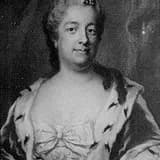
Death of Eva Ekeblad in Lidköping, Sweden, aged 61.
On 15 May 1786, Eva Ekeblad died in Lidköping, Sweden, at the age of 61.[1][2][7][9][10] She spent much of her later life managing family estates and fulfilling aristocratic duties, while her earlier scientific work continued to circulate in summaries of the Royal Swedish Academy of Sciences and in agrarian practice.
Her death marked the end of a life that bridged noble household management and Enlightenment science. Although she did not publish books, her 1746 potato experiments, 1748 election to the Academy, and 1750s investigations into bleaching and cosmetics left a durable imprint on Swedish agricultural and domestic technology.[2][11][17] Yet for many decades after her passing, her name was largely absent from mainstream scientific histories.
In the 19th and 20th centuries, institutional narratives tended to emphasize male chemists and agronomists, and Ekeblad’s contributions survived mainly in specialized or local accounts. Renewed interest in women’s roles in science during the late 20th and early 21st centuries brought her work back into focus, and she is now widely recognized as a pioneer for women in chemistry and agronomy.[1][5][11][12]
Her death in Lidköping thus closes not only a biographical chapter but also highlights how historical memory can obscure, and later recover, women’s contributions to science and technology.