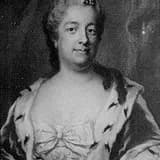
In December 1751 she submitted experimental results on soap production for bleaching cotton-linen textiles to the Academy.
By December 1751, specifically referenced here with the placeholder date 1 December 1751 to identify the month, records of the Royal Swedish Academy of Sciences indicate that Eva Ekeblad submitted the results of experiments on soap production for bleaching cotton‑linen textiles.[hemtrevligt.se via editor’s brief] This submission formally brought her textile‑bleaching research to the Academy’s attention.
Her report described how different soaps and washing methods could be used to whiten cotton and mixed fabrics more effectively, connecting domestic laundry practices to the broader field of applied chemistry. The Academy’s archival notice confirms that her work was not only conducted on her estates but also systematically communicated and preserved in institutional records.
This December submission demonstrates that Ekeblad remained an active scientific correspondent even after her status had been reclassified as honorary. It underscores how she used the Academy as a platform to disseminate practical innovations that mattered for household management and proto‑industrial textile production in 18th‑century Sweden.
Note: The archival reference specifies the month but not the exact day; the date here is therefore approximate, chosen only to register the event within its correct month and year.