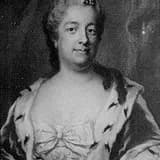
Elected the first woman member of the Royal Swedish Academy of Sciences.
On 3 December 1748, Eva Ekeblad was elected to the Royal Swedish Academy of Sciences (Kungliga Vetenskapsakademien), becoming the first woman ever admitted to this institution.[3][5][10][11] Her election was based largely on her agronomic and chemical work with potatoes, particularly her 1746 findings on using the tuber to produce flour and distilled alcohol.[2][11][17]
The Academy, founded in 1739, was a prestigious learned society dominated by male scholars, officials, and landowners. For such a body to acknowledge a woman’s experimental work as worthy of membership was highly unusual in 18th‑century Europe. Ekeblad’s admission reflected both her scientific contributions and the Enlightenment ideal—still unevenly applied—that intellectual ability could transcend gender.[5][11]
While later administrative decisions would reclassify her as an honorary rather than a full member, the 1748 election itself established a crucial precedent: a woman could be formally recognized by Sweden’s leading scientific academy.[2][5][10] Ekeblad did not regularly attend meetings in Stockholm because she lived primarily on her rural estates, but she continued to correspond with the Academy and submit reports on her agricultural and chemical experiments.
Her election resonated beyond her lifetime. In modern historiography she is frequently cited as a pioneer for women in science, demonstrating that, even within the constraints of aristocratic domestic roles, a woman could influence scientific discourse and institutional practice at the highest level.[1][5][11]