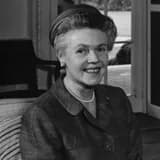
On October 12, 1949, President Harry S. Truman nominated Eugenie Anderson as U.S. ambassador to Denmark, making her the first woman ever chosen for ambassadorial rank.
On October 12, 1949, President Harry S. Truman announced the nomination of Eugenie Moore Anderson as U.S. ambassador to Denmark, making her the first woman ever nominated to the rank of ambassador in United States history.[1][16]
The New York Times reported the news the following day under the headline “Woman Nominated as U.S. Ambassador,” emphasizing the novelty of a Minnesota politician’s wife and Democratic activist being elevated to a post previously reserved for men.[0] At the time, no American woman had served as chief of mission abroad with the title of ambassador, and the State Department remained overwhelmingly male.[11]
Anderson’s nomination capped years of intense political work in Minnesota, where she helped build the Democratic–Farmer–Labor Party, campaigned for progressive candidates such as Hubert H. Humphrey, and developed a reputation for mastering complex policy debates despite lacking a traditional diplomatic pedigree.[9][11]
In the broader context of 1949, her nomination broke with entrenched gender norms in foreign policy, challenging the assumption that high‑level diplomatic negotiations required male leadership. Truman’s choice both validated Anderson’s political skills and symbolized the administration’s willingness to recognize women’s capacity for international responsibility.[3]
Historically, October 12, 1949, stands as a turning point: it launched the career of the first American woman ambassador and opened a path, however gradual, for other women to be considered for senior diplomatic appointments. Later generations of U.S. women ambassadors have cited Anderson’s nomination as an early milestone in the diversification of the Foreign Service’s leadership ranks.[6][3]