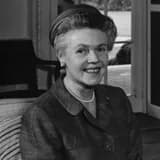
Helen Eugenie Moore Anderson was born in Adair, Iowa, on July 26, 1909, to a Methodist minister’s family, beginning the life of a future trailblazing U.S. diplomat.
Helen Eugenie Moore Anderson was born on July 26, 1909, in the small town of Adair, Iowa, into a Methodist minister’s family that valued education, public service, and moral responsibility.[16][10]
Growing up as one of several children of Rev. Ezekial A. Moore and FloraBelle Moore (as multiple biographical accounts attest), Anderson’s rural Midwestern upbringing exposed her early to community life and public speaking in church settings, experiences that later shaped her ease with political organizing and diplomacy.[1][16]
Her birth in 1909 placed her in a generation of American women whose ambitions were constrained by law and custom: women had not yet gained the right to vote nationally, professional diplomatic roles for women were virtually nonexistent, and married women were widely expected to focus on the domestic sphere.[11][14]
Against that backdrop, the significance of Anderson’s birth lies in the arc from this beginning to her later trailblazing career. The Iowa child who initially aspired to be a concert pianist—studying at institutions such as Stephens College, Simpson College, Carleton College, and the Institute of Musical Art/Juilliard—would become the first American woman ambassador and a pioneering representative at the United Nations Security Council.[3][4][10]
Editors and historians now mark July 26, 1909, not only as the start of Anderson’s life, but as the starting point of a trajectory that would challenge prevailing assumptions about women’s roles in politics and foreign policy. Her birth date anchors timelines in women’s history that trace the emergence of female leadership in twentieth‑century diplomacy.[16]