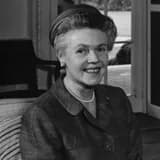
By October 31, 1949, Eugenie Anderson had officially taken office as U.S. ambassador to Denmark, becoming the first American woman to serve as chief of mission with ambassadorial rank.
By October 31, 1949, Eugenie Anderson had officially become U.S. ambassador to Denmark, assuming her duties as the first American woman to serve as chief of mission abroad with the title of ambassador.[3][4]
Her entry into office marked the operational beginning of this historic first. From the Danish capital, Anderson represented U.S. policy in a period when the Marshall Plan, NATO, and Cold War alignments were reshaping Europe. She oversaw bilateral relations, negotiated agreements, and engaged Danish officials and the public with a style she later described as “people’s diplomacy,” emphasizing personal contact and public outreach.[6][3]
As ambassador, Anderson quickly distinguished herself not merely as a symbolic pioneer but as an effective diplomat. Accounts from the U.S. Embassy and later historical profiles describe her extensive travels across Denmark, speeches in Danish, and efforts to explain American policies directly to citizens, rather than limiting communication to elite circles.[4][11]
The historical significance of her formal assumption of the post lies in the tangible exercise of authority: a woman was now signing diplomatic correspondence, directing embassy staff, and negotiating on equal footing with male counterparts from other nations. This day is often cited as the moment the United States first had a woman serving in the top diplomatic role abroad.[3]
For women’s history, late October 1949 symbolizes the shift from theoretical possibility to lived reality. Anderson’s presence as ambassador in Copenhagen expanded public imagination of who could represent the United States overseas and inspired later generations of women who entered the Foreign Service and rose to ambassadorial posts around the world.[6]