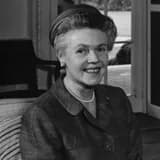
In August 1952, recorded here as August 1, Eugenie Anderson, then ambassador to Denmark, served as U.S. representative to the UN Ad Hoc Commission on Prisoners of War.
In August 1952, recorded here as August 1, 1952 for timeline purposes, Ambassador Eugenie Anderson was selected as the United States representative to the third session of the United Nations Ad Hoc Commission on Prisoners of War.[4]
At the time, Anderson was serving as U.S. ambassador to Denmark, and her appointment to this specialized commission signaled confidence in her abilities beyond bilateral diplomacy. The Ad Hoc Commission on Prisoners of War was convened to address urgent humanitarian and legal questions arising from conflicts and postwar detentions, including those related to the Korean War.[4]
Her role placed her at the intersection of diplomacy and emerging international human rights norms. As U.S. representative, Anderson participated in deliberations on the treatment, exchange, and repatriation of prisoners—issues central to humanitarian law and global perceptions of the United States’ commitment to international standards.[3]
While not a "first" in the same sense as her ambassadorial appointment, this commission service underscored her growing stature in multilateral diplomacy and foreshadowed her later work with the United Nations. It also demonstrated that a woman ambassador could be entrusted with sensitive negotiations bearing directly on wartime conduct and the lives of thousands.[4]
For historians of women’s diplomacy, Anderson’s August 1952 commission role is significant because it broadened the scope of her trailblazing career: she moved from breaking barriers in ambassadorial rank to contributing substantively to international humanitarian efforts under UN auspices, helping normalize women’s participation in high‑stakes global negotiations.[3]