← All women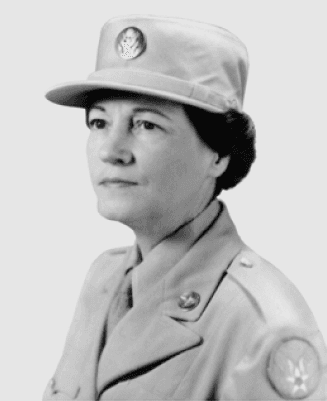
American · Aviation
Esther McGowin Blake
1897 – October 17, 1979
Early life and background
Esther McGowin Blake was born in 1897, but the available reliable sources consulted for this profile do not provide a documented month and day of birth. She was an Alabama native and later lived in Miami, Florida. Beyond that basic biographical outline, the surviving institutional summaries offer limited detail about her early years, education, and family background. What is clear is that she came of age in an era when women’s public opportunities were sharply constrained and their expected roles were largely domestic, even as the United States moved into the twentieth century and, later, global war.
Blake’s adult life was shaped by the responsibilities of family and work. By the time she entered military service during World War II, she was a widow and employed as a civilian at Miami Air Depot. The war brought extraordinary pressure on American families, and Blake’s decision to serve came after learning that one of her sons, a B-17 pilot, had been shot down over Europe and that her younger son was also in military service. That combination of personal sacrifice and national crisis became central to how she was later remembered. The sources available here do not document a spouse’s name, marriage date, or additional children beyond her two sons.
World War II service
Blake’s military career began in March 1944, when she enlisted in the Women’s Army Corps / Army Air Forces. This step was deeply meaningful in the context of the war. Women had been brought into military support roles to free men for combat, but they still operated within a system that treated female service as exceptional and limited. Blake’s enlistment was motivated in part by the hope that her work would help free a soldier from clerical duty and speed the war’s end, a sentiment echoed in later accounts.
Her wartime service took her beyond the civilian office environment into active military duty, including assignments in Alaska and Canada’s Yukon Territory. One Air Force history source states that she served for about a year in Alaska before being discharged in November 1945. That service is notable not only because of its geographic difficulty but also because it placed a middle-aged widow in a demanding wartime environment at a time when women’s military roles were still tightly circumscribed. She exemplified the thousands of women who made military operations possible through clerical, administrative, and logistical work, even though their contributions were often undervalued.
Blake’s World War II service also mattered as an early example of her willingness to answer the call of the military system her sons had entered. In a period when women’s service was often framed as temporary or auxiliary, her decision to enlist demonstrated that women’s contributions could be driven by both patriotic conviction and family obligation. That combination of motives gave her story enduring resonance in women’s military history.
Historic first in the United States Air Force
Blake’s best-known accomplishment came on July 8, 1948, when she became the first enlisted woman in the United States Air Force. She enlisted in the very first minute of the first hour of the first day that regular Air Force duty was authorized for women. The event was historic because the Air Force itself was a new branch, established only the year before, and its decision to accept women as regular enlisted members represented an important institutional opening.
Her quick response to the new policy turned her into a symbolic pioneer. Rather than waiting for women’s inclusion to be normalized, Blake acted immediately, embodying the urgency and determination of women who sought entry into institutions that had long excluded them. The phrase often used in Air Force histories—“the first woman in the Air Force”—captures not merely a chronological first but a watershed moment in the service’s evolution. It signaled that women’s participation would no longer be limited to wartime expedients or peripheral roles.
The broader context of 1948 makes Blake’s achievement even more significant. Postwar America was still sorting out the place of women who had served during the conflict, and many institutions were attempting to return to prewar gender norms. By enlisting on the first available day, Blake stood at the boundary between wartime necessity and peacetime permanence. Her act helped establish a precedent for the women who would follow in the Air Force and later in the wider armed forces.
Later service and civilian career
Blake remained connected to the Air Force until 1954, when she separated from active duty because of disability. After leaving the service, she did not withdraw from public life. Instead, she continued in federal employment at the Veterans Regional Headquarters in Montgomery, Alabama. That postwar work extended her commitment to government service and to the veteran community, linking her wartime military experience to the institutional care of those who had served.
Her civilian career underscores an important pattern in women’s twentieth-century history: military service often led to further forms of public employment, especially in clerical and administrative fields where women’s labor was increasingly accepted, though still gendered. For Blake, this meant that her legacy was not limited to a single famous day in 1948. She remained active in the machinery of federal service, supporting the systems that helped care for veterans and sustain military administration.
Recognition and legacy
Blake’s later recognition included a notable honor in 1987, when the Air Force Senior NCO Academy at Maxwell Air Force Base named one of its student dormitories after her. Such commemorations serve to embed memory into military culture, ensuring that service members encounter the names of pioneers as part of their professional environment. In Blake’s case, the honor confirmed her status as a foundational figure in the history of women’s service in the Air Force.
She is also remembered in broader historical lists of American women’s firsts and in institutional histories of Air Force women. That memory has importance beyond biography. Blake’s life illustrates how women broke barriers not through a single legislative moment but through repeated acts of willingness, competence, and persistence in male-dominated institutions. Her service helped normalize the idea that women belonged in the Air Force as permanent enlisted personnel, not merely as temporary wartime auxiliaries.
Blake’s story continues to resonate because it combines the personal and the institutional. She entered service in response to family crisis during World War II, then reentered as the first woman to enlist for regular Air Force duty when that possibility opened. Her life shows how individual action can help define institutional change, especially at moments when a new branch of government or military service is forming its identity.
Personal life and death
The sources consulted here identify Blake as a widow by the time of her 1944 enlistment and confirm that she had at least two sons, one of whom was a B-17 pilot and the other a service member. They do not provide detailed information about her husband, children beyond the two sons mentioned, or other private family matters. For a historical figure whose public significance rests on military firsts, the available record emphasizes service more than domestic biography.
Esther McGowin Blake died on October 17, 1979. Her death closed a life that had traversed the major military transformations of the mid-twentieth century: the wartime mobilization of women, the creation of a separate Air Force, and the permanent integration of women into that service. She remains best known as the first enlisted woman in the United States Air Force, a title that captures her place at the opening of a longer story about women’s participation in American military life.
Dated achievements
6 indexed.
- Mar011944Science
Enlists in the Women's Army Corps/Army Air Forces
Esther Blake enlisted in the WAC/Army Air Forces in Miami after both her sons entered military service in WWII.
View details Esther Blake: First Enlisted Woman in the Air Force - Nov011945