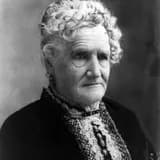
Esther Hobart Morris died in Cheyenne, Wyoming, on April 2, 1902, at the age of 87.
Esther Hobart Morris died on April 2, 1902, in Cheyenne, Wyoming, at the age of 87. By the time of her death, she had lived to see the culmination of much of her life's advocacy: Wyoming had entered the Union in 1890 as the first state with full women's suffrage enshrined in its constitution, and she herself had remained politically active into her eighties, serving as a delegate to a national suffrage convention in Cleveland in 1895.
Her death marked the passing of a woman who, through her 1870 appointment as Justice of the Peace, had become one of the most enduring symbols of women's capacity for public service and legal authority in the United States. While the popular legend crediting her with single-handedly persuading Wyoming legislators to pass the suffrage bill of 1869 has been challenged and refined by later historians, her documented judicial service remains an unambiguous, verifiable milestone.
In recognition of her legacy, a statue of Morris was erected in front of the Wyoming State Capitol in Cheyenne, and an identical bronze statue was placed in the National Statuary Hall of the U.S. Capitol in Washington, D.C., representing Wyoming among the nation's most historically significant figures — one of relatively few women so honored in that collection. Her life continues to be studied as a foundational chapter in the history of American women's political and legal rights.
Note: a minority of sources, including the French Wikipedia, list her death as April 3, 1902, but the preponderance of English-language biographical sources confirm April 2, 1902.