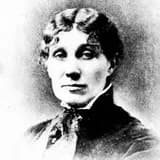
Erminnie A. Smith became the first woman elected as a member of the New York Academy of Sciences, breaking a longstanding gender barrier in American science.
On November 5, 1877, Erminnie A. Smith achieved a landmark distinction by becoming the first woman ever elected to membership in the New York Academy of Sciences, one of the oldest and most respected scientific societies in the United States, founded in 1817.
At the time, scientific academies and professional societies were almost universally closed to women, who were often relegated to auxiliary roles or excluded from formal recognition entirely, regardless of the quality or rigor of their research. Smith's election represented a significant crack in this barrier, signaling that a woman's scientific contributions—particularly her expertise in mineralogy and her growing ethnographic work—could be judged on their merits by a body of professional peers.
This achievement did not occur in isolation; it was the product of Smith's years of self-directed study in mineralogy and geology, including studies undertaken in Europe, and her growing reputation as a serious scholar. Her admission paved a symbolic path for future generations of women scientists seeking institutional recognition and helped legitimize the participation of women in formal scientific discourse in the United States.
This milestone came just a year after she founded the Aesthetic Society of Jersey City, underscoring a period of intense intellectual activity and institution-building in her career, shortly before she would embark on her most famous ethnographic fieldwork among the Iroquois for the Smithsonian's Bureau of American Ethnology.