← All women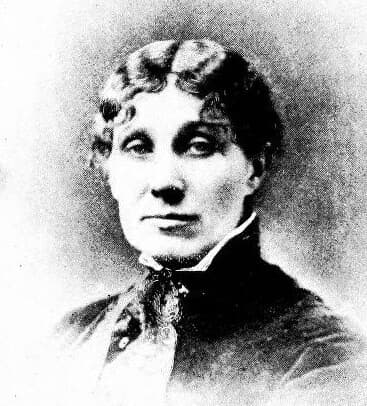
American · Science · Literature
Erminnie A. Smith
April 26, 1836 – June 9, 1886
Early Life and Background
Erminnie Adelle Smith (née Platt) was born on 26 April 1836 in Marcellus, New York, United States, to Joseph Platt and Ermina Dodge Platt.[1][5] Growing up in upstate New York in the mid‑19th century, she came of age in a society where women’s roles were still largely confined to the domestic sphere and access to advanced education for women was limited. Nonetheless, her family supported serious schooling, and she enrolled at the Troy Female Seminary (later known as the Emma Willard School), one of the pioneering institutions for women’s education in the United States.[1][5]
Smith graduated from the Troy Female Seminary in 1853, an achievement that placed her among the relatively small cohort of American women with formal academic training in the sciences and humanities.[1][5] The curriculum at Troy emphasized rigorous intellectual work, including mathematics and science as well as literature, which helped prepare her for the interdisciplinary path she later pursued. Her early exposure to academic discourse, combined with her proximity to Haudenosaunee (Iroquois) territories in New York, would later influence her decision to focus on Native American cultures and languages.
Education and Formative Influences
After her initial education in New York, Smith’s intellectual development continued in Europe. Later biographical accounts note that when her sons became students in Germany, she herself undertook further study at universities in Strasbourg, Heidelberg, and Freiberg.[5] In Germany she studied mineralogy and related subjects, deepening her expertise in geology and crystallography at a time when it was rare for women to participate in scientific study at European universities.[5]
This combination of American women’s seminary training and continental European scientific study gave Smith an unusually cosmopolitan and interdisciplinary background. Her early work focused on geology, especially crystallography, but she also developed strong interests in language, literature, and public lecturing. These overlapping interests later made it possible for her to cross disciplinary boundaries, moving from geology into anthropology and ethnology as those fields were emerging in the late 19th century.[1][5]
Marriage, Family, and Personal Life
In 1855, Erminnie Platt married Simeon H. Smith, a Chicago lumber dealer and merchant.[1][5] Following their marriage, she is generally referred to in historical sources as Erminnie A. Smith or Erminnie Adelle Smith. The couple had children, including sons who later studied in Germany, which in turn led Erminnie to pursue her own studies there.[5] Her role as both mother and scholar reflects the dual expectations placed on women of her era, but she navigated these demands by integrating family life with intellectual travel and study.
Smith eventually settled with her family in Jersey City, New Jersey. There she built a home that doubled as an intellectual salon, hosting lectures and discussions on science, literature, philosophy, and art. This domestic‑public space became a central part of her career, allowing her to organize events that drew large audiences while also maintaining her responsibilities within the household.[4][5]
Career Beginnings: Geology and Public Lecturing
Smith’s earliest documented scientific work was in geology, particularly crystallography.[5] During and after her studies in Germany, she developed expertise in mineralogy, which she shared through public lectures. In the 19th century, public lecturing was one of the few avenues through which women could participate visibly in scientific culture without holding formal academic posts, and Smith took full advantage of this platform.
By the 1870s, she was known as an active public lecturer on scientific subjects in the Jersey City area.[3][5] Her lectures covered a range of topics, including geology and emerging scientific ideas, and helped attract a local audience interested in intellectual discussion. These activities laid the groundwork for her next major initiative: founding a formal society to sustain and expand this kind of cultural engagement.
The Aesthetic Society of Jersey City
In 1876, Erminnie A. Smith founded the Aesthetic (or Esthetic) Society of Jersey City, a literary and scientific club that became an important local hub for intellectual activity.[2][4][5] The society organized parlor meetings and lectures on science, literature, philosophy, and art, drawing audiences reportedly as large as 500 people.[4][5] At a time when women were largely excluded from university faculties and many scientific societies, Smith’s Aesthetic Society offered an alternative space where women and men could engage with advanced ideas.
Through this society, Smith herself learned of the newly forming discipline of anthropology.[5] The discussions and lectures hosted by the Aesthetic Society introduced her to debates about human cultures, evolution, and ethnology, and provided a supportive environment for her to pivot from geology toward the study of Native American societies. The society also attracted notable figures; later accounts mention, for example, a lecture by Oscar Wilde in Jersey City in 1882, illustrating the cultural visibility of the organization.[4]
The significance of the Aesthetic Society lies not only in its programming but also in its structure. It was a woman‑founded and woman‑led institution, with “Daughters of the Aesthetic Society” later publishing Echoes of the Aesthetic Society of Jersey City (1882), a compilation of literary and scientific texts dedicated to Smith as their founder.[6] This demonstrates her role as a community organizer who used voluntary associations to expand access to scientific and literary discourse.
Transition to Anthropology and Ethnology
By the late 1870s, Smith’s attention had shifted decisively from geology to anthropology and ethnology, particularly the study of the Iroquois (Haudenosaunee) peoples of New York and Canada. In 1878, she was engaged by the Smithsonian Institution’s Bureau of American Ethnology to study the languages and customs of the Iroquois.[3][5][12] This appointment made her one of the first women employed in scientific work by the Smithsonian, a major milestone in the inclusion of women in American scientific research.[3][5]
Beginning around 1880, financed by the Smithsonian, Smith devoted her later years to ethnographic investigation of the Iroquois Confederacy.[5] She traveled to Iroquois communities in New York and to the Tuscarora in Canada, conducting immersive fieldwork rather than relying solely on library sources. Institutional and scholarly accounts describe her as the first woman to specialize in ethnographic fieldwork, emphasizing that she worked on site among Indigenous communities at a time when most anthropologists studied cultures from afar.[1][4][5][12]
Smith’s ethnographic practice included living among the Tuscarora, learning their language, and systematically recording their oral traditions. She also adopted innovative methods by training Indigenous informants to assist in collecting linguistic and cultural data, a technique that later became standard in anthropological fieldwork.[5] Her field studies were conducted roughly between 1879 and 1885, though individual dates for specific trips are not precisely documented in surviving sources.[3][5]
Major Works and Contributions
Smith’s most important scholarly contributions center on Iroquois language and mythology. During her fieldwork among the Tuscarora, she spent multiple summers living with community members and compiled an extensive corpus of linguistic material. According to biographical sources, she obtained and classified more than 15,000 words of Iroquois dialects.[3][5] This substantial lexicon laid the foundation for an Iroquois–English dictionary, for which she is often credited as compiler.[3][9]
Her principal published work is “Myths of the Iroquois”, which appeared in 1883 in the Second Annual Report of the Bureau of Ethnology, 1880–1881.[1][3][5][8] In this volume she presented a carefully collected and interpreted set of Iroquois legends, rituals, and cosmological narratives. The work documented creation stories, hero cycles, and other mythic narratives, while also contextualizing their role in Iroquois ritual life and social organization. By publishing these materials in a major government‑sponsored ethnological report, Smith helped bring Indigenous oral literatures to wider scholarly and public attention.
In addition to Myths of the Iroquois, Smith authored numerous scientific papers on Iroquois customs, language, and religion.[1][5] Some accounts also note that she wrote essays and poems and contributed to broader literary culture.[3] Though many of these writings are less well documented in contemporary bibliographies, they reflect her dual identity as both scientist and author.
One of the distinctive aspects of her work is its focus on women’s roles in Iroquois society. Smith’s accounts showed that Iroquois women held rights to property and enjoyed social freedoms not available to many American and European women of her time.[1] She highlighted the honor and respect accorded to women for their involvement in culture, economics, and ritual practice within the Haudenosaunee world. These observations later proved influential for feminist thinkers who looked to Indigenous matrilineal societies as models of alternative gender relations.[1][4]
Professional Recognition and Awards
Smith’s research earned her significant professional recognition, particularly within scientific societies that had previously been closed to women. On 5 November 1877, she was elected the first female member of the New York Academy of Sciences.[1][2][9] This event is repeatedly cited in historical sources as a groundbreaking moment: she was not merely admitted as a special case, but recognized as a full member based on her scientific accomplishments.
Later, Smith also served as an officer of the American Association for the Advancement of Science (AAAS), becoming its first woman officer.[5][7][9] She is depicted in a portrait of AAAS officers from around 1885, underscoring her visible role in the leadership of the organization.[5] While precise dates for her election to AAAS office are not recorded in surviving easily accessible sources, institutional narratives consistently emphasize her pioneering position.
Multiple institutional sources, including the Smithsonian and Britannica, describe Smith as the first woman to specialize in ethnographic fieldwork.[1][4][5][12] This characterization functions as a form of recognition, marking her as a groundbreaker in the methodology of anthropology. The National Portrait Gallery’s bas‑relief of Smith, illustrated as the frontispiece to Echoes of the Aesthetic Society of Jersey City (1882), serves as another kind of honor, visually commemorating her contributions to science and community organizing.[6]
Methodological Innovations
Smith’s work is notable not only for its content but also for its methodological innovations. Unlike many of her contemporaries, she emphasized immersive fieldwork, living among the Tuscarora and other Iroquois communities in order to observe rituals, collect oral histories, and learn the language directly from native speakers.[3][4][5]
She also introduced the practice of training Indigenous informants to assist in data collection, an approach later adopted widely by ethnologists.[5] By teaching community members to record linguistic and mythological material systematically, Smith expanded the scope and reliability of her research while also involving Indigenous people as active collaborators in the production of knowledge.
Her focus on linguistic documentation was particularly important. At a time when many Native American languages were under pressure from English‑language schooling and assimilation policies, Smith’s careful compilation of vocabularies and narratives helped preserve elements of Iroquois linguistic and cultural heritage. Her work therefore has dual significance: it contributed to academic understanding of Iroquois languages and myths, and it aided in the preservation of traditions that might otherwise have been lost.
Personal Life, Beliefs, and Community Engagement
Beyond her formal scientific work, Smith remained deeply engaged in community life in Jersey City. Through the Aesthetic Society she fostered a culture of intellectual curiosity and public discussion, inviting speakers and organizing events that bridged science and the arts.[4][5][6] The society’s meetings, held in her parlor, blurred the boundaries between domestic and public space, offering women especially an opportunity to participate in serious cultural and scientific conversations.
The publication of Echoes of the Aesthetic Society of Jersey City in 1882 by the "Daughters of the Aesthetic Society" reflects both her influence and the affection with which she was regarded.[6] The volume compiled literary and scientific texts and featured a bas‑relief portrait of Smith by sculptor William Rudolf O’Donovan, underscoring the respect accorded to her as founder and intellectual leader.
While detailed records of her religious or political beliefs are limited, her emphasis on women’s intellectual development and her documentation of Iroquois women’s rights suggest a strong commitment to expanding women’s opportunities and challenging restrictive gender norms. Her life demonstrates how a woman in the late 19th century could use voluntary organizations, public lectures, and scientific research to carve out a substantial role in public intellectual life.
Later Life and Death
In her later years, Smith continued her work with the Bureau of American Ethnology, focusing on Iroquois language and culture and refining her publications.[5][8] She maintained her involvement in scientific societies and in the Aesthetic Society of Jersey City, which remained active and influential.
On 9 June 1886, Erminnie A. Smith died at her home in Jersey City, New Jersey.[1][5][6] She was fifty years old. Her death is recorded in major reference sources, including the Encyclopaedia Britannica and the Smithsonian’s National Portrait Gallery, which agree on this date and location.[1][5][6] Following a funeral service held at the Lafayette Reformed Church, she was buried in New York Bay Cemetery.[1]
Her passing brought an end to an unusually productive and ground‑breaking career that had lasted barely a decade in its ethnological phase. Nevertheless, the work she completed during this period—particularly Myths of the Iroquois and her linguistic collections—continued to influence ethnology and Native American studies long after her death.
Legacy and Historical Impact
Erminnie A. Smith’s legacy can be understood along several intersecting axes: methodological, institutional, and feminist. Methodologically, she is remembered as the first woman field ethnographer, a pioneer who demonstrated that immersive, on‑site research could be conducted by women and could yield valuable scientific results.[1][4][5][12] Her practice of training Indigenous informants and compiling extensive linguistic data anticipated later anthropological techniques.
Institutionally, Smith broke gender barriers in American science by becoming the first woman member of the New York Academy of Sciences and the first woman officer of the AAAS.[1][5][7][9] These achievements helped normalize the presence of women in scientific societies and provided precedents that others could invoke when seeking admission or office. They also indicated a gradual, if uneven, shift in the attitudes of male‑dominated institutions toward women’s scientific work.
From a feminist perspective, Smith’s documentation of Iroquois women’s rights to property and their respected roles in society offered an important comparative lens on gender relations.[1] Her accounts showed that Indigenous societies could afford women economic and ritual authority beyond what was typical in contemporary Euro‑American society. Later feminist writers and activists drew on such ethnographic evidence to argue that patriarchy was neither universal nor inevitable.
Her influence persists in several ways. The Smithsonian Institution and its archives have highlighted Smith as part of their "Wonderful Women" series, emphasizing her role as the first woman to specialize in ethnographic fieldwork and as an expert on the Iroquois Nation.[12] Local histories of Jersey City celebrate her as one of the city’s historic women, noting the continued impact of the intellectual culture she helped establish through the Aesthetic Society.[4] The National Portrait Gallery preserves her image in a bas‑relief portrait, linking her story to the broader narrative of women in American science and culture.[6]
Smith’s work also continues to circulate through reprints and digital editions of Myths of the Iroquois, which remain available to readers interested in Iroquois mythology and the history of ethnology.[7][8][13] These texts ensure that her voice and the stories she recorded stay in scholarly and public circulation.
Taken together, Erminnie A. Smith’s life demonstrates how a 19th‑century woman, starting from a small town in New York and educated in a women’s seminary, could become an internationally recognized scholar, a community organizer, and a barrier‑breaker in scientific institutions. Her contributions to the study of the Iroquois, her innovations in fieldwork methodology, and her role in opening scientific societies to women make her a central figure in the history of women in science and in the early development of American anthropology.
Dated achievements
3 indexed.
- Apr261836Science
Birth of Erminnie Adele Platt
Erminnie Adele Platt was born in Marcellus, New York, later becoming a pioneering American ethnologist and mineralogist.
View details Erminnie A. Smith - Wikipedia - Nov051877Science
First Woman Elected to the New York Academy of Sciences
Erminnie A. Smith became the first woman elected as a member of the New York Academy of Sciences, breaking a longstanding gender barrier in American science.