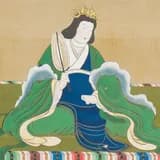
Suiko’s enthronement in 592 made her Japan’s first historically attested reigning empress.
In 592, Princess Nukatabe was installed as Empress Suiko, becoming the first historically attested woman to rule Japan as empress regnant. Sources place her enthronement at Toyurano-miya Palace, and she reigned until 628. Her accession followed a period of dynastic conflict after the assassination of Emperor Sushun, with the powerful Soga clan backing her elevation.
This was a major constitutional and political milestone. Suiko’s enthronement marked a break from increasingly male succession patterns and established that a woman could legitimately occupy the Chrysanthemum Throne in her own right, not merely as a consort or regent. Her rule gave the court a stabilizing figure during a tense transition, while real power was often exercised in cooperation with leading ministers, especially Soga Umako and later Prince Shōtoku as regent.
The significance of Suiko’s accession extends beyond gender history. It helped create the political space in which Buddhist patronage, continental diplomatic contacts, and administrative reforms could advance. Her enthronement became a lasting precedent in Japanese history and a landmark for women’s political authority in East Asia, where women rulers were rare and often constrained by elite factional politics.