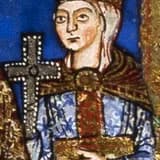
On Christmas Day 1126, Henry I compelled his nobles to swear an oath recognizing Matilda as his heir — the first such designation of a woman.
On Christmas Day, 25 December 1126, King Henry I assembled the great nobles and prelates of his court and required them to swear a solemn oath recognizing his daughter Matilda as his heir to the thrones of England and Normandy, in the absence of a surviving legitimate son (Henry's only son, William Adelin, had died in the White Ship disaster of 1120).
This oath-taking was extraordinary: no woman had ever before been formally designated heir to the English crown through such a public, binding ceremony of allegiance. Among those who swore, according to chroniclers, was Stephen of Blois — the very man who would later break his oath and seize the throne for himself, precipitating the civil war known as the Anarchy.
The 1126 oath (renewed again in 1127 and later in 1131) represents a landmark moment in the history of female succession in England, predating other attempts to establish women's rights to rule by centuries. Though ultimately Matilda would never receive a formal coronation as monarch, this ceremony established the legal and moral basis for her claim, and for her son Henry II's eventual accession. It stands as one of the earliest documented instances of a medieval European monarchy formally attempting to secure a female line of succession.