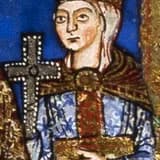
Matilda entered London and took the title 'Lady of the English,' becoming the first woman to exercise royal authority over England in her own right.
On 24 June 1141, following the capture of King Stephen, Matilda entered London and was received as the prospective ruler of England. In the weeks that followed, she adopted the unprecedented title domina Anglorum, or 'Lady of the English' — a deliberately chosen designation short of 'queen,' reflecting the fact she had not yet been formally crowned, but nonetheless signifying her assumption of sovereign authority.
During this period, Matilda began issuing royal charters under her own seal, appointing officials, and making governmental decisions as a ruling monarch would — arguably making her the first woman to exercise sovereign royal power over England in her own right, rather than as a queen consort acting through or alongside a husband.
However, her time in this position of ascendancy proved brief and troubled. Her demands for money and her perceived haughtiness alienated the Londoners, and her refusal to confirm the customary privileges of the city, combined with continued maneuvering by Stephen's wife, Matilda of Boulogne, and other loyalists, quickly eroded her support. Nonetheless, this episode remains historically pivotal: it represents the closest any woman had come to ruling England outright in the medieval period prior to the Tudor era, and it set crucial precedents — both cautionary and enabling — for later female rule in English history, including that of Mary I and Elizabeth I centuries later.