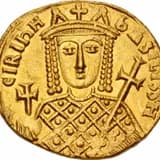
Irene’s son Constantine VI was born on 14 January 771, creating the dynastic heir whose minority later enabled her regency.
On 14 January 771, Irene gave birth to her son Constantine VI, the future Byzantine emperor. His birth secured the dynastic succession of the Isaurian dynasty and transformed Irene from empress consort into the mother of the heir apparent. In an imperial system where legitimacy rested heavily on bloodline and public ceremony, the arrival of a male heir strengthened Irene’s standing at court and made her indispensable to dynastic continuity.
The event was historically significant because Constantine’s minority later allowed Irene to claim the regency after Leo IV’s death. That regency became the foundation of her political career and, eventually, her unprecedented ascent to sole rule. The birth also shaped the political struggles of her later life: the tensions between mother, son, regent, and co-ruler became central to Byzantine court politics for decades. Although the sources on Irene’s personal feelings are limited, the broader historical record shows that motherhood gave her a formal role that women in Byzantium could leverage in exceptional circumstances.