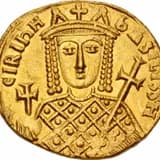
Irene died on 9 August 803 in exile on Lesbos, ending the life of Byzantium’s first sole female ruler.
On 9 August 803, Irene died on Lesbos after her exile from the Byzantine court. Her death closed the life of a ruler whose career had transformed Byzantine politics and religious life. From empress consort to regent, from co-ruler to sole sovereign, Irene had occupied every major mode of imperial female authority available in the Byzantine system and had pushed one of them into new territory by ruling alone.
Her death mattered because it fixed the end of an extraordinary career that continued to shape memory long after her fall. Later Orthodox tradition honored her as a saint, reflecting the enduring importance of her role in restoring icon veneration. Her life also remained a point of reference in discussions of women’s power, religious policy, and imperial legitimacy. Even though her methods were often ruthless, her reign represented a barrier-breaking political achievement in a society that rarely imagined women at the apex of state power. The legacy of her death is therefore inseparable from the legacy of her rule: a reminder of both the possibilities and the costs of female sovereignty in Byzantium.