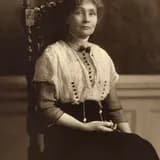
On 6 February 1918, this Act received Royal Assent, granting British women over 30 with property qualifications the vote for the first time.
On 6 February 1918, the Representation of the People Act 1918 received Royal Assent, marking a watershed moment in British political history. The Act granted the parliamentary vote to women over the age of 30 who met certain property qualifications, enfranchising approximately 8.4 million women for the first time in British history.
This legislative milestone came after decades of campaigning by suffrage organizations, including the militant Women's Social and Political Union founded and led by Emmeline Pankhurst. While the Act fell short of full equality, since men could vote from age 21 without property restrictions, it represented the first crack in the wall of total female political disenfranchisement in Britain.
The passage of the Act is widely understood by historians as reflecting both the decades of suffrage agitation, including the WSPU's controversial militant tactics, and the changed social and political context brought about by women's substantial contributions to the British war effort during World War I. Pankhurst, who had suspended WSPU militancy in 1914 to support the war effort, saw this as vindication of her strategic pivot and decades of activism.
This Act laid the essential groundwork for full gender equality in voting rights, which would be completed a decade later with the Equal Franchise Act of 1928, passed just weeks after Pankhurst's death.