← All women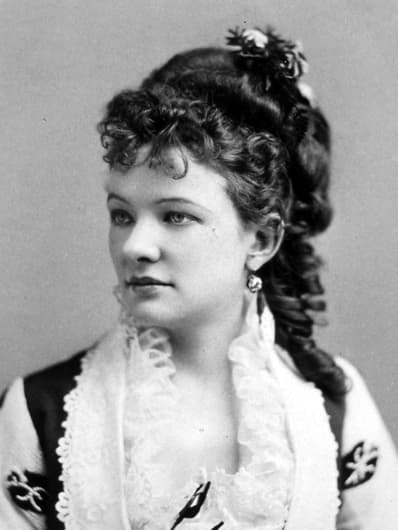
American · Arts
Emma Abbott
December 9, 1850 – January 5, 1891
Early Life and Background
Emma Almira Abbott was born on December 9, 1850, in Chicago, Illinois, into a family rooted in New England musical traditions.[1][12][13] Some scholarly studies and earlier biographical notices give 1849 as her birth year, but standard reference works and multiple language encyclopedias consistently list 1850.[1][13][18][19] Her parents, Seth Abbott and Almira (Palmer) Abbott, were both musically inclined; Seth Abbott had previously taught voice and played numerous instruments in Lowell, Massachusetts before the family’s move west.[19] Growing up in this environment, Emma was exposed early to singing, instrumental practice, and the idea of music as both vocation and calling.
Chicago in the mid‑19th century was a rapidly growing city, shaped by migration, commerce, and the cultural currents of a young industrial nation. For a girl in this setting, sustained musical training and public performance were not typical paths, given prevailing expectations that women should remain in domestic spheres. Yet Abbott’s parents encouraged her evident talent. Biographical accounts note that she sang in church choirs and was taught by her father, who recognized her unusual voice and stage potential.[12][13][16]
In 1859, when she was still a child, Abbott made her debut as a singer and guitar player in Peoria, Illinois.[7] The Smithsonian Institution records this early performance as the moment she stepped into public artistic life, although the exact day and month are not documented.[7] That debut marked the beginning of a precocious career: at around nine she was already appearing in concerts, and by her early teens she was teaching guitar and participating in touring ensembles.[5] Her formative years thus combined family instruction, church music, and early professional experience in the musical circuits of the Midwest.
Career Beginnings and Development
Abbott’s teen years were characterized by steady growth as a performer. Accounts describe her touring in the Midwest as a young singer and guitarist and joining the Lombard Concert Company of Chicago while still in her mid‑teens.[5] She sang in synagogues and churches, including the choir of the Universalist Church of the Divine Paternity in New York, gaining practical training and visibility.[7] This mix of sacred and secular venues reflected the flexible performance culture of post–Civil War America, where musicians moved between religious services, concert halls, and traveling companies.
A crucial turning point came in 1870, when Abbott’s talent attracted the attention of the celebrated American soprano Clara Louise Kellogg.[5] Kellogg, recognizing both her vocal potential and her lack of financial means, provided funds so Abbott could go to New York to study with Professor Achille Errani, a respected vocal pedagogue.[5][13] The year 1870 is consistently cited in biographical references, though an exact date is not given.[13] In New York, Abbott obtained her first salaried singing job and expanded her technical training, honing the flexible, clear soprano tone for which she later became known.[1][13]
After her initial studies in New York, Abbott continued her musical education in Europe. She trained in Milan and Paris with teachers including Wartel, Sangiovanni, and Delle Sedie, building a repertoire and stage technique aligned with the European operatic tradition.[13][18] This period abroad was not merely a refinement of her voice; it also placed her within international networks of opera houses, agents, and conductors. For an American woman singer of the 1870s, securing roles in European theaters demanded both exceptional ability and the ability to navigate gender and national stereotypes about American performers.
European Opera Debut and Moral Stance
Abbott’s operatic breakthrough came in London. In 1876, she made her opera debut at Covent Garden, singing Marie in Donizetti’s La fille du régiment.[13] The Biographical Dictionary of America and other sources describe this as her formal entrance onto one of Europe’s most prestigious stages.[12][13][18] Under Colonel Mapleson’s direction at Covent Garden, she appeared not only in opera but also at important London concerts, where her pure, flexible soprano was quickly noticed.[18]
Her time in London, however, also produced one of the most frequently cited episodes in her career: her refusal to appear as Violetta in Verdi’s La traviata. According to multiple accounts, Abbott’s contract was canceled after she declined to sing the role, describing the courtesan character as immoral and incompatible with her religious principles.[7][14] This decision was significant in several respects. It demonstrated a public assertion of personal morality by a woman performer in a profession frequently associated, in Victorian discourse, with questionable respectability. It also signaled Abbott’s intention to shape her own repertory and image rather than simply submit to management decisions.
Abbott’s stance did have material consequences; losing the Covent Garden contract meant she had to rebuild her career path. Yet it also reinforced her appeal among American audiences, many of whom admired her moral convictions and preferred operatic plots edited or selected to minimize what they viewed as scandalous content. The episode foreshadowed the choices she would later make as an impresario, where she offered shortened or adapted operas tailored to middle‑class sensibilities.[13]
Return to the United States and New York Debut
After London, Abbott returned to the United States and resumed performances on the New York stage. In 1877, she made her New York operatic debut, again as Marie in La fille du régiment.[13] Biographical entries consistently note the year but do not supply an exact calendar date.[13] The role’s combination of vocal agility and theatrical brightness suited her voice and stage persona, and the success of this appearance established her as a leading American soprano.
In the late 1870s, Abbott sang in operas by Verdi, Gounod, and Bellini, building a repertoire that balanced Italian and French works.[13] She appeared in theaters such as the Park Theatre in Brooklyn, where roles like Marguerite in Gounod’s Faust became associated with her name.[5] During this period she also developed the concert programming style that would later characterize her company: including familiar melodies and ballads interspersed with operatic scenes, and performing in English translation to reach audiences with limited knowledge of foreign languages.
Marriage and Partnership with Eugene Wetherell
Abbott’s professional development was intertwined with her personal life. In 1875, she married Eugene Wetherell, who became both her husband and business partner.[13][18] Some older sources, including the 1911 Encyclopædia Britannica, date the marriage to 1873, but Encyclopedia.com and several modern references give 1875.[13][18] Because the surviving accounts provide only the year, not the month and day, the precise date remains uncertain.
Wetherell brought managerial and organizational skills to their partnership. He helped arrange tours, negotiate with theaters, and coordinate logistics, while Abbott provided artistic leadership and star power. The marriage reflected a common model in 19th‑century women’s performance careers, where husbands often served as agents or managers. Yet in Abbott’s case, contemporaries repeatedly emphasized her own role as impresario and decision‑maker, suggesting that her authority within the enterprise extended beyond conventional gendered divisions of labor.[7][13]
Founding the Emma Abbott English Grand Opera Company
Abbott’s most historically significant achievement came in 1878, when she and Wetherell formed the Emma Abbott English Grand Opera Company, often referred to simply as the Abbott English Opera Company.[1][7][13] Sources consistently state the year but do not record an exact founding date. Encyclopedia.com and reference entries characterize this ensemble as the first opera company established by a woman in the United States.[13] The Smithsonian likewise notes that it was among the earliest American opera companies founded by a woman.[7]
The company specialized in English‑language productions of popular operas, frequently in shortened versions and sometimes interspersed with contemporary ballads.[7][13] Abbott’s repertory choices reflected her understanding of American middle‑class tastes. While European houses typically performed in Italian, French, or German, Abbott insisted on English translations and on performance practices that made plot and emotion immediately graspable for audiences new to opera. She also selected roles suited to her abilities and moral views, avoiding characters she considered morally problematic.
From 1878 through about 1890, the Abbott company toured extensively throughout the United States, including western cities and smaller communities that rarely hosted grand opera.[7][13] These seasons built what scholars have called a new middle‑class audience for opera, by combining affordability, accessibility, and moral respectability.[7][13] Critics sometimes attacked the company for a “lowbrow” approach, complaining about cuts to scores or interpolations of popular songs.[7] Nonetheless, Abbott’s audiences remained loyal, and contemporaries frequently praised her warm stage presence, emotional sincerity, and “pure, clear voice of great flexibility and volume.”[1]
Major Roles, Artistic Style, and Reception
Throughout her career, Abbott performed leading roles in operas by Verdi, Gounod, Bellini, and other composers, primarily in translation. Her roles included Juliette in Gounod’s Roméo et Juliette, Marguerite in Faust, and various heroines in Italian repertory.[7][13] Reference works emphasize her technical qualities: a bright, clear soprano, secure in high notes and agile passagework, coupled with a capacity for sustained lyricism.[1][12]
Abbott’s artistic style was shaped not only by vocal training but also by her sense of moral responsibility and audience connection. She cultivated an image as a virtuous, hardworking woman who brought refined art within reach of ordinary Americans. This resonated strongly with audiences in the late 19th century, especially in Protestant communities wary of the perceived excesses of European opera culture. Her decision to sing in English and to explain or adapt plots contributed to the perception that opera could be wholesome entertainment suitable for families.
Critical reaction was mixed. Some reviewers praised her musicality and the discipline of her company, while others lamented what they saw as artistic compromises—cuts to recitatives, rearranged scenes, and inserted ballads. The Smithsonian notes that although she was "attacked by critics for taking a lowbrow approach," she has been credited with expanding the middle‑class audience for opera.[7] This tension between artistic purity and accessibility has remained central to assessments of her legacy.
Awards, Honors, and Public Reputation
Abbott did not accumulate formal awards in the modern sense; 19th‑century American opera culture lacked the systematic prize structures found later in the 20th century. Her recognition instead came through press coverage, box‑office success, and the honor of engagements at major venues such as Covent Garden in London and prominent theaters in New York.[13][18]
Contemporaries frequently referred to her as “the People’s Prima Donna”, a phrase echoed in later historical essays and institutional profiles.[5][7] This nickname captured both her popularity and her orientation toward non‑elite audiences. Newspaper obituaries and biographical collections, including Woman of the Century (1893), presented her as a model of industriousness, moral rectitude, and artistic accomplishment for American women.[16] The Biographical Dictionary of America and the 1911 Encyclopædia Britannica likewise included entries on her life, reinforcing her status as a nationally recognized figure.[12][18]
While no specific medals or state honors are documented in the consulted sources, the breadth of coverage and the persistence of her reputation in reference works and music histories function as a form of posthumous recognition. Modern scholarship on American opera often cites Abbott when examining the rise of touring companies and the role of women impresarios in the late 19th century.[19]
Personal Life and Character
Emma Abbott’s marriage to Eugene Wetherell in the mid‑1870s was central to her professional life.[13][18] Wetherell served as her manager and partner in business decisions related to touring, repertory, and company organization. Although details of their domestic life are sparse in standard references, the partnership is consistently portrayed as stable and supportive; their collaboration continued until her death in 1891.[13][18]
Abbott’s religious convictions are a recurring theme in biographical accounts. Her refusal to sing La traviata, her emphasis on moral respectability in repertory choices, and her careful positioning of opera as suitable for respectable audiences all point to a strong sense of ethical responsibility.[7][14] She was often described as "honest little Emma" in contemporary writings, a phrase reflecting both her stature and the affectionate way audiences perceived her.[19]
Some later summaries, including fan‑oriented sites, attribute philanthropic activities to Abbott, noting her involvement in charitable causes and fundraising performances.[17] While such claims align with common practices among 19th‑century performers, the specific organizations and dates are not clearly documented in the major reference works consulted, and therefore cannot be detailed with precision here. Nonetheless, accounts agree that she used her popularity to support community and charitable efforts.
Later Life, Touring, and Death
In the final decade of her life, Abbott continued to tour vigorously with the Emma Abbott English Grand Opera Company. From about 1878 to one month before her death in January 1891, the company traveled throughout the United States, including western territories and cities that had limited exposure to grand opera.[13] Her schedule remained demanding; even in her late thirties and early forties she frequently appeared in leading roles and oversaw company operations.
Most modern reference sources agree that Abbott died on January 5, 1891, in Salt Lake City, Utah, of pneumonia.[1][3][6][11][13] Some 19th‑century biographical sketches, such as the entry in Woman of the Century, give January 4 and list Ogden, Utah as the place of death, reflecting either an error or confusion in early reporting.[16] Later encyclopedias and cataloging authorities, as well as multiple language editions of Wikipedia, have standardized the date as January 5 and the location as Salt Lake City.[1][3][6][11]
Abbott’s death occurred while she was on tour in the West, a testimony to her ongoing commitment to bringing opera to audiences far from traditional cultural centers. Contemporary obituaries emphasized her prominence as one of the most successful 19th‑century American operatic singers to tour widely with her own company.[13] She was around forty years old at the time of her death, a relatively young age that underscores the intensity and compressed nature of her career.[3][6][11]
Legacy and Historical Impact
Emma Abbott’s legacy rests on several intertwined contributions: her success as a soprano, her role as a pioneering female impresario, and her impact on the democratization of opera in the United States. As a singer, she demonstrated that an American woman could achieve prominence both in European theaters and across a vast domestic touring network.[13][18] Her clear, flexible soprano and heartfelt performances earned her lasting admiration.
As an impresario, Abbott broke significant gender barriers. By founding and directing the Emma Abbott English Grand Opera Company in 1878, she became, in the words of Encyclopedia.com, the first woman to establish an opera company.[13] Managing a full‑scale touring ensemble involved artistic leadership, financial risk, and logistical complexity—tasks rarely entrusted to women in her era. Her success demonstrated that women could not only star on stage but also command the business structures of the performing arts.
Abbott’s decision to perform opera in English and tailor productions to middle‑class tastes had long‑term effects on American musical culture. The Smithsonian credits her with helping to expand the middle‑class audience for opera, despite critical complaints about her "lowbrow" approach.[7] By making opera accessible to audiences who might otherwise never attend, she contributed to the gradual normalization of the genre as part of everyday cultural life in cities and towns across the country.
Her career also raises questions that continue to interest historians and musicologists: the tension between artistic fidelity to original scores and the need to adapt works for new audiences; the role of morality in repertory choices; and the possibilities and limits of women’s leadership in 19th‑century performing arts. Modern scholarship on American opera frequently cites Abbott when tracing the emergence of touring companies and the place of women within those enterprises.[19]
Although she did not leave behind a compositional oeuvre or formal theoretical writings, Abbott’s practices as a performer and impresario exerted measurable influence on the infrastructure of American musical life. Her name persisted in encyclopedias, biographical dictionaries, and regional histories, and she remains an important figure in women’s history and the history of American opera. In particular, her example paved the way for later women singers and managers who sought to balance artistic ambition, commercial viability, and moral respectability in the evolving cultural landscape of the United States.
Dated achievements
3 indexed.
- Dec091850Arts
Birth of Emma Abbott
Emma Almira Abbott was born in Chicago, Illinois, on December 9, 1850, later becoming one of America's most celebrated operatic sopranos.
View details Emma Abbott - Wikipedia - Jan011878Arts
Founding of the Emma Abbott English Grand Opera Company
Emma Abbott founded her own opera company in 1878, becoming the first woman in the United States to establish and lead her own opera company.