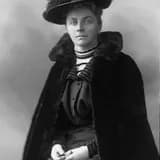
Hobhouse became secretary of the London-based South African Conciliation Committee, opposing British government policy shortly after war broke out.
Just after the outbreak of the South African War (Second Boer War) on 11 October 1899, Emily Hobhouse was appointed secretary of the South African Conciliation Committee in London on 10 October 1899. This organisation brought together liberals, pacifists, and critics of imperial policy who opposed Britain's war against the Boer republics of the Transvaal and Orange Free State.
In this role, Hobhouse organised meetings, wrote pamphlets, and coordinated opposition to the war among sympathetic members of Parliament and the public, at a time when dissent against the war was deeply unpopular and often equated with disloyalty. Her work with the Committee placed her at the centre of the small but vocal 'pro-Boer' movement in Britain.
This position was the direct precursor to her decision to travel to South Africa in 1900 to see the effects of the war for herself, and it established the network of contacts and the moral conviction that would drive her subsequent, far more famous, humanitarian investigations. The role marked her transition from a woman of private domestic duty to a public political campaigner, an unusual and difficult path for a woman in Victorian Britain.