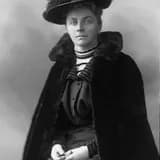
Hobhouse became one of the earliest civilian whistleblowers to publicly expose Britain's use of concentration camps for civilians in the South African War.
Emily Hobhouse's investigations and public reporting from late 1900 into 1901 mark her as one of the earliest civilian whistleblowers to expose a state-run system of concentration camps to public scrutiny. The camps established by British forces during the South African War to intern Boer (and later Black African) civilians are widely regarded by historians as among the first modern instances of mass civilian internment under the label of 'concentration camps.'
At enormous personal and professional risk, Hobhouse defied military secrecy, government denial, and virulent public criticism to bring the suffering within these camps to the attention of the British public and Parliament. She was vilified in the press, labelled a traitor by some, and her testimony was initially dismissed by military authorities — yet she persisted, returning to Britain to campaign, publish, and lobby for reform.
Her actions set an early template for independent humanitarian fact-finding and whistleblowing on state abuses during wartime, predating the establishment of formal international humanitarian monitoring bodies. Later historians and human rights advocates have cited her as a forerunner of modern human rights investigators and NGO field workers. While the exact characterisation of her as 'the first' whistleblower against concentration camps rests on the interpretation of later commentators rather than a formal contemporary title, the broad consensus recognises her singular, pioneering role in this era.