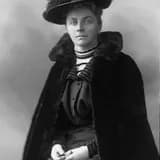
Emily Hobhouse died in London on 8 June 1926, aged 66; her ashes were later interred in the National Women's Monument at Bloemfontein.
Emily Hobhouse died in London on 8 June 1926, at the age of 66, after some years of declining health that had increasingly limited her public activity in her final decade. Though she had spent much of her later life in relative poverty and ill health, largely uncelebrated in her native Britain, she remained a revered figure among the Afrikaner community of South Africa, who never forgot her championing of their cause during the darkest days of the South African War.
Her death was marked with much greater recognition in South Africa than in Britain, where her wartime dissent had left many establishment figures reluctant to celebrate her legacy. Obituaries in South African newspapers praised her as a saviour of the Boer nation, while in Britain her contributions were, for decades afterward, only modestly acknowledged.
In accordance with her wishes and the deep bond she had formed with the Boer people, arrangements were made for her ashes to be sent to South Africa for interment at the base of the National Women's Monument in Bloemfontein, the memorial she had helped fund to honour the victims of the concentration camps. Her death closed the life of a woman whose singular moral courage had exposed one of the British Empire's gravest wartime abuses and who spent her final decades continuing to labour for peace and child welfare across a war-torn Europe.