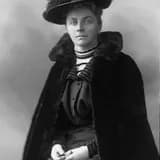
Hobhouse sailed to Cape Town, arriving 7 December 1900, to investigate British concentration camps holding Boer women and children.
On 7 December 1900, Emily Hobhouse arrived in Cape Town, South Africa, having sailed from England under the auspices of the South African Women and Children Distress Fund, which she had helped establish. Her mission was to investigate and provide relief to Boer women and children who had been forcibly removed from their farms — burned as part of Britain's scorched-earth policy — and interned in camps that the British military called 'refugee camps' but which were, in reality, concentration camps.
Hobhouse's decision to travel alone to a war zone as a private, unmarried woman of forty was extraordinary for the period, defying both the physical dangers of wartime travel and the social conventions restricting women's independent action. She carried supplies, funds, and a determination to see conditions with her own eyes rather than rely on official military reports.
This arrival marked the beginning of a campaign that would expose one of the great humanitarian scandals of the British Empire. Her subsequent camp visits and reporting brought the suffering of Boer civilians to British and international attention, fundamentally altering public perception of the war and establishing Hobhouse as a pioneering war-time humanitarian investigator, predating later Red Cross-style civilian monitoring.