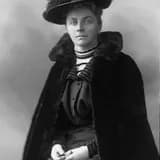
Hobhouse attended the 14 February 1905 unveiling of the National Women's Monument in Bloemfontein, commemorating Boer women and children who died in the camps.
On 14 February 1905, Emily Hobhouse attended the unveiling ceremony of the National Women's Monument (Vrouemonument) in Bloemfontein, South Africa. The monument was erected to commemorate the estimated 26,000 Boer women and children, along with an unknown number of Black African civilians, who died in the British concentration camps during the South African War.
Hobhouse had played a leading role in fundraising for the monument among sympathetic British and international donors, viewing it as essential that the suffering she had witnessed be permanently and publicly memorialised rather than forgotten or minimised. Illness prevented her from delivering her prepared speech in person at the unveiling, but her written address was read aloud and was received with deep emotion by the Afrikaner community, who by then regarded her as a devoted friend and ally.
The monument remains one of South Africa's most significant historical memorials, and Hobhouse's association with it cemented her enduring status as a heroine among Afrikaners — a status highly unusual for an Englishwoman in the aftermath of a war fought against Britain. This event exemplified the reconciliation and lasting personal bonds she built with the very people whose suffering she had fought to expose, bonds that would ultimately lead to her ashes being interred at the monument's base decades later.