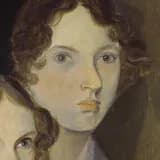
Emily Brontë's sole novel, a dark, structurally innovative tale of passion and revenge on the Yorkshire moors, was published under the pseudonym Ellis Bell.
In December 1847, Emily Brontë's only novel, Wuthering Heights, was published in London by Thomas Cautley Newby, bound together in a three-volume set alongside Anne Brontë's Agnes Grey. As with the sisters' earlier poetry collection, Emily published under the pseudonym Ellis Bell, obscuring her identity and gender from a reading public still deeply skeptical of women's capacity for serious literary work.
The novel tells the turbulent, multigenerational story of Heathcliff and Catherine Earnshaw, set against the harsh, isolating beauty of the Yorkshire moors that Emily knew intimately from her life at Haworth. Its innovative nested narrative structure—relayed through the accounts of the servant Nelly Dean and the outsider Mr. Lockwood—was highly unusual for its time, as was its unflinching portrayal of cruelty, obsession, and social class tension.
Contemporary reviewers were divided and often shocked by the novel's raw depictions of violence and its morally ambiguous characters; some considered it coarse or even 'diabolical.' It was not until after Emily's death, when Charlotte Brontë oversaw a revised 1850 edition and publicly revealed her sister's authorship, that the novel's genius began to be more widely recognized.
Today, Wuthering Heights is regarded as one of the greatest novels in the English language, a foundational text of English literary Romanticism and Gothic fiction, whose psychological complexity and narrative daring influenced countless subsequent writers.