← All women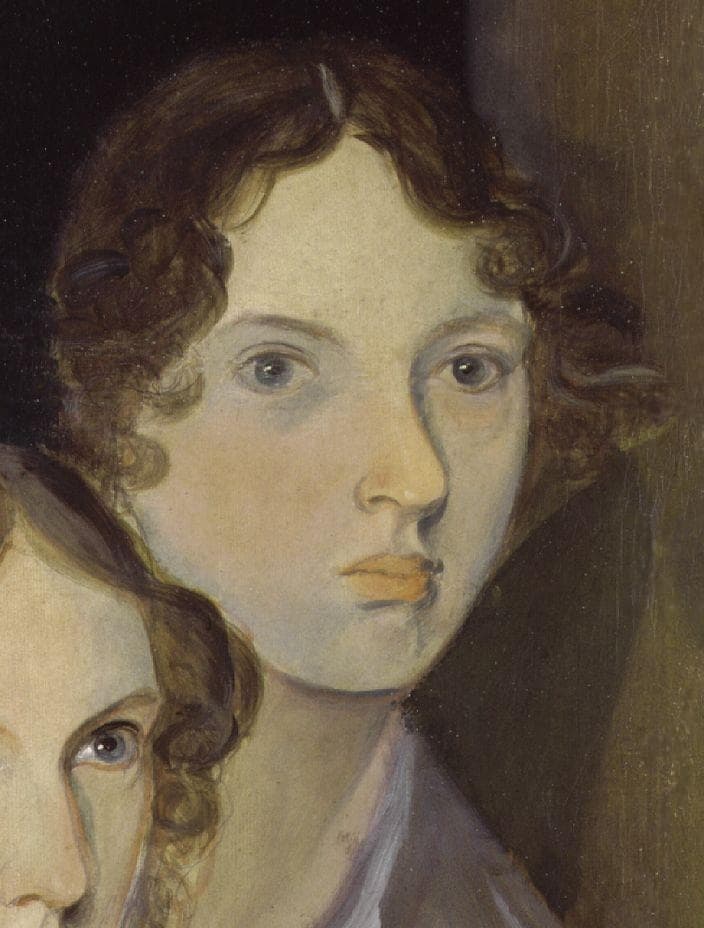
British, English · Literature
Emily Brontee
July 30, 1818 – December 19, 1848
Early life and family background
Emily Jane Brontë was born on 30 July 1818 in Thornton, Yorkshire, England, the fifth of six children of the Reverend Patrick Brontë and Maria Branwell Brontë. She was raised in a close clerical household that experienced repeated loss: her mother died when Emily was still young, and the surviving children grew up under the care of their father and their aunt, Elizabeth Branwell. The family later moved to Haworth, where Patrick Brontë served as curate, and the remote parsonage became the center of Emily’s life and imagination.
Emily’s upbringing was marked by books, strict discipline, and the intense companionship of her siblings, especially Charlotte, Branwell, and Anne. The children invented elaborate imaginary worlds and wrote stories together, a practice that encouraged verbal invention, mythmaking, and collaborative creativity. Emily is often described as solitary and private, but that reputation should not obscure the disciplined literary culture of the Brontë household. Her education was limited by the standards of later professional writers, yet she read widely and developed a powerful imaginative relationship to the Yorkshire landscape that surrounded Haworth.
The moors that encircled the parsonage became central to her sensibility. Rather than serving as a picturesque backdrop, the landscape functioned in her imagination as a living force: exposed, austere, and emotionally charged. This setting would later shape the atmosphere of Wuthering Heights and much of her poetry. Emily’s early life therefore combined domestic restriction with extraordinary inward freedom, a combination that would define her brief literary career.
Education and formative influences
Emily Brontë’s formal schooling was uneven and intermittent. Like many girls of her class in the early nineteenth century, she did not receive the same advanced institutional training that men might have received, and her education came largely through reading at home, private instruction, and the intellectual environment of her family. The Brontë children’s early experiments in writing were crucial to their development. They composed stories, poems, and miniature chronicles, often drawing on history, adventure, and fantasy.
Haworth’s isolation, often viewed as a hardship, became a creative resource. Emily’s work shows close attention to weather, terrain, seasonal change, and the emotional power of natural settings. Her relationship to the natural world was not merely descriptive; it was philosophical and spiritual. Her poems and fiction often suggest that landscape is inseparable from human feeling and moral conflict.
Another formative influence was the necessity of secrecy. Women writers in the Victorian period frequently faced condescension, and the Brontës adopted male pseudonyms—Currer, Ellis, and Acton Bell—to publish without immediate exposure to gendered criticism. This choice reflects the literary barriers Emily confronted. Even as her imagination expanded toward radical intensity, her route into print remained constrained by the norms of her time.
First publication and poetic development
Emily Brontë’s first known book-length publication appeared on 4 May 1846 as Poems by Currer, Ellis, and Acton Bell, a joint volume by the Brontë sisters. Emily contributed a substantial portion of the poems, many of which display the qualities that would later distinguish her as one of the most original poets of the nineteenth century: compressed language, emotional directness, spiritual struggle, and an unusual fusion of darkness with transcendence.
The volume did not achieve commercial success, but its importance was greater than its sales suggested. It was one of the earliest public demonstrations of the Brontës’ literary seriousness, and it revealed Emily’s ability to create verse of concentrated intensity. Her poems are often marked by solitude, longing, mortality, and an insistence on the integrity of inner experience. They also reflect the physical world of the Yorkshire moors, which in her writing becomes an arena of both peril and vitality.
For a woman in the 1840s, publishing poetry under a pseudonym was a practical necessity and a cultural negotiation. Emily’s contribution to the 1846 volume helped establish her as a writer with a distinctive voice, even though she remained largely unknown to the reading public. Her later reputation as a poet would grow more slowly than her fame as a novelist, but her poetry is now regarded as a major achievement in its own right.
Wuthering Heights and literary maturity
Emily Brontë’s only novel, Wuthering Heights, was first published in December 1847 under the name Ellis Bell. The novel is now recognized as a foundational work of English fiction, but its first readers encountered a book that was unsettling, innovative, and difficult to classify. Set across generations and narrated through multiple perspectives, it tells the story of Heathcliff, Catherine Earnshaw, and the destructive force of obsession in a harsh, closed social world.
The novel’s originality lies partly in its structure and tone. Rather than offering a simple moral arc, it presents contradictions: love intertwined with cruelty, passion with revenge, freedom with ruin. Emily Brontë’s language is highly charged, and her treatment of landscape, memory, and desire gives the book an elemental force that was unusual in Victorian fiction. Its Yorkshire setting is not decorative; the moors mirror the novel’s emotional violence and its uneasy relation to domestic order.
Wuthering Heights initially received mixed and sometimes hostile responses, in part because it departed so sharply from prevailing literary expectations. Women novelists were often expected to produce morally edifying, socially legible fiction, yet Emily’s book resists easy moral classification. Over time, however, critics and readers recognized it as a masterpiece of psychological and formal daring. It has since become one of the most studied novels in English literature and the work for which Emily Brontë is best known worldwide.
Personal life and character
Emily Brontë never married and had no children. Her life was centered on her family, the Haworth parsonage, and her interior artistic world. Biographical tradition often emphasizes her privacy, reserve, and dislike of social display. While these traits are well documented in broad outlines, they should not be mistaken for lack of intellectual or emotional intensity. Emily maintained deep attachments to her family, and her writing reveals a vivid and forceful imaginative life.
She also spent time working outside the home, including periods when she and Charlotte sought employment and underwent efforts to build careers beyond the parsonage. Emily’s work as a governess was limited and did not become a lasting vocation. She appears to have preferred the relative autonomy of home life and the private discipline of writing. The exact details of many personal interactions are necessarily fragmentary, since she left few letters and resisted self-exposure.
What survives suggests a woman of strong convictions who did not easily conform to the social expectations placed on women of her class. In a culture that prized female modesty and outward sociability, Emily Brontë’s refusal to perform conventional femininity contributed to the mystique that later attached to her name.
Illness, death, and immediate aftermath
Emily Brontë fell seriously ill in 1848 and died on 19 December 1848 at Haworth of tuberculosis, at just thirty years old. Her death came only a year after the publication of Wuthering Heights, leaving her with little chance to witness the eventual stature of her work. Tuberculosis was among the most common and devastating diseases of the nineteenth century, and treatment options were limited and often ineffective.
Accounts of her final illness note her refusal of medical intervention and her determination to continue living and moving about for as long as possible. This has contributed to her posthumous image as austere and self-possessed, though such interpretations should be treated cautiously. What is certain is that her death was tragically early and that it curtailed a literary career that might otherwise have produced more novels or a larger body of poetry.
After her death, Charlotte Brontë played a major role in shaping the publication and reception of the Brontë sisters’ writings. Emily’s reputation expanded gradually rather than immediately. Over time, critics came to value the originality of her novel and the concentrated power of her poems, and she emerged as one of the defining literary figures of the Victorian era.
Recognition and legacy
Emily Brontë did not receive major awards or public honors during her lifetime, and her most important recognition came after death. Today she is celebrated as both a novelist and poet, and Wuthering Heights is frequently ranked among the great novels of world literature. Her poetry is likewise admired for its compression, seriousness, and emotional depth. She is now one of the most studied women writers of the nineteenth century.
Her legacy is especially significant in the history of women’s authorship. Emily wrote in a period when women often had to publish anonymously or under male pseudonyms to be taken seriously. Despite those constraints, she created work of extraordinary originality that has outlasted the cultural limits of her own time. Her fiction and poetry challenged the assumption that women’s writing had to be domestic, decorous, or morally simple.
Modern readers continue to value Emily Brontë for the intensity of her vision, the power of her landscape writing, and the emotional and psychological complexity of her characters. Her achievement lies not in a long public career but in the force of a small body of work that permanently altered the literary canon. Emily Brontë remains a central figure in studies of Romanticism, Victorian literature, and women’s literary history.
Dated achievements
4 indexed.
- Jul301818Literature
Birth of Emily Jane Brontë
Emily Jane Brontë was born in Thornton, Yorkshire, England, the fifth of six children of Patrick and Maria Brontë.
View details Britannica: Emily Brontë - May041846Literature
Publication of Poems by Currer, Ellis, and Acton Bell
Emily Brontë's first book-length publication appeared under the male pseudonym 'Ellis Bell' in this joint poetry collection with her sisters.