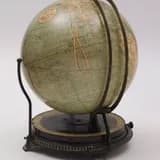
Ellen Eliza Fitz died in Watertown, Massachusetts, after a long illness, leaving behind a lasting legacy in educational globe design.
On October 12, 1886, Ellen Eliza Fitz died in Watertown, Massachusetts, after a long illness. Her death marked the end of a life that had quietly but permanently altered educational technology through the invention of the Fitz globe mounting system.
Although Fitz is not as widely remembered as many nineteenth-century inventors, her legacy endured in classrooms and museum collections. The globe mount she patented in 1875 helped students understand daylight, twilight, seasons, and the Sun’s relationship to the Earth—concepts that were difficult to demonstrate visually before the rise of modern instructional media. Her work remained relevant because it solved an everyday teaching challenge with elegant mechanical design.
Fitz’s life and career also illuminate the broader conditions confronting women inventors in the nineteenth century. She worked in a period when women’s technical contributions were often minimized or omitted from standard histories. The survival of her globe, her papers, and later historical scholarship has helped restore her place in the history of science education and women’s inventorship.