← All women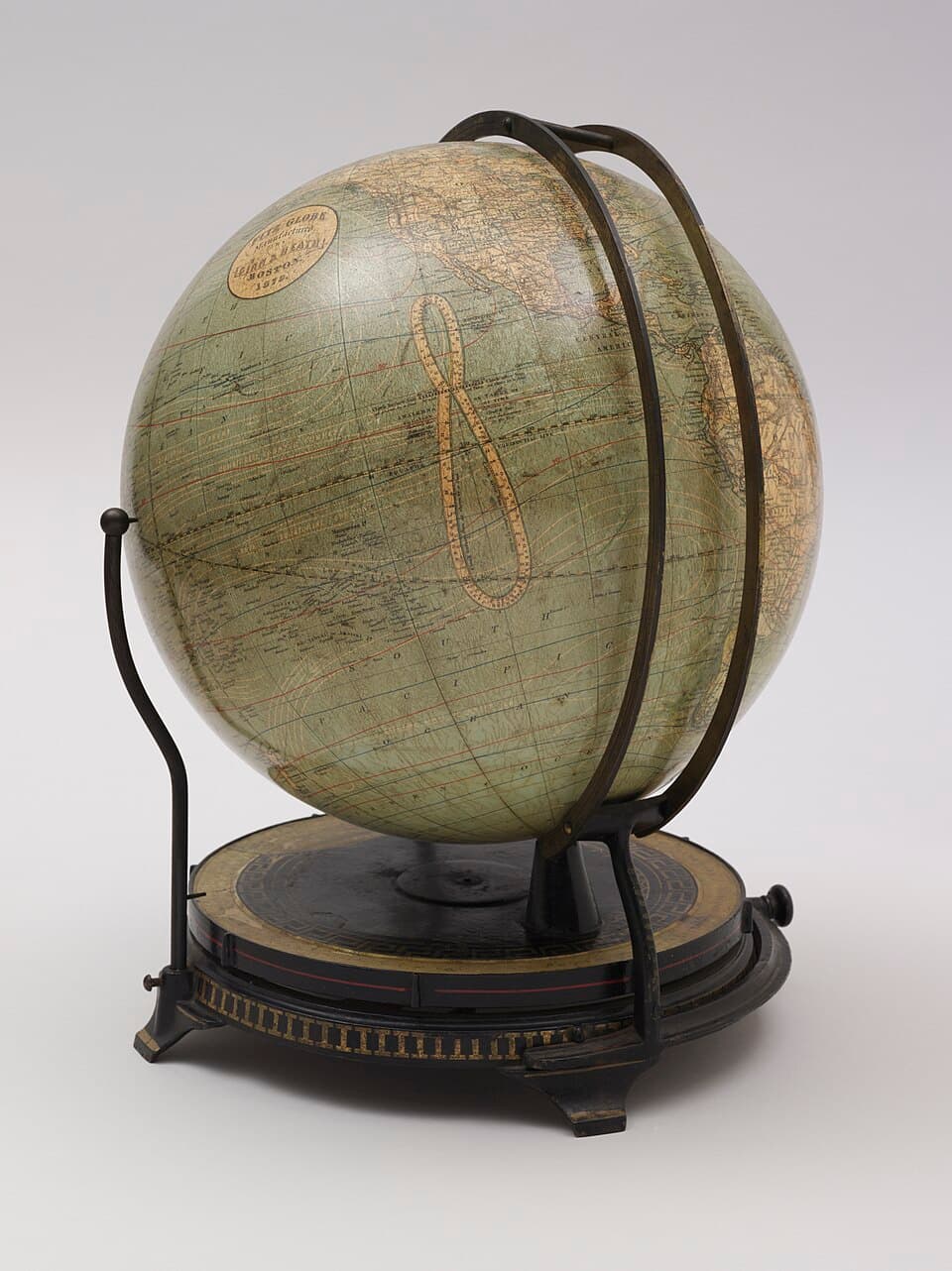
American · Science · Arts
Ellen Eliza Fitz
1835 – October 12, 1886
Early life and background
Ellen Eliza Fitz was born in 1835 in Kingston, New Hampshire, to Asa Fitz and Susan Fitz. Later family and archival sources indicate that she spent part of her childhood in Massachusetts, growing up in Lynnfield and Newton. Her father was active in education reform and curriculum development, a context that likely shaped Fitz’s familiarity with pedagogy and instructional materials.
Information about Fitz’s formal schooling is limited in surviving public sources, but the records associated with her papers and later historical summaries consistently identify her as an inventor, author, and educator. That combination is important: Fitz was not simply a mechanic or commercial patent-holder, but a woman who worked at the intersection of teaching and design. Her later invention reflected a practical understanding of how students learn abstract scientific and geographic concepts.
Career beginnings
Fitz is believed to have worked as a governess and educator, including time spent in Canada, before becoming known for her inventive work. That background matters because nineteenth-century governesses were often responsible for advanced domestic instruction in households where formal women’s access to scientific institutions remained limited. For a woman in that position to develop and patent a technical teaching aid was unusual and significant.
By the mid-1870s, Fitz had designed a mounting system for terrestrial globes that used a pair of vertical rings to show the changing relationships among daylight, twilight, nighttime, and the Sun’s apparent position throughout the year. This was not merely decorative engineering. It was a pedagogical device intended to make astronomy and geography visible in the classroom and in the home.
The Fitz globe and patent achievement
In 1875, Fitz received a U.S. patent for her globe mounting system. The invention became known as the Fitz Globe. Historical descriptions from the Library of Congress and globe collections explain that the mount used vertical rings to indicate the lengths of days, nights, and twilight for any place on Earth during the year. The globe sphere itself could be produced by a manufacturer, but Fitz’s original contribution was the ingenious mounting system that gave the object its instructional power.
This was a major achievement in the history of women’s inventorship. Fitz is widely identified as the first woman to patent a globe-mounting system, placing her among the small number of nineteenth-century women whose technical ideas were formally recognized by the patent system. At a time when women faced substantial legal, educational, and commercial barriers, she created a product with clear educational use and lasting market value.
The invention also reflected the era’s expanding interest in visual and hands-on learning. Before digital graphics or interactive classroom tools, a specialized globe mount could help teachers explain why day length changes with season and latitude. Fitz’s design therefore occupies an important place in the history of science education, mapmaking, and educational technology.
Later work, publications, and related patents
Archival and reference sources indicate that Fitz continued to refine her ideas after the 1875 patent. A second patent, issued in 1882, extended her approach by providing a mount that could show the position of stars above each horizon in different seasons. This second invention suggests that Fitz remained deeply engaged with the challenge of turning abstract astronomical relationships into concrete teaching tools.
She also produced explanatory writing about her system, including a handbook on the terrestrial globe and its operation for families, schools, and academies. That publication underscores how she understood invention as part of a larger educational project. Rather than treating the globe as a novelty, Fitz framed it as a practical classroom instrument, suitable for broad use in an expanding educational marketplace.
Recognition and historical significance
Fitz’s work has received renewed attention from institutions such as the Library of Congress and map collections that preserve examples of her globe. These sources emphasize that her mounting system helped users understand the Earth’s rotation and revolution in relation to sunlight, twilight, and nighttime. The survival of her globe objects gives historians a tangible record of nineteenth-century women’s technical contributions to education.
Her importance lies not only in the patent itself but also in what the patent represents. Fitz succeeded in a field where women’s inventive labor was frequently overlooked, and she did so with an idea that was both elegant and useful. Her invention bridged science and pedagogy, offering teachers a better way to explain astronomical phenomena. That practical value is one reason the Fitz Globe remains a subject of historical interest today.
Personal life
Publicly available sources provide limited detail about Fitz’s private life. She is most often identified through her family background, her work as an educator, and her patents. The available record does not clearly document a marriage or children, and no reliable source in the provided set establishes such details. What is clear is that she spent at least part of her adult life working within educational settings and using that experience to shape her invention.
This lack of biographical abundance is itself telling. Women inventors of the nineteenth century were often reduced in the historical record to a single accomplishment, even when their lives were more varied. Fitz’s surviving papers, globe examples, and patent record are therefore especially valuable for reconstructing her career and context.
Death and legacy
Fitz died in Watertown, Massachusetts, on October 12, 1886, after a long illness. She was about fifty-one years old. Her death occurred just a few years after her second patent, but the impact of her work persisted well beyond her lifetime.
Her legacy is strongest in three areas. First, she is a notable figure in the history of women inventors, especially because she secured a patent in a field tied to education and scientific visualization. Second, she contributed to the history of mapmaking and globe design, since her mount changed how a globe could be used. Third, she belongs in the broader history of science education, because her invention helped generations of learners grasp relationships between Earth, Sun, and seasons.
Modern historical scholarship has restored Fitz to view as more than a footnote. Collections at the Library of Congress and museum holdings confirm that her globe was not only patented but built and used. For that reason, Ellen Eliza Fitz stands as an important nineteenth-century woman inventor whose work connected technical ingenuity, teaching practice, and public understanding of science.
Dated achievements
2 indexed.
- Jun131875Arts
Patent for the Fitz Globe mounting system
Ellen Eliza Fitz received a U.S. patent for her globe mounting system, becoming the first woman known to patent a globe mount.
View details Library of Congress: Women as Mapmakers - Oct121886Arts
Death of Ellen Eliza Fitz
Ellen Eliza Fitz died in Watertown, Massachusetts, after a long illness, leaving behind a lasting legacy in educational globe design.